Post by : Saif
Vatican City is preparing to build a major renewable energy project that could make the Holy See largely energy self-sufficient. The planned facility will combine solar panels with agricultural activities and is expected to cost around €100 million.
Sources involved in discussions about the project said the agrivoltaic plant could have a capacity of between 80 and 90 megawatts. If completed as planned, it would rank among Italy’s larger solar installations.
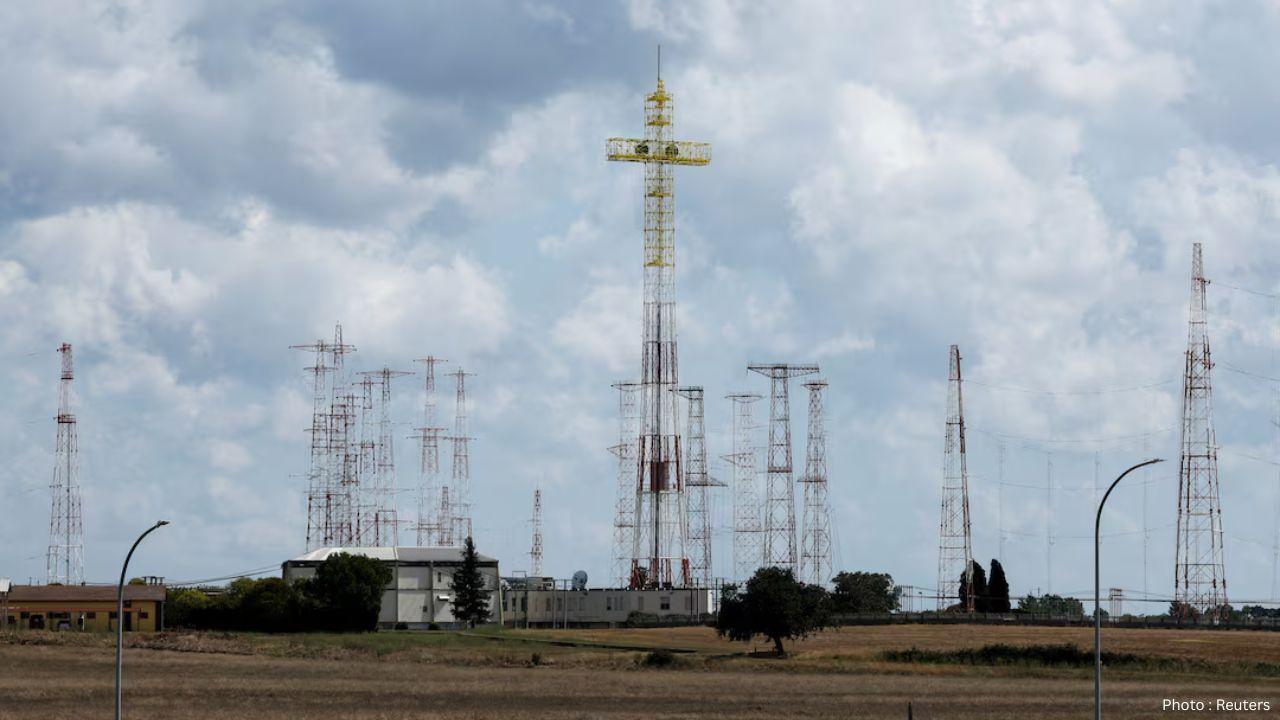
The project will be developed at the Vatican-owned Santa Maria di Galeria estate on the outskirts of Rome. The site has hosted Vatican Radio transmission facilities since the 1950s.
The project will use an agrivoltaic system, where solar panels are installed several metres above the ground, allowing crops to grow underneath. The panels can provide shade that helps reduce water evaporation and protect crops from extreme weather.
Tracking solar panels are expected to cover around 200 hectares of the site, representing almost half of the roughly 450-hectare estate.
Sources said construction could take between 18 and 24 months, including the required administrative and permitting procedures. Contracts for the work are expected to be put out to tender in the coming weeks.
Read more: U.S. Solar Installations Decline in 2025 as Policy Changes Shake Renewable Energy Market
The facility is designed to supply electricity to Vatican Radio’s transmission station and help Vatican City reduce its dependence on outside power supplies.
Electricity generated by the project could also support properties linked to the Holy See in Rome, including Bambino Gesù hospital.
Any electricity produced beyond the Vatican’s requirements could be supplied to Italy, according to sources familiar with the plans.
Vatican City is the world’s smallest country, covering about 108 acres and having fewer than 900 residents. Despite its small size, the Holy See has several facilities and properties that require a reliable electricity supply.
The renewable energy project was reportedly a priority of late Pope Francis and has also received support from Pope Leo XIV. The initiative reflects the Vatican’s broader focus on environmental protection and reducing dependence on conventional energy sources.
A joint Italian-Vatican commission met earlier this month to begin work on the project following Italy’s ratification of a bilateral agreement concerning development of the Santa Maria di Galeria site.
The agreement extends special arrangements already applied to Vatican Radio facilities at the location. These include exemptions from certain Italian taxes and public charges.
Italy’s ratification law states that implementation of the agreement should not create any additional burden on public finances.
The Vatican has previously invested in solar energy. In 2008, during the pontificate of Pope Benedict XVI, German companies SolarWorld and SMA Solar Technology donated thousands of photovoltaic panels and related equipment.
Around 2,400 solar panels were installed on the roof of the Nervi Hall, which is used for papal audiences and concerts.
The new agrivoltaic project would represent a much larger step in the Vatican’s renewable energy plans, potentially providing enough electricity to cover its needs while also allowing agricultural production at the same site.
#trending #latest #Vatican #VaticanCity #RenewableEnergy #SolarEnergy #SolarPower #Agrivoltaics #CleanEnergy #GreenEnergy #Sustainability #ClimateAction #EnergyTransition #SolarPlant #Italy #Rome #VaticanNews








Advances in Aerospace Technology and Commercial Aviation Recovery
Insights into breakthrough aerospace technologies and commercial aviation’s recovery amid 2025 chall

Defense Modernization and Strategic Spending Trends
Explore key trends in global defense modernization and strategic military spending shaping 2025 secu

Tens of Thousands Protest in Serbia on Anniversary of Deadly Roof Collapse
Tens of thousands in Novi Sad mark a year since a deadly station roof collapse that killed 16, prote

Canada PM Carney Apologizes to Trump Over Controversial Reagan Anti-Tariff Ad
Canadian PM Mark Carney apologized to President Trump over an Ontario anti-tariff ad quoting Reagan,

The ad that stirred a hornets nest, and made Canadian PM Carney say sorry to Trump
Canadian PM Mark Carney apologizes to US President Trump after a tariff-related ad causes diplomatic

Bengaluru-Mumbai Superfast Train Approved After 30-Year Wait
Railways approves new superfast train connecting Bengaluru and Mumbai, ending a 30-year demand, easi



