
Post by : Meena Rani
In 2025, the global defense landscape is undergoing a profound transformation, driven by unprecedented investment growth and rapid technological advancements. According to the Stockholm International Peace Research Institute (SIPRI), global military spending reached over $2.1 trillion, marking a 9.4% increase compared to 2024 - the highest growth since the Cold War. This surge reflects escalating geopolitical tensions, technological race dynamics, and evolving security challenges that necessitate modernization and strategic adaptation.
The United States leads with a defense budget exceeding $850 billion, focusing on upgrading nuclear forces, accelerating hypersonic weapons development, and integrating artificial intelligence into command and control systems. Significant collaborations with private aerospace and defense contractors expedite innovation cycles. For example, DARPA’s recent Hypersonic Air-breathing Weapon Concept program emphasizes speed and maneuverability that challenge existing missile defense architectures.
China’s military modernization prioritizes blue-water navy expansion, anti-access/area-denial (A2/AD) capabilities, and next-gen missile systems, reflecting its strategic ambitions in the Indo-Pacific. Enhanced investments in cyber warfare and space situational awareness demonstrate China’s intent to compete within emerging domains. The People’s Liberation Army's ongoing force restructuring aims to field a more versatile, technologically advanced fighting force by 2030.
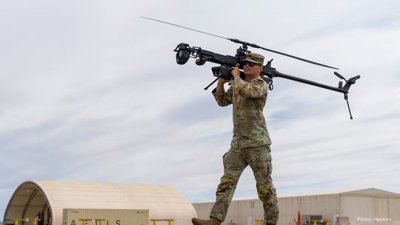
Russia continues a dual focus on conventional force upgrades and asymmetric capabilities, such as electronic warfare and unmanned systems. Its strategic missile forces remain a cornerstone as Russia navigates economic constraints and Western sanctions. Recent deployments of advanced S-500 surface-to-air missiles and development of the Avangard hypersonic glide vehicle underscore Russia’s commitment to maintaining strategic parity.
Emerging domains like cyberspace and outer space represent critical arenas, with nations recognizing these as frontline battlefields. Cyber defenses are reinforced not only against espionage but also disruptive attacks targeting critical infrastructure. The militarization of space sees the deployment of anti-satellite weapons and hardened satellite constellations, evidencing a shift in defense postures globally.
Modernization programs are also revolutionizing personnel management. Recruiting initiatives target STEM professionals with expertise in AI, robotics, and cybersecurity. Militaries are implementing continuous training models leveraging virtual reality and AI-driven simulations to maintain tactical proficiency and adaptability.
Regionally, hotspots such as the South China Sea, Eastern Europe, and the Middle East shape defense priorities. The U.S. and NATO’s enhanced presence in Eastern Europe reflects concerns over Russian actions in Ukraine, while Indo-Pacific alliances including the Quad focus on counterbalancing China’s assertiveness. Middle Eastern security continues to grapple with proxy conflicts, terrorism, and strategic rivalry.
Policy reforms aim to enhance procurement efficiency and technology adoption. Public-private partnerships and international defense R&D collaborations accelerate capabilities deployment and cost-effectiveness. Programs like the U.S. Defense Innovation Unit exemplify efforts to harness commercial technology advancements for military use swiftly.
Sustainability is increasingly integrated into defense planning. Departments are investing in alternative fuels, reducing emissions from naval fleets, and adopting eco-friendly manufacturing practices to minimize environmental impact while maintaining operational readiness.
The interplay of these factors defines 2025 as a year of significant defense evolution, setting trajectories for future military innovation and strategic competition.
For stakeholders and analysts, this complex environment demands continuous monitoring and adaptive strategies to anticipate emerging threats and capitalize on technological progress.
Scientific and defense journals project that the next decade will be shaped by the fusion of cyber-physical technologies, quantum computing in cryptography, and AI-enabled decision-making frameworks, underscoring the importance of ongoing investment and innovation in defense modernization.
This article serves as a comprehensive resource to understand the multifaceted nature of contemporary military modernization and spending trends shaping global security architecture in 2025 and beyond.
#DefenseModernization #MilitarySpending #GlobalSecurity #MilitaryTech #DefenseInnovation #CyberSecurity









Advances in Aerospace Technology and Commercial Aviation Recovery
Insights into breakthrough aerospace technologies and commercial aviation’s recovery amid 2025 chall

Defense Modernization and Strategic Spending Trends
Explore key trends in global defense modernization and strategic military spending shaping 2025 secu

Tens of Thousands Protest in Serbia on Anniversary of Deadly Roof Collapse
Tens of thousands in Novi Sad mark a year since a deadly station roof collapse that killed 16, prote

Canada PM Carney Apologizes to Trump Over Controversial Reagan Anti-Tariff Ad
Canadian PM Mark Carney apologized to President Trump over an Ontario anti-tariff ad quoting Reagan,

The ad that stirred a hornets nest, and made Canadian PM Carney say sorry to Trump
Canadian PM Mark Carney apologizes to US President Trump after a tariff-related ad causes diplomatic

Bengaluru-Mumbai Superfast Train Approved After 30-Year Wait
Railways approves new superfast train connecting Bengaluru and Mumbai, ending a 30-year demand, easi



