Post by : Avinab Raana
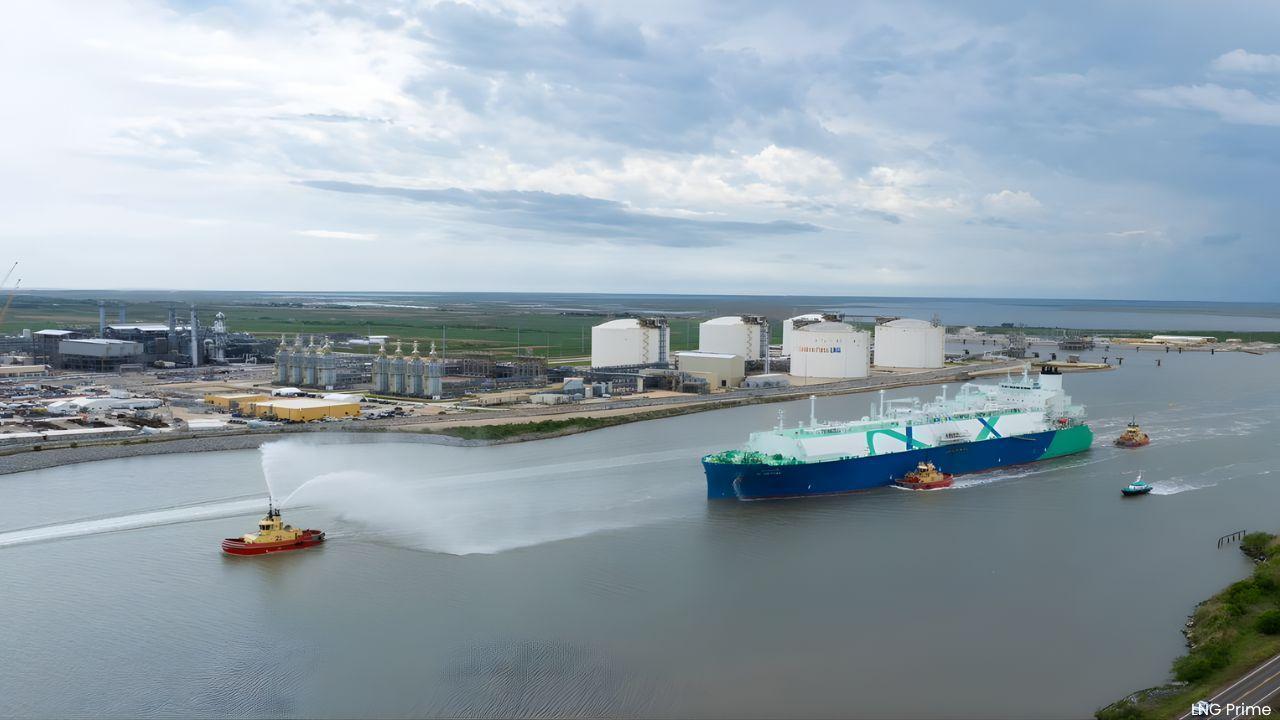
In a defining breakthrough for the global energy and maritime logistics ecosystem, the Golden Pass LNG project has successfully shipped its first export cargo, marking the transition from construction to full-scale operational reality. This milestone represents far more than a ceremonial shipment, it signals the arrival of a major new player in the liquefied natural gas market at a time when global energy demand is undergoing rapid transformation. Located on the U.S. Gulf Coast, the Golden Pass facility is poised to become a critical node in international energy supply chains, strengthening export capacity while offering buyers across Europe and Asia a reliable alternative source of natural gas. As energy markets continue to adapt to geopolitical shifts and supply disruptions, this first cargo stands as a powerful symbol of resilience, expansion, and strategic positioning.
The Golden Pass LNG terminal, developed as a joint venture between leading global energy companies, represents one of the most ambitious LNG infrastructure projects in recent years. With multiple liquefaction trains designed to process vast volumes of natural gas, the facility is expected to deliver millions of tons of LNG annually once fully operational. The complexity of the project lies not only in its scale but also in its integration with upstream gas supply networks and downstream shipping logistics. The successful shipment of its first cargo demonstrates that the terminal has reached a critical level of readiness, capable of supporting sustained export operations while meeting stringent safety and environmental standards that define modern LNG infrastructure.
The commencement of exports from Golden Pass LNG significantly enhances the United States’ position as a leading global LNG supplier. In recent years, the U.S. has rapidly expanded its export capacity, capitalizing on abundant shale gas reserves and rising international demand. The addition of Golden Pass to this network strengthens supply diversification for importing nations, particularly in Europe, where energy security has become a central concern. By increasing available volumes and providing long-term contract opportunities, the project reinforces the role of U.S. LNG in stabilizing global markets while reducing dependency on traditional suppliers. This shift is expected to have long-term implications for pricing dynamics, trade routes, and geopolitical energy strategies.
Behind every LNG shipment lies a complex and highly coordinated maritime operation, and Golden Pass’s first cargo underscores the critical role of shipping in global energy distribution. Specialized LNG carriers equipped with advanced containment systems ensure the safe transport of liquefied gas across vast distances, connecting production hubs with consumption centers. The successful dispatch of the first cargo highlights the efficiency of the integrated logistics chain from liquefaction at the terminal to loading, navigation, and delivery. As export volumes increase, shipping demand is expected to rise in parallel, driving growth in LNG carrier fleets and reinforcing the importance of maritime infrastructure in sustaining global energy flows.
The launch of export operations at Golden Pass LNG is set to generate wide-ranging economic benefits, extending beyond the energy sector into manufacturing, shipping, and supply chain industries. The project has already created thousands of jobs during its construction phase and is expected to support long-term employment across operations, maintenance, and logistics. Additionally, increased LNG exports contribute to trade balances and stimulate investment in related infrastructure, including pipelines, ports, and storage facilities. For the maritime sector, this translates into sustained demand for specialized vessels, port services, and logistical support systems, further strengthening the interconnected nature of global trade.
As Golden Pass LNG begins its export journey, the broader implications for global energy markets are profound. This milestone reflects a shift toward diversified supply chains, enhanced resilience, and greater flexibility in meeting demand across regions. For energy-importing nations, it offers a dependable source of fuel in an increasingly volatile environment. For the United States, it reinforces its role as a cornerstone of global energy supply. Ultimately, the first cargo shipment is not just a starting point. It is a clear indication of how infrastructure, innovation, and strategic investment are reshaping the future of energy and maritime trade. As additional cargoes follow, Golden Pass LNG is set to play a pivotal role in defining the next chapter of global LNG expansion.
#trending #latest#LNGExports #GoldenPassLNG #EnergyTrade #MarineLogistics #GlobalShipping









Advances in Aerospace Technology and Commercial Aviation Recovery
Insights into breakthrough aerospace technologies and commercial aviation’s recovery amid 2025 chall

Defense Modernization and Strategic Spending Trends
Explore key trends in global defense modernization and strategic military spending shaping 2025 secu

Tens of Thousands Protest in Serbia on Anniversary of Deadly Roof Collapse
Tens of thousands in Novi Sad mark a year since a deadly station roof collapse that killed 16, prote

Canada PM Carney Apologizes to Trump Over Controversial Reagan Anti-Tariff Ad
Canadian PM Mark Carney apologized to President Trump over an Ontario anti-tariff ad quoting Reagan,

The ad that stirred a hornets nest, and made Canadian PM Carney say sorry to Trump
Canadian PM Mark Carney apologizes to US President Trump after a tariff-related ad causes diplomatic

Bengaluru-Mumbai Superfast Train Approved After 30-Year Wait
Railways approves new superfast train connecting Bengaluru and Mumbai, ending a 30-year demand, easi



