Post by : Amit
Photo : X / Gas Processing
A Significant Step for U.S. LNG Export Growth
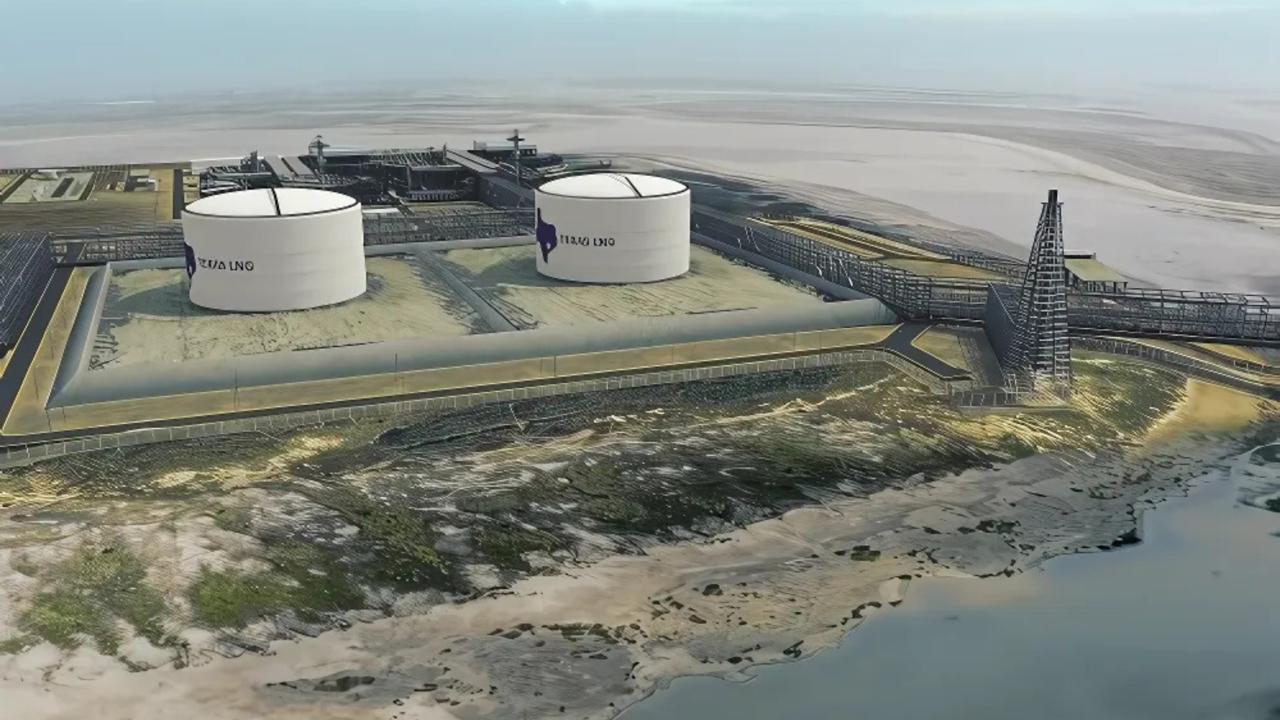
Bechtel has reached another important construction milestone at Cheniere Energy’s Corpus Christi Stage 3 Liquefaction Project in Texas, signaling continued momentum in expanding the United States’ liquefied natural gas (LNG) export infrastructure. The latest segment completion brings the project closer to its target of boosting Cheniere’s production capacity by approximately 10+ million tonnes per annum (mtpa), reinforcing America’s role as a leading LNG supplier to global markets.
The expansion, located in Gregory, Texas, is part of Cheniere’s broader strategic effort to meet surging global demand for LNG—particularly from Europe and Asia, where energy diversification and security have become critical in the wake of shifting geopolitical dynamics. This milestone also underscores Bechtel’s position as one of the world’s most experienced LNG engineering, procurement, and construction (EPC) contractors, with a track record of delivering dozens of LNG trains across multiple continents.
Engineering Precision Meets Scale
The completed segment represents more than a symbolic achievement—it is the result of thousands of hours of detailed engineering, complex logistical coordination, and synchronized teamwork between multiple stakeholders. Bechtel has been applying modular construction techniques, enabling work to progress in parallel both onsite and at specialized fabrication yards.
This modularization shortens schedules by allowing major components—such as liquefaction skids, pipe racks, and compressor modules—to be pre-assembled in controlled environments before being shipped to Texas for integration. Such an approach reduces weather-related risks and accelerates installation, which is especially critical for large LNG projects with tight commissioning timelines.
Adding another layer of sophistication, Bechtel uses advanced digital construction management systems to track material flows, monitor performance in real time, and coordinate multi-disciplinary teams. This integration is particularly valuable when sequencing highly specialized tasks, such as installing cryogenic heat exchangers, massive refrigeration compressors, and safety-critical LNG storage tanks. Each stage requires precise tolerances and stringent safety compliance to meet U.S. and international regulatory standards.
Corpus Christi Stage 3: The Broader Picture
The Stage 3 expansion consists of seven midscale liquefaction trains, a design choice that balances efficiency and operational flexibility. Unlike traditional large-scale trains, these smaller units allow for staggered commissioning and ramp-up, enabling Cheniere to match LNG output with fluctuating market demand.
Once operational, Stage 3 will significantly augment the existing Corpus Christi facility, which already exports LNG to customers in Europe, Latin America, and Asia. This added capacity is not just about volume—it provides buyers with a reliable and geopolitically stable alternative to pipeline-based natural gas supplies, which are vulnerable to disruptions from geopolitical tensions, sanctions, or infrastructure damage.
By increasing flexibility and resilience, the expansion will further strengthen the U.S. LNG sector’s ability to respond to market shifts, emergencies, or seasonal demand spikes.
Global LNG Market Context
The LNG sector has experienced rapid growth over the last three years, fueled in part by Europe’s urgent need to replace pipeline gas from Russia and Asia’s push to decarbonize by shifting from coal to gas. In 2024, U.S. LNG exports reached record highs, with Cheniere accounting for nearly half of total shipments.
Market analysts believe that once Stage 3 reaches full operation, the United States could become the world’s largest sustained LNG exporter, surpassing both Qatar and Australia. This competitive position could last for years, especially if U.S. producers maintain their cost advantage through efficient shale gas extraction and advanced liquefaction technologies.
However, the LNG boom also sparks debates over the role of fossil fuels in a net-zero future. While LNG burns cleaner than coal and oil—reducing CO₂ emissions by around 20% and virtually eliminating sulfur oxides—it is still a hydrocarbon fuel. Expansion plans therefore face scrutiny from environmental groups and policymakers concerned about long-term decarbonization pathways.
Both Cheniere and Bechtel have responded by integrating efficiency improvements and exploring carbon capture and storage (CCS) solutions into their designs, aiming to reduce operational emissions and position LNG as a lower-carbon bridge fuel in the global energy transition.
Economic and Local Impact
The Corpus Christi Stage 3 expansion is not just an energy project—it is a significant driver of economic activity in Texas’ Gulf Coast region. At peak construction, thousands of workers are employed across trades including welding, pipefitting, electrical installation, and heavy equipment operation.
Local suppliers, transport providers, and accommodation services also benefit from the influx of workers and the demand for specialized equipment. In addition, Cheniere has invested in community programs, workforce training initiatives, and environmental stewardship projects in Nueces and San Patricio counties, creating lasting benefits beyond the construction phase.
For Texas, projects like this reinforce the state’s status as a global energy hub, combining abundant natural gas resources with world-class port and industrial infrastructure.
Bechtel’s LNG Legacy
Bechtel has been at the forefront of LNG development for more than five decades, with landmark projects delivered in the U.S., Australia, Qatar, and beyond. Its expertise spans every stage of the LNG value chain, from conceptual design and front-end engineering to commissioning and handover.
At Corpus Christi, Bechtel’s long-standing involvement—from the initial phases through to Stage 3—ensures deep familiarity with site conditions, logistical constraints, and operational requirements. This continuity reduces integration risks and helps maintain schedule discipline, which is critical when coordinating thousands of workers and hundreds of subcontractors on a single megaproject.
Sustainability Considerations
While the expansion’s primary goal is increasing LNG output, sustainability measures are integrated into the project. These include advanced methane detection and reduction systems, optimized liquefaction energy use, and compliance with stringent U.S. environmental regulations.
Cheniere has also pioneered the concept of providing buyers with detailed greenhouse gas (GHG) emissions data for each LNG cargo. This transparency supports customers in meeting their own carbon disclosure obligations and enhances the credibility of U.S. LNG in markets with strict environmental standards, such as the EU and Japan.
Timelines and Next Steps
With this latest segment completed, Bechtel’s focus now turns to installing key liquefaction systems, cryogenic piping networks, and sophisticated control and safety systems. Work is also advancing on marine loading facilities, which will allow the expanded terminal to load multiple LNG carriers efficiently.
Cheniere expects first LNG production from Stage 3 in the second half of 2025, with full commercial operations targeted for 2026. If construction progresses ahead of schedule, initial cargoes could sail earlier, offering a welcome supply boost to tight markets.
Strategic Importance for the U.S.
The Corpus Christi Stage 3 expansion is more than a commercial venture—it is a strategic asset for U.S. foreign policy and energy diplomacy. By providing a stable, transparent, and competitively priced supply of LNG, the U.S. can support allies in diversifying their energy mix, reducing dependence on politically unstable suppliers, and enhancing their energy security.
For Europe, U.S. LNG has already been instrumental in replacing Russian pipeline gas. In Asia, it offers diversification from Middle Eastern LNG, reducing exposure to chokepoints like the Strait of Hormuz. This flexibility strengthens the resilience of global energy supply chains.
A Project on the Move
The latest construction milestone at Corpus Christi Stage 3 is a tangible indicator of progress on one of North America’s most strategically significant energy projects. With global LNG demand projected to rise for at least the next two decades, the expansion positions Cheniere—and the United States—to meet that demand while setting high benchmarks for technology, efficiency, and reliability.
By blending engineering excellence with commercial foresight and environmental responsibility, the Cheniere-Bechtel partnership is not merely building infrastructure—it is shaping the future of global LNG trade. And with each completed segment, the vision of an expanded, more resilient U.S. LNG export network moves closer to reality.
Texas ,LNG export terminal






Advances in Aerospace Technology and Commercial Aviation Recovery
Insights into breakthrough aerospace technologies and commercial aviation’s recovery amid 2025 chall

Defense Modernization and Strategic Spending Trends
Explore key trends in global defense modernization and strategic military spending shaping 2025 secu

Tens of Thousands Protest in Serbia on Anniversary of Deadly Roof Collapse
Tens of thousands in Novi Sad mark a year since a deadly station roof collapse that killed 16, prote

Canada PM Carney Apologizes to Trump Over Controversial Reagan Anti-Tariff Ad
Canadian PM Mark Carney apologized to President Trump over an Ontario anti-tariff ad quoting Reagan,

The ad that stirred a hornets nest, and made Canadian PM Carney say sorry to Trump
Canadian PM Mark Carney apologizes to US President Trump after a tariff-related ad causes diplomatic

Bengaluru-Mumbai Superfast Train Approved After 30-Year Wait
Railways approves new superfast train connecting Bengaluru and Mumbai, ending a 30-year demand, easi



