Post by : Saif
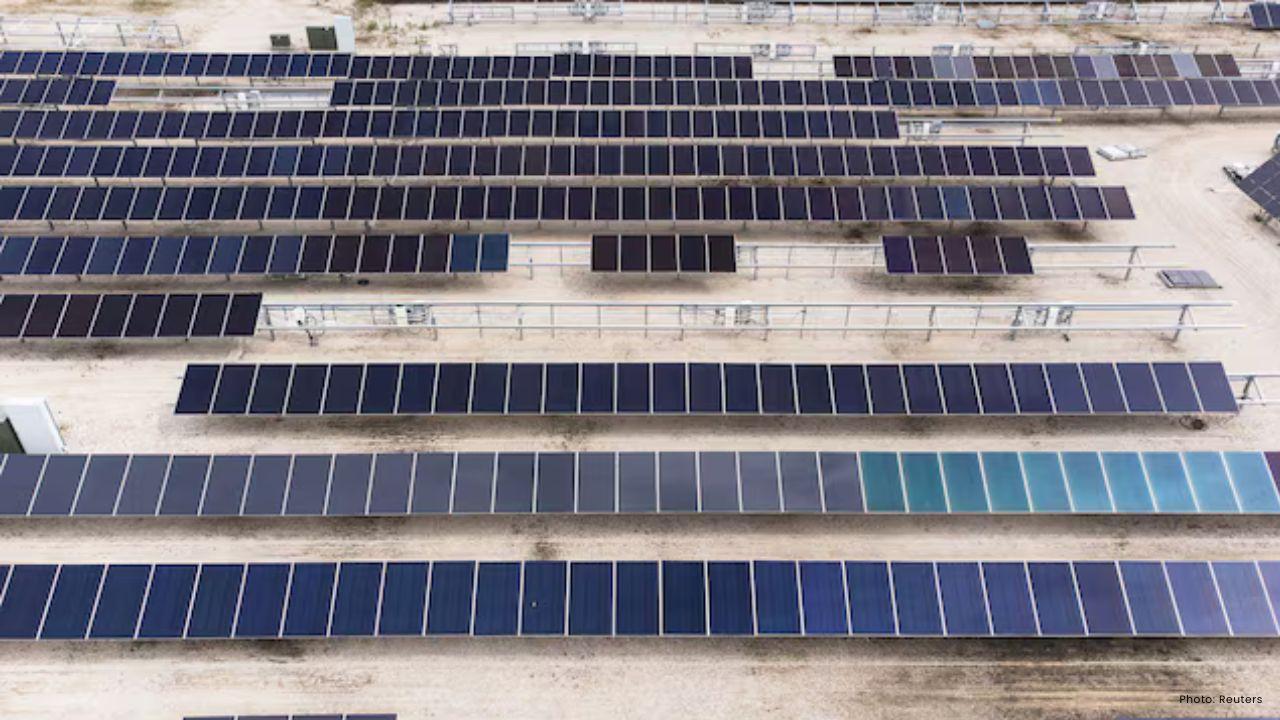
The growth of solar power in the United States slowed in 2025 after several policy changes disrupted the renewable energy industry. A new industry report shows that fewer solar systems were installed compared with the previous year, raising concerns about the future pace of clean energy development in the country.
According to a study released by the Solar Energy Industries Association (SEIA) and research firm Wood Mackenzie, the United States installed about 43 gigawatts of new solar power capacity in 2025, down from nearly 50 gigawatts in 2024.
The decline reflects a major shift in the energy market after new policies removed or reduced incentives that had previously supported solar development. These incentives had encouraged companies, utilities, and homeowners to invest heavily in renewable energy projects.
Industry experts say the policy changes caused uncertainty in the market and slowed the pace of new projects. Many companies had already planned large solar installations, but some projects were delayed or canceled as financial conditions changed.
One of the most important factors behind the slowdown was the rollback of certain subsidies and tax benefits for renewable energy developers. These financial incentives had played a major role in the rapid expansion of solar power in the United States over the past decade.
Without these incentives, developers face higher costs and greater risks when building solar projects. As a result, some companies have become more cautious about starting new installations.
The report also showed that the decline affected several parts of the solar industry. Large utility-scale solar projects experienced a significant drop, with installations falling by about 16 percent in 2025. At the same time, community solar installations fell by roughly 25 percent, showing that smaller shared solar programs were also affected.
Community solar projects are designed to allow groups of households or businesses to share electricity from a single solar facility. These programs often help people who cannot install solar panels on their own homes.
Another issue that affected the market was new trade and tariff policies that increased costs for solar components and equipment. Tariffs on imported solar materials can make building new projects more expensive, especially if domestic production cannot quickly meet demand.
At the same time, delays in project approvals and regulatory changes also slowed development in some regions. Energy companies sometimes need years of planning before a large solar farm can begin producing electricity, so sudden policy changes can disrupt projects already in progress.
Despite the slowdown, the solar industry continues to play an important role in the U.S. energy system. Even with the drop in installations, solar energy and battery storage together still made up a large share of the new power generation capacity added to the electricity grid.
Solar energy has become one of the fastest-growing sources of electricity in the United States over the past decade. Falling equipment prices, improved technology, and government incentives helped the industry expand rapidly in recent years.
Many states have invested heavily in solar infrastructure as part of efforts to reduce greenhouse gas emissions and fight climate change. Solar power produces electricity without burning fossil fuels, which means it does not release carbon dioxide during operation.
Several states continue to lead the solar expansion effort. Texas installed the largest amount of new solar capacity in 2025, followed by states such as Indiana, Florida, Arizona, Ohio, Utah, and Arkansas.
These states have seen strong growth partly because of favorable land availability, good sunlight conditions, and supportive state-level policies.
Even with the slowdown, industry experts believe solar energy will remain an important part of America’s energy future. Electricity demand is expected to increase significantly in the coming years, especially as new technologies such as artificial intelligence, electric vehicles, and large data centers require more power.
Renewable energy sources like solar and wind are often seen as key solutions to meet this rising demand while reducing pollution.
Industry forecasts suggest that the United States could still dramatically expand its solar capacity over the next decade. Some projections estimate that total solar capacity in the country could reach around 770 gigawatts by 2036, which would represent a massive increase compared with current levels.
However, experts say stable policies will be critical for reaching those goals. Renewable energy projects often require large investments, and companies usually plan projects years in advance. Sudden policy shifts can slow progress and create uncertainty for investors.
Supporters of renewable energy argue that long-term policy stability is necessary to maintain growth in the industry. Clear rules and consistent incentives can help companies continue building solar projects and expanding clean energy infrastructure.
Critics of subsidies, however, argue that renewable energy industries should eventually compete without heavy government support. They believe the market should determine which energy technologies succeed.
The debate reflects a larger discussion about the future direction of energy policy in the United States. As the country tries to balance economic growth, energy security, and climate goals, decisions about renewable energy incentives will continue to play a major role.
For now, the latest report shows that the U.S. solar industry remains strong but faces new challenges. The slowdown in installations during 2025 highlights how closely the growth of renewable energy is connected to government policy and market conditions.
The coming years will reveal whether the industry can adapt to these changes and continue expanding as the world moves toward cleaner sources of energy.
#trending #latest #armustnews #SolarEnergy #RenewableEnergy #CleanEnergy #USSolar #EnergyPolicy #ClimateEnergy #GreenPower #EnergyTransition #Sustainability










Advances in Aerospace Technology and Commercial Aviation Recovery
Insights into breakthrough aerospace technologies and commercial aviation’s recovery amid 2025 chall

Defense Modernization and Strategic Spending Trends
Explore key trends in global defense modernization and strategic military spending shaping 2025 secu

Tens of Thousands Protest in Serbia on Anniversary of Deadly Roof Collapse
Tens of thousands in Novi Sad mark a year since a deadly station roof collapse that killed 16, prote

Canada PM Carney Apologizes to Trump Over Controversial Reagan Anti-Tariff Ad
Canadian PM Mark Carney apologized to President Trump over an Ontario anti-tariff ad quoting Reagan,

The ad that stirred a hornets nest, and made Canadian PM Carney say sorry to Trump
Canadian PM Mark Carney apologizes to US President Trump after a tariff-related ad causes diplomatic

Bengaluru-Mumbai Superfast Train Approved After 30-Year Wait
Railways approves new superfast train connecting Bengaluru and Mumbai, ending a 30-year demand, easi



