Post by : Saif
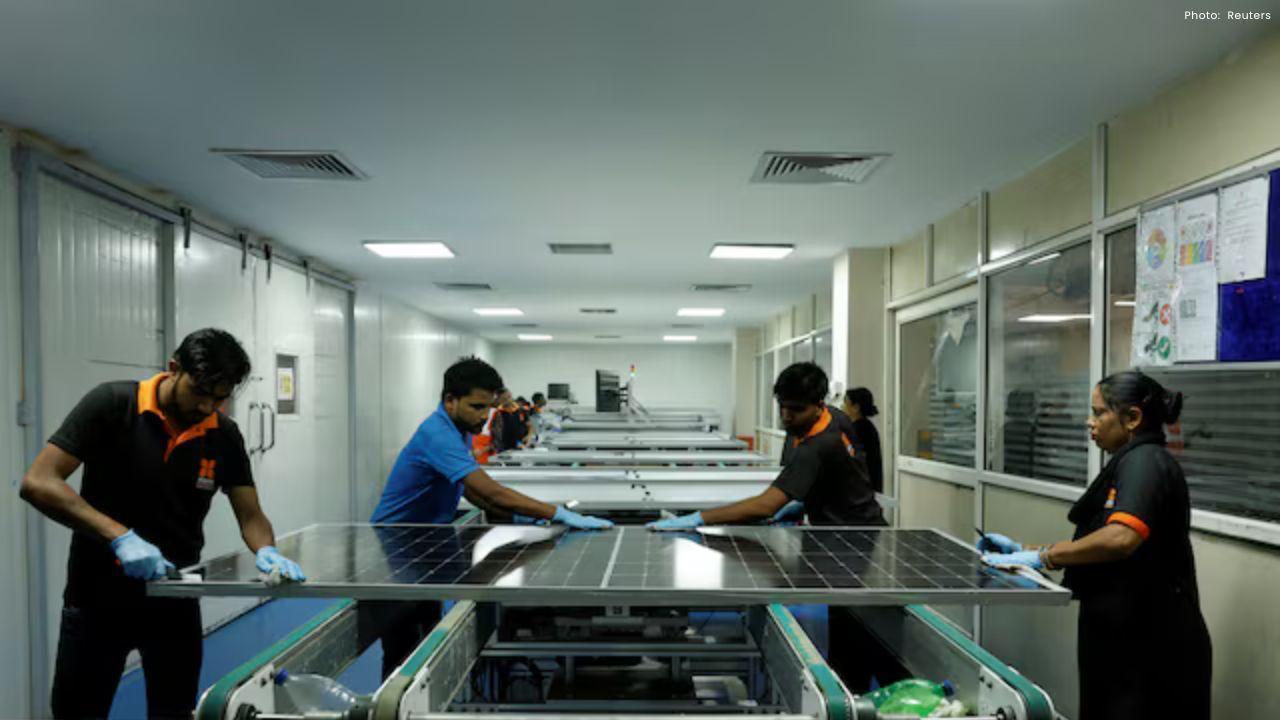
India’s fast-growing solar industry has received a serious setback after the United States announced new trade duties on solar imports from India. The decision could make Indian solar panels much more expensive in the American market, affecting companies that rely on exports for growth.
The U.S. government said it is imposing preliminary countervailing duties on solar cells and panels from India. Officials believe some Indian companies received government support that gave them an unfair advantage. Because of this, the United States has set very high duty rates on these products while the investigation continues.
These duties are important because the United States is one of the largest buyers of solar equipment in the world. Over the past few years, Indian solar exports to the U.S. had increased sharply. Indian manufacturers benefited as global supply chains shifted and buyers looked for alternatives to other major producers. Many Indian companies invested heavily in expanding their factories to meet rising demand.
The new trade action could change that progress. If the duties remain in place, Indian solar panels will cost much more in the U.S. market. Higher prices could reduce orders from American buyers. This may lead to lower sales, slower production growth, and reduced profits for Indian firms.
The announcement has already affected investor confidence. Shares of several Indian renewable energy companies fell after the news became public. Investors fear that reduced access to the U.S. market could hurt future earnings. For companies that were counting on strong exports, the uncertainty is troubling.
Supporters of the U.S. move say the action protects American manufacturers. They argue that local companies need a fair chance to compete. By imposing duties, the U.S. government hopes to encourage more solar panel production inside the country and reduce dependence on foreign imports.
However, critics worry about the broader impact. They say that higher trade barriers could slow the global shift to clean energy. Solar panels are a key part of efforts to reduce carbon emissions and fight climate change. If prices rise because of tariffs, it may become harder for businesses and households to afford renewable energy systems.
The decision also highlights how trade and climate goals can sometimes conflict. On one hand, countries want to protect their industries and workers. On the other hand, the world needs affordable clean energy to meet environmental targets. Balancing these priorities is not easy.
For India, the challenge now is to adapt. Companies may try to find new markets in Europe, Asia, or other regions. They may also focus more on the growing domestic market, as India continues to expand its renewable energy capacity. At the same time, diplomatic discussions between India and the United States may continue in hopes of reducing trade tensions.
This development shows how closely connected global industries have become. A decision made in one country can quickly affect businesses and workers thousands of miles away. As the case moves forward, both governments will face pressure to protect their interests while maintaining strong economic ties.
The future of India’s solar industry will depend on how it responds to this challenge. Innovation, cost control, and market diversification may become even more important. In the wider picture, the situation reminds the world that trade policy plays a powerful role in shaping the path toward a cleaner energy future.
#trending #latest #IndianSolar #USTrade #SolarIndustry #RenewableEnergy #CleanEnergy #TradeTensions #ClimateEconomy #armustnews










Advances in Aerospace Technology and Commercial Aviation Recovery
Insights into breakthrough aerospace technologies and commercial aviation’s recovery amid 2025 chall

Defense Modernization and Strategic Spending Trends
Explore key trends in global defense modernization and strategic military spending shaping 2025 secu

Tens of Thousands Protest in Serbia on Anniversary of Deadly Roof Collapse
Tens of thousands in Novi Sad mark a year since a deadly station roof collapse that killed 16, prote

Canada PM Carney Apologizes to Trump Over Controversial Reagan Anti-Tariff Ad
Canadian PM Mark Carney apologized to President Trump over an Ontario anti-tariff ad quoting Reagan,

The ad that stirred a hornets nest, and made Canadian PM Carney say sorry to Trump
Canadian PM Mark Carney apologizes to US President Trump after a tariff-related ad causes diplomatic

Bengaluru-Mumbai Superfast Train Approved After 30-Year Wait
Railways approves new superfast train connecting Bengaluru and Mumbai, ending a 30-year demand, easi



