Post by : Avinab Raana
Photo : X / AMD Embedded
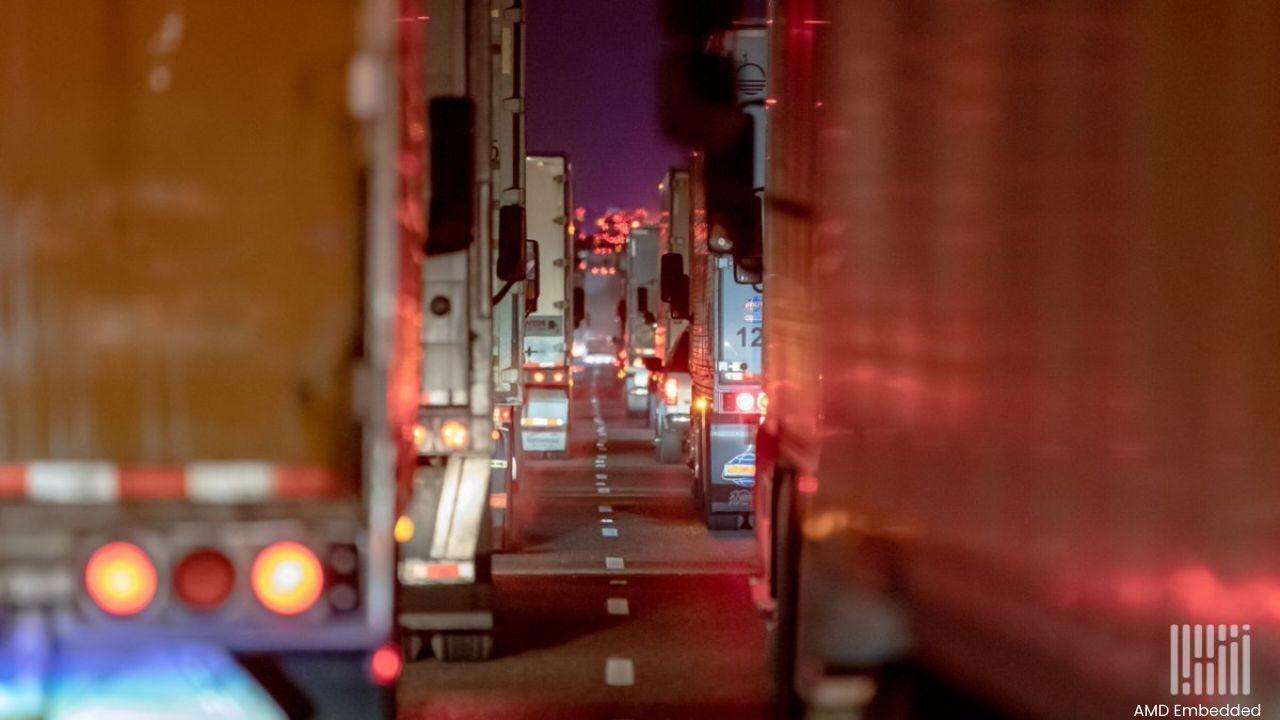
As global supply chains face mounting disruptions from geopolitical tensions, capacity shortages, and shifting trade routes, the TIR system is rapidly emerging as a critical enabler of resilience in multimodal logistics. Backed by the International Road Transport Union (IRU), the TIR framework is proving to be far more than a customs transit tool, it is becoming a strategic backbone for seamless cargo movement across borders, modes, and regions. In an era where delays and inefficiencies can cost millions, the ability of TIR to streamline freight flows is gaining renewed global attention.
At its core, the TIR system simplifies customs procedures, allowing goods to move across multiple countries with minimal checks and reduced paperwork. This efficiency is particularly valuable in multimodal corridors where cargo transitions between road, rail, and sea. By minimizing border delays and administrative bottlenecks, TIR enables faster transit times and greater predictability two factors that are increasingly critical for industries dependent on just-in-time logistics. Freight forwarders are now leveraging this system to maintain continuity even as traditional supply routes face disruptions.
The real strength of TIR lies in its ability to maintain operational continuity during crises. Whether it is geopolitical conflict, port congestion, or regulatory challenges, TIR-backed corridors have demonstrated higher levels of reliability compared to conventional transit systems. This resilience is not accidental, it is built on standardized procedures, trusted networks, and digital integration that allow stakeholders to adapt quickly to changing conditions. As global trade becomes more volatile, such resilience is no longer optional but essential.
One of the most significant advancements driving TIR adoption is its digital evolution. The shift toward eTIR fully digitalized transit processes is enhancing transparency, reducing fraud risks, and accelerating clearance times. Digital tracking and real-time data sharing are enabling authorities and logistics providers to monitor cargo movements with unprecedented accuracy. This transformation aligns perfectly with the broader push toward smart logistics, where technology is central to efficiency and security.
Freight forwarders are playing a pivotal role in expanding the reach and effectiveness of TIR corridors. By integrating TIR into their multimodal strategies, they are unlocking new trade routes and optimizing existing ones. This is particularly evident in emerging corridors linking Asia, Europe, and the Middle East, where TIR is facilitating smoother transitions between transport modes. The result is a more interconnected logistics ecosystem capable of handling increased trade volumes without compromising speed or reliability.
As supply chains continue to evolve, the importance of resilient and flexible logistics systems cannot be overstated. The TIR system is positioning itself as a cornerstone of this transformation, offering a scalable solution that can adapt to diverse trade environments. Governments, logistics providers, and international organizations are increasingly recognizing its potential to enhance trade efficiency while reducing costs and risks.
The rise of TIR as a key driver of multimodal corridor resilience marks a significant shift in how global logistics is structured and managed. What was once seen as a procedural framework is now a strategic asset, enabling faster, safer, and more reliable cargo movement across borders. As disruptions become the new normal, systems like TIR will define the future of global trade where resilience, efficiency, and adaptability are the ultimate competitive advantages.
#trending #latest,#TIRSystem #FreightForwarding #MultimodalLogistics #SupplyChainResilience #GlobalTrade









Advances in Aerospace Technology and Commercial Aviation Recovery
Insights into breakthrough aerospace technologies and commercial aviation’s recovery amid 2025 chall

Defense Modernization and Strategic Spending Trends
Explore key trends in global defense modernization and strategic military spending shaping 2025 secu

Tens of Thousands Protest in Serbia on Anniversary of Deadly Roof Collapse
Tens of thousands in Novi Sad mark a year since a deadly station roof collapse that killed 16, prote

Canada PM Carney Apologizes to Trump Over Controversial Reagan Anti-Tariff Ad
Canadian PM Mark Carney apologized to President Trump over an Ontario anti-tariff ad quoting Reagan,

The ad that stirred a hornets nest, and made Canadian PM Carney say sorry to Trump
Canadian PM Mark Carney apologizes to US President Trump after a tariff-related ad causes diplomatic

Bengaluru-Mumbai Superfast Train Approved After 30-Year Wait
Railways approves new superfast train connecting Bengaluru and Mumbai, ending a 30-year demand, easi



