Post by : Avinab Raana
Photo : X / Zag Daily
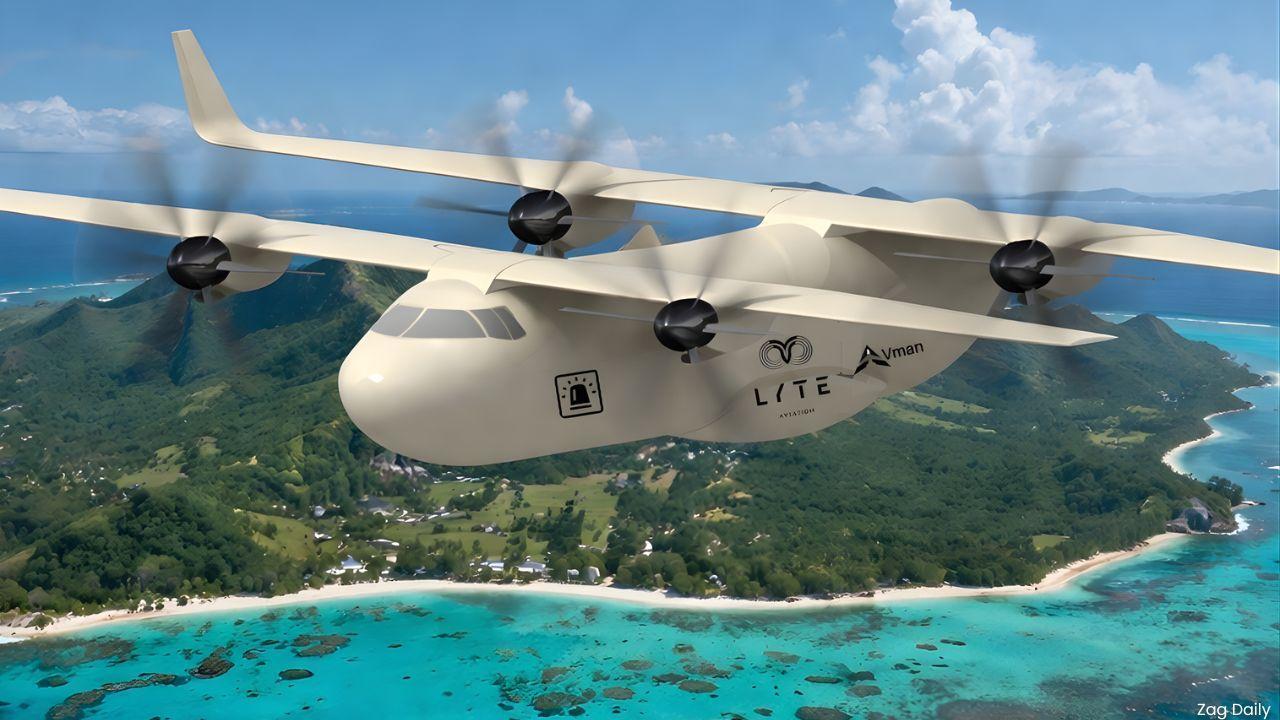
In a bold leap toward the future of healthcare and aviation, Lyte Aviation has unveiled its SkyClinic aircraft concept, an ambitious hybrid-electric flying hospital designed to deliver critical medical services directly to underserved and remote regions. At a time when rapid response can mean the difference between life and death, this concept merges aerospace innovation with healthcare accessibility, offering a solution that transcends traditional infrastructure limitations. The SkyClinic is not just an aircraft; it is a vision of how mobility and medicine can converge to address some of the world’s most pressing humanitarian challenges.
The SkyClinic is based on Lyte Aviation’s LA-44 SkyBus platform, a hybrid-electric aircraft capable of vertical takeoff and landing (VTOL). This capability allows the aircraft to operate in environments where conventional runways are unavailable, including disaster zones, remote villages, and densely populated urban areas. The hybrid propulsion system not only reduces emissions but also enhances operational efficiency, aligning with the global push toward sustainable aviation solutions.
What sets SkyClinic apart is its modular interior, designed to function as a fully equipped airborne medical unit. The aircraft can be configured for emergency surgeries, intensive care, diagnostics, and patient transport, effectively turning it into a mobile healthcare facility. This flexibility ensures that the aircraft can adapt to a wide range of medical scenarios, from routine care in isolated regions to high-intensity disaster response missions.
One of the most compelling aspects of the SkyClinic concept is its potential to bridge critical gaps in global healthcare accessibility. Millions of people worldwide live in areas where medical infrastructure is either inadequate or entirely absent. In such environments, reaching a hospital can take hours or even days often with fatal consequences.
SkyClinic aims to eliminate this barrier by bringing the hospital to the patient. With its VTOL capability and long-range performance, the aircraft can rapidly deploy medical teams and equipment to locations that are otherwise difficult to access. This approach not only improves response times but also expands the reach of healthcare systems, particularly in developing regions and during humanitarian crises.
The concept is particularly relevant in the context of disaster response, where traditional infrastructure is often compromised. Earthquakes, floods, and conflict zones frequently disrupt roads, airports, and hospitals, leaving affected populations without access to essential medical services.
SkyClinic offers a resilient solution by operating independently of ground infrastructure. It can land in confined spaces, deliver immediate medical care, and evacuate patients if necessary. This capability positions it as a critical asset for governments, NGOs, and international aid organizations seeking to enhance their disaster response capabilities.
While many urban air mobility (UAM) concepts focus on passenger transport, SkyClinic represents a shift toward purpose-driven innovation. It demonstrates how advanced aerospace technologies can be applied to solve real-world problems, moving beyond convenience to address fundamental human needs.
The integration of hybrid-electric propulsion, VTOL capabilities, and modular design reflects a broader trend in the aerospace industry—developing versatile platforms that can serve multiple roles. In this case, the focus is on healthcare, but the underlying technology could be adapted for logistics, surveillance, and other mission-critical applications.
Despite its promise, the SkyClinic concept faces several challenges before it can become operational. Regulatory approval, certification processes, and infrastructure readiness will play a crucial role in determining its feasibility. Additionally, the cost of development and deployment must be balanced against the need for affordability, particularly in the regions that stand to benefit the most.
However, these challenges are not insurmountable. As hybrid-electric aviation technologies continue to mature and regulatory frameworks evolve, concepts like SkyClinic are likely to move closer to reality. The growing emphasis on sustainability and social impact in aviation further strengthens the case for such innovations.
The unveiling of SkyClinic marks a pivotal moment in the intersection of aviation and healthcare. It challenges conventional thinking about how medical services are delivered and opens the door to a future where geography is no longer a barrier to care.
If realized, this concept could redefine emergency response, improve healthcare accessibility, and set a new standard for how technology is used to address global challenges. In an industry often driven by speed and efficiency, SkyClinic introduces a new dimension—compassion powered by innovation—offering a glimpse into a future where saving lives takes flight.
#trending #latest#SkyClinic #LyteAviation #FlyingHospital #UrbanAirMobility #AerospaceInnovation










Advances in Aerospace Technology and Commercial Aviation Recovery
Insights into breakthrough aerospace technologies and commercial aviation’s recovery amid 2025 chall

Defense Modernization and Strategic Spending Trends
Explore key trends in global defense modernization and strategic military spending shaping 2025 secu

Tens of Thousands Protest in Serbia on Anniversary of Deadly Roof Collapse
Tens of thousands in Novi Sad mark a year since a deadly station roof collapse that killed 16, prote

Canada PM Carney Apologizes to Trump Over Controversial Reagan Anti-Tariff Ad
Canadian PM Mark Carney apologized to President Trump over an Ontario anti-tariff ad quoting Reagan,

The ad that stirred a hornets nest, and made Canadian PM Carney say sorry to Trump
Canadian PM Mark Carney apologizes to US President Trump after a tariff-related ad causes diplomatic

Bengaluru-Mumbai Superfast Train Approved After 30-Year Wait
Railways approves new superfast train connecting Bengaluru and Mumbai, ending a 30-year demand, easi



