Post by : Avinab Raana
Photo : X / AeroTime
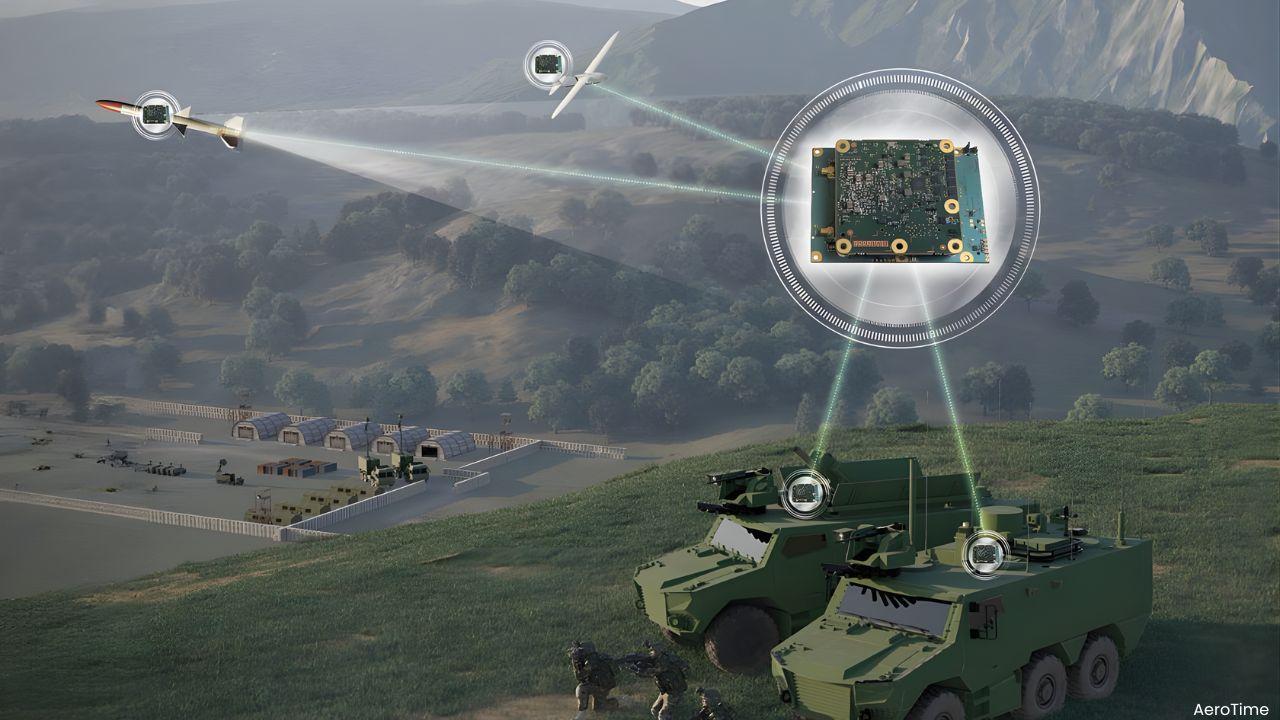
In a world where GPS signals can be disrupted, spoofed, or entirely denied, Thales has unveiled a breakthrough solution that could redefine how modern transportation and defense systems navigate contested environments. The launch of the TopStar Smart Receiver marks a significant leap toward resilient Position, Navigation, and Timing (PNT) systems, an essential backbone for everything from military vehicles to drones and precision-guided systems. As electronic warfare intensifies globally, the ability to maintain accurate navigation under hostile conditions is no longer a luxury, it is a mission-critical necessity.
At the core of the TopStar Smart Receiver is its compact three-in-one architecture, integrating positioning, navigation, and timing into a single unit. Traditionally, these functions required separate systems, increasing size, weight, and power demands across platforms. By consolidating them, Thales has introduced a solution that not only simplifies integration but also enhances operational efficiency, particularly for space-constrained platforms like drones and tactical vehicles.This innovation is especially critical in modern defense ecosystems, where mobility and compact design directly influence deployment flexibility. The receiver is engineered to seamlessly integrate into land vehicles, unmanned aerial systems, and munitions, enabling consistent and reliable navigation across multiple operational scenarios.
One of the defining features of the TopStar Smart Receiver is its advanced anti-jamming capability, powered by an adaptive Controlled Radiation Pattern Antenna (CRPA). This technology allows the system to function effectively even in environments saturated with interference, enabling operations up to 30 times closer to jamming sources compared to conventional GPS receivers.
In today’s geopolitical climate, where GPS jamming incidents have surged across conflict zones, this capability represents a strategic advantage. Navigation systems have become prime targets in electronic warfare, and the ability to resist interference ensures continuity in both military missions and critical transportation operations. The TopStar system addresses this vulnerability head-on, reinforcing reliability in the most demanding environments.
Beyond positioning and navigation, the system introduces a high-performance timing capability that ensures synchronization of tactical communication networks even when satellite signals are lost. The receiver can maintain accurate timing for up to 48 hours without GNSS input, a dramatic improvement over the typical 30-minute limit of conventional systems.
This extended holdover capability is crucial for maintaining communication networks, coordinated operations, and mission-critical systems during signal outages. In practical terms, it ensures that platforms remain operational and connected even in complete GNSS-denied environments, significantly enhancing mission resilience and reliability.
The TopStar Smart Receiver also reflects a broader strategic vision strengthening Europe’s sovereign defense and aerospace capabilities. Fully assembled in France, the system is part of a larger investment initiative aimed at scaling resilient navigation technologies and reducing dependency on external supply chains.This move aligns with growing global efforts to secure critical technologies within domestic industrial bases, particularly in sectors as sensitive as navigation and defense. By combining innovation with localized production, Thales is positioning itself at the forefront of next-generation aerospace and defense solutions.
The launch of the TopStar Smart Receiver signals a broader transformation across the transportation and aerospace industries. As autonomous systems, drones, and advanced military platforms become more prevalent, the demand for resilient, interference-resistant navigation solutions is set to surge.This innovation goes beyond defense, it has implications for civil aviation, smart mobility systems, and even space operations, where reliable navigation is fundamental to safety and efficiency. The shift toward integrated, anti-jamming PNT systems is no longer optional; it is rapidly becoming the industry standard.
Thales’ latest innovation is more than a technological upgrade, it is a response to a changing world where connectivity and navigation are under constant threat. By delivering a compact, powerful, and resilient solution, the company is setting a new benchmark for how systems operate in contested environments. As the lines between defense, aviation, and advanced mobility continue to blur, technologies like the TopStar Smart Receiver will play a defining role in shaping the future of global transportation. The real question is no longer whether navigation systems will evolve but how quickly industries can adapt to this new, high-stakes reality.
#trending #latest#Thales #ResilientNavigation #AntiJamming #PNTSystems #DefenseTechnology









Advances in Aerospace Technology and Commercial Aviation Recovery
Insights into breakthrough aerospace technologies and commercial aviation’s recovery amid 2025 chall

Defense Modernization and Strategic Spending Trends
Explore key trends in global defense modernization and strategic military spending shaping 2025 secu

Tens of Thousands Protest in Serbia on Anniversary of Deadly Roof Collapse
Tens of thousands in Novi Sad mark a year since a deadly station roof collapse that killed 16, prote

Canada PM Carney Apologizes to Trump Over Controversial Reagan Anti-Tariff Ad
Canadian PM Mark Carney apologized to President Trump over an Ontario anti-tariff ad quoting Reagan,

The ad that stirred a hornets nest, and made Canadian PM Carney say sorry to Trump
Canadian PM Mark Carney apologizes to US President Trump after a tariff-related ad causes diplomatic

Bengaluru-Mumbai Superfast Train Approved After 30-Year Wait
Railways approves new superfast train connecting Bengaluru and Mumbai, ending a 30-year demand, easi



