Post by : Avinab Raana
Photo : X / Deccan Herald
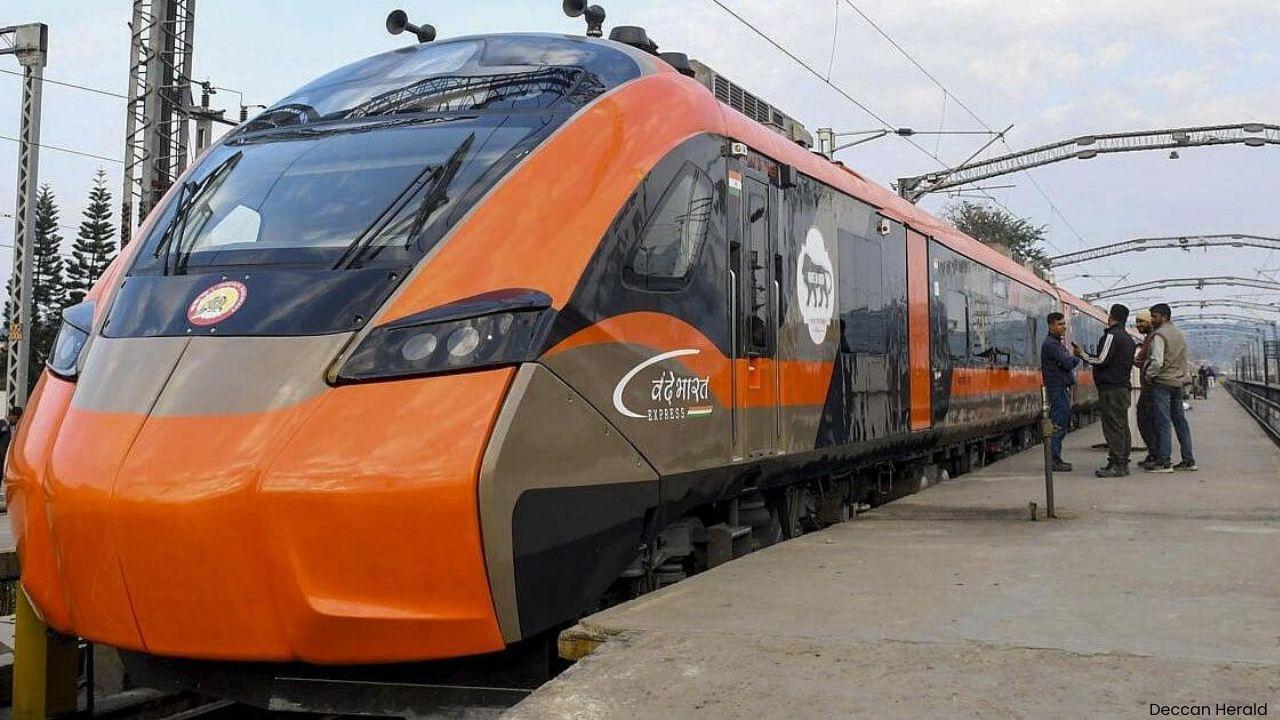
India’s transportation landscape is on the brink of a transformative leap as the much-anticipated Mumbai–Bengaluru Vande Bharat Sleeper service receives official approval, signaling a new era in long-distance rail travel. This development is not just another addition to the expanding Vande Bharat network—it represents a strategic shift toward premium, high-speed overnight connectivity between two of India’s most economically dynamic cities. As infrastructure modernization gains momentum, this project stands out as a defining milestone in reshaping intercity mobility across the country.
The newly approved sleeper service will connect Mumbai’s Chhatrapati Shivaji Maharaj Terminus with Bengaluru’s KSR station, creating a crucial high-speed corridor linking India’s financial capital with its tech powerhouse. Designed as an overnight service, the train aims to significantly reduce travel time compared to existing options, which currently take over 20–22 hours to complete the journey.
With an expected journey time of approximately 16 to 17 hours, the service is poised to offer a faster, more efficient alternative to traditional long-distance trains, while maintaining the comfort of overnight travel. This positions the Vande Bharat Sleeper as a hybrid solution combining speed with rest making it particularly attractive for business travelers, professionals, and long-distance commuters.
What sets the Vande Bharat Sleeper apart is its next-generation design focused on passenger comfort and safety. The train is expected to feature modern sleeping berths, advanced suspension systems for smoother rides, automatic doors, and upgraded onboard facilities, all engineered to deliver a premium travel experience.
With a 16-coach configuration capable of accommodating over 800 passengers, the train will also enhance capacity on one of India’s busiest corridors. This blend of efficiency and comfort reflects Indian Railways’ broader vision of transforming long-distance travel into a seamless, high-quality experience that rivals air travel in convenience while remaining cost-effective.
The approval of this route aligns with Indian Railways’ larger plan to deploy Vande Bharat Sleeper trains across long-distance corridors ranging between 1,000 to 1,500 kilometers segments that are ideal for overnight journeys.
Unlike traditional express trains, these new-generation sleeper trains are designed to operate at higher speeds with improved energy efficiency and reduced travel times. The Mumbai–Bengaluru corridor, with its high passenger demand and economic significance, emerges as a natural candidate for this upgrade. This initiative not only strengthens connectivity but also supports regional economic integration by enabling faster movement of people across key industrial and IT hubs.
While the service has been approved, final details regarding route alignment, stoppages, and operational timelines are still being finalized. Preliminary expectations suggest that the train could operate via key junctions such as Pune, Solapur, and Guntakal, ensuring connectivity across multiple regions.
The introduction of dual rakes one originating from each city will enable a daily overnight service, ensuring consistent connectivity in both directions. This operational model is designed to maximize efficiency while maintaining high service frequency, a critical factor in meeting growing passenger demand.
The Mumbai–Bengaluru Vande Bharat Sleeper is more than just a new train, it represents a shift in how Indians perceive long-distance travel. By offering a faster, more comfortable alternative to traditional trains and a more affordable option compared to air travel, it has the potential to reshape passenger preferences across the corridor.
For Indian Railways, this move also signals a strategic push toward premiumization, where quality, speed, and customer experience become central to service offerings. As competition with airlines intensifies, innovations like the Vande Bharat Sleeper could redefine the value proposition of rail travel in India.
The approval of the Mumbai–Bengaluru Vande Bharat Sleeper marks a critical step in India’s journey toward a modern, efficient, and passenger-centric rail network. It reflects a broader vision of integrating speed, comfort, and accessibility into a single transport solution that caters to the evolving needs of a growing economy.
As India continues to invest in next-generation rail infrastructure, projects like this will play a pivotal role in shaping the future of mobility where distance shrinks, time becomes more valuable, and travel transforms into an experience rather than just a necessity.
#trending #latest#VandeBharatSleeper #IndianRailways #HighSpeedRail #SmartMobility #RailInnovation







Advances in Aerospace Technology and Commercial Aviation Recovery
Insights into breakthrough aerospace technologies and commercial aviation’s recovery amid 2025 chall

Defense Modernization and Strategic Spending Trends
Explore key trends in global defense modernization and strategic military spending shaping 2025 secu

Tens of Thousands Protest in Serbia on Anniversary of Deadly Roof Collapse
Tens of thousands in Novi Sad mark a year since a deadly station roof collapse that killed 16, prote

Canada PM Carney Apologizes to Trump Over Controversial Reagan Anti-Tariff Ad
Canadian PM Mark Carney apologized to President Trump over an Ontario anti-tariff ad quoting Reagan,

The ad that stirred a hornets nest, and made Canadian PM Carney say sorry to Trump
Canadian PM Mark Carney apologizes to US President Trump after a tariff-related ad causes diplomatic

Bengaluru-Mumbai Superfast Train Approved After 30-Year Wait
Railways approves new superfast train connecting Bengaluru and Mumbai, ending a 30-year demand, easi



