Post by : Avinab Raana
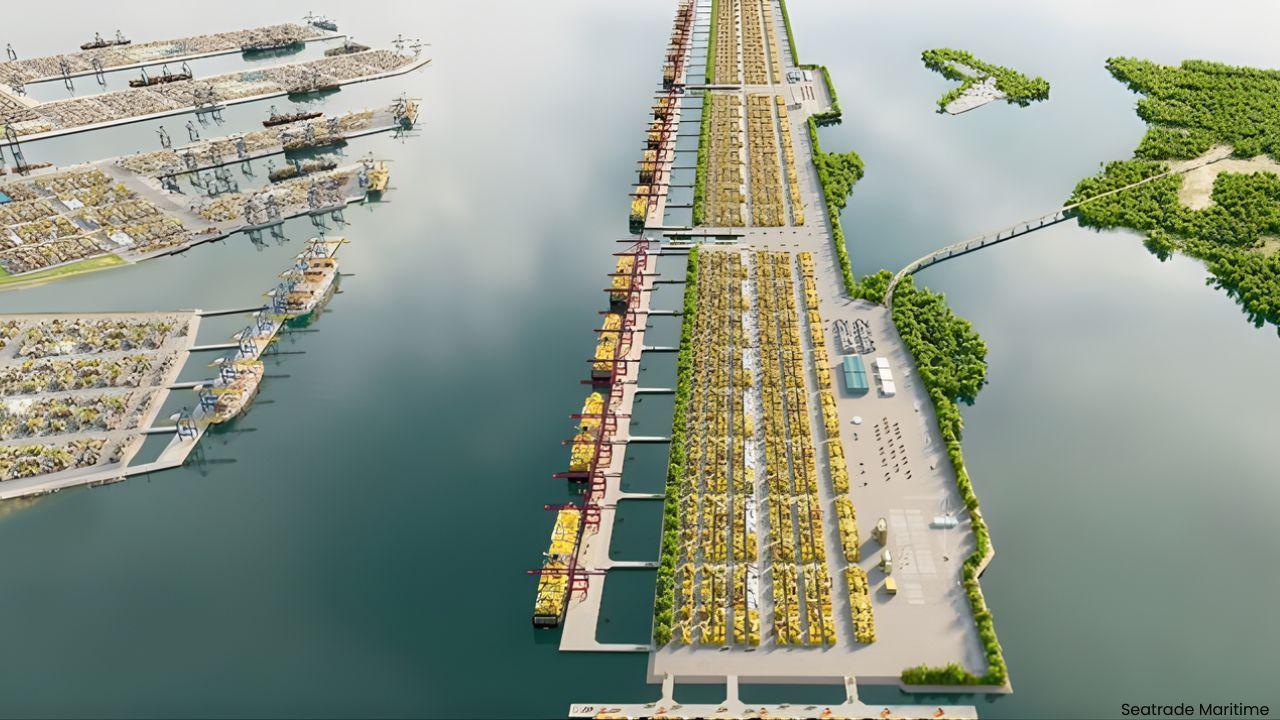
Photo : X / Seatrade Maritime
Vietnam is positioning itself at the center of global trade transformation, and the latest move by MSC, one of the world’s largest container shipping companies marks a defining step in that journey. By joining a strategic joint venture to develop a massive transshipment port in Ho Chi Minh City, MSC is not just investing in infrastructure; it is betting on Vietnam’s emergence as a critical node in global supply chains. At a time when shipping routes are being reconfigured due to geopolitical and economic shifts, this project signals a powerful realignment in Asia-Pacific maritime logistics.
The project, known as the Can Gio International Transshipment Port, represents an investment of approximately $5 billion and will be developed through a consortium comprising Vietnam Maritime Corporation, Saigon Port, and Terminal Investment Limited (TiL) MSC’s port investment arm. TiL is expected to hold a 49% stake, highlighting MSC’s strong commitment to the project’s long-term success.
Spanning nearly 571 hectares, the port will feature an extensive berth system stretching around 7.5 kilometers, designed to accommodate some of the world’s largest container vessels. This scale of development reflects the ambition to transform Ho Chi Minh City into a global transshipment powerhouse capable of competing with established hubs across Southeast Asia.
The port is expected to handle up to 4.8 million TEUs annually by 2030, with long-term projections reaching an impressive 16.9 million TEUs by 2047. These figures place Can Gio among the most ambitious port projects in the region, with the potential to significantly reshape container traffic patterns across Asia.
In its initial phase, the facility will include two to four terminals capable of handling ultra-large vessels of up to 250,000 deadweight tonnage, with future expansion plans targeting up to 13 terminals. This phased development strategy ensures scalability, allowing the port to grow in tandem with rising global trade demand.
Currently, a significant portion of Vietnam’s international container cargo is transshipped through regional hubs such as Singapore and Malaysia, increasing logistics costs and dependency on foreign infrastructure. The Can Gio project aims to reverse this trend by creating a domestic transshipment hub that can handle large-scale international cargo flows directly.
This shift is not just about cost efficiency, it is about strategic autonomy. By developing its own high-capacity transshipment infrastructure, Vietnam can strengthen its position in global logistics chains while reducing reliance on external ports. For MSC, this translates into greater control over cargo flows and improved network efficiency across its global operations.
To ensure the project’s timely execution and long-term viability, authorities have imposed strict conditions on the investor consortium. The partners are required to disburse at least $1.9 billion within the first decade and complete the full development within 20 years, while also maintaining operational balance with existing nearby ports.
Additionally, the project cannot be transferred within the first 10 years, ensuring stability and commitment from all stakeholders. These measures reflect the government’s intent to maintain strategic oversight while encouraging large-scale private investment in critical infrastructure.
MSC’s involvement in the project further solidifies its expanding presence in Vietnam, where it already operates extensive shipping routes connecting key ports such as Hai Phong, Da Nang, and Cai Mep–Thi Vai. The company currently handles over one million TEUs of Vietnam’s import-export cargo annually, underscoring its significant role in the country’s maritime ecosystem.
By investing directly in port infrastructure, MSC is not only enhancing its operational capabilities but also securing a strategic foothold in one of the fastest-growing logistics markets in the world. This move aligns with a broader industry trend where shipping lines are increasingly integrating vertically into port operations to optimize efficiency and profitability.
The development of the Can Gio transshipment port is expected to have far-reaching implications for the global shipping industry. As supply chains continue to evolve, the need for efficient, high-capacity hubs is becoming more critical than ever. This project positions Vietnam as a serious contender in the regional logistics race, challenging established hubs and attracting new trade flows.
For the maritime industry, the message is clear: the future of global logistics will be shaped by strategic investments in infrastructure, and Vietnam is stepping forward as a key player in that transformation. As the Can Gio port takes shape, it promises not just to move cargo but to redefine the dynamics of global trade connectivity.
#trending #latest#MSC #VietnamPort #TransshipmentHub #GlobalLogistics #MaritimeGrowth








Advances in Aerospace Technology and Commercial Aviation Recovery
Insights into breakthrough aerospace technologies and commercial aviation’s recovery amid 2025 chall

Defense Modernization and Strategic Spending Trends
Explore key trends in global defense modernization and strategic military spending shaping 2025 secu

Tens of Thousands Protest in Serbia on Anniversary of Deadly Roof Collapse
Tens of thousands in Novi Sad mark a year since a deadly station roof collapse that killed 16, prote

Canada PM Carney Apologizes to Trump Over Controversial Reagan Anti-Tariff Ad
Canadian PM Mark Carney apologized to President Trump over an Ontario anti-tariff ad quoting Reagan,

The ad that stirred a hornets nest, and made Canadian PM Carney say sorry to Trump
Canadian PM Mark Carney apologizes to US President Trump after a tariff-related ad causes diplomatic

Bengaluru-Mumbai Superfast Train Approved After 30-Year Wait
Railways approves new superfast train connecting Bengaluru and Mumbai, ending a 30-year demand, easi



