Post by : Avinab Raana
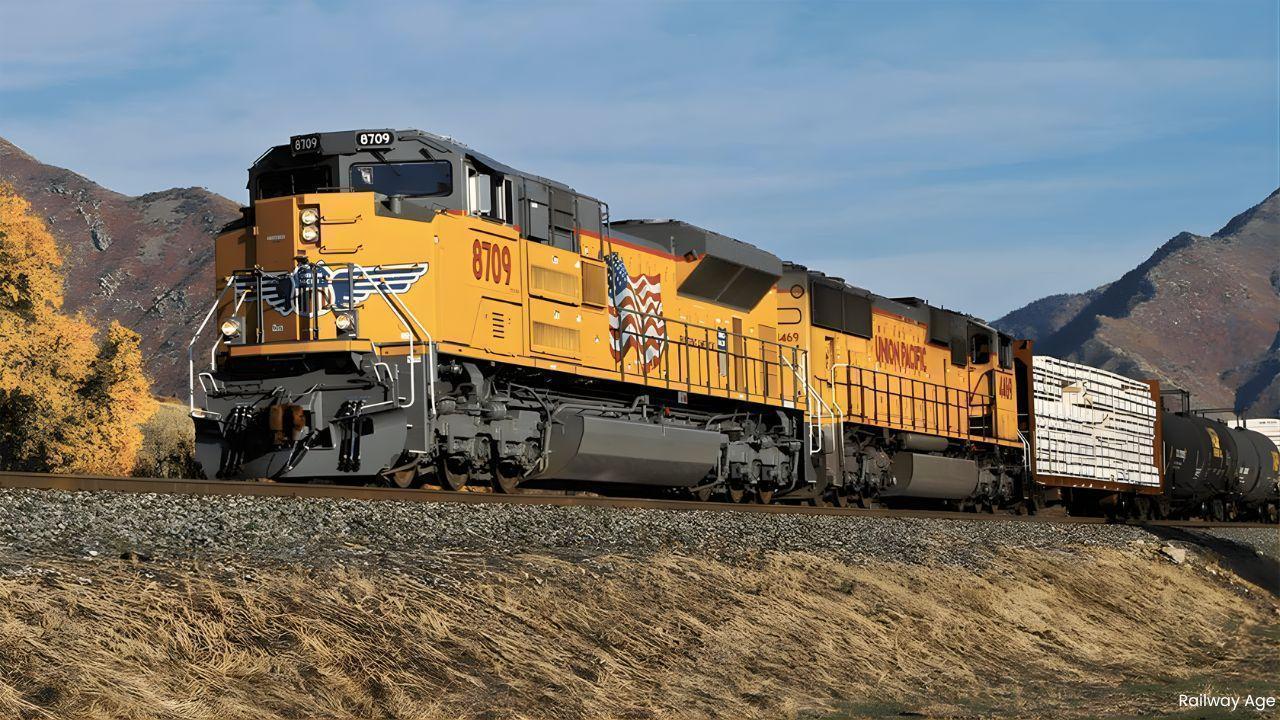
Photo : X / Railway Age
In a strategic move that underscores the importance of domestic supply chains, Union Pacific has signed a long-term agreement with Rocky Mountain Steel Mills for the production of steel rails in the United States. At a time when global supply chains are being re-evaluated for resilience and reliability, this deal represents far more than a procurement contract, it is a clear signal that domestic manufacturing is regaining prominence in critical infrastructure sectors. The agreement reflects a growing realization that national transportation networks depend heavily on secure, local supply ecosystems.
The agreement, set to run for seven years, ensures a steady supply of steel rails produced entirely within the United States, specifically from the Pueblo, Colorado facility currently the country’s only dedicated rail production site.This commitment highlights Union Pacific’s strategic focus on sourcing the majority of its rail materials domestically, reducing reliance on international suppliers and mitigating risks associated with global disruptions. The deal also brings closure to previous legal disputes between the two companies, signaling a renewed partnership built on long-term collaboration and mutual growth.
Central to this agreement is a newly developed long-rail mill at the Pueblo site, backed by an investment exceeding $1 billion. This state-of-the-art facility is designed to produce steel rails up to 100 meters in length, significantly longer than traditional rail sections.The impact of this innovation is substantial. Longer rail sections reduce the number of welds required during track installation by up to 80%, improving overall track durability, safety, and maintenance efficiency.Additionally, the facility is powered by a large-scale solar installation, positioning it as one of the most sustainable steel production sites globally. This combination of advanced manufacturing and renewable energy integration reflects a broader shift toward environmentally responsible infrastructure development.
The relationship between Union Pacific and Rocky Mountain Steel spans nearly 140 years, dating back to the late 19th century.This long-standing partnership has played a critical role in supporting the expansion of rail networks across the western United States, contributing to industrial growth and economic development. From early railroad expansion to wartime production surges, the collaboration has consistently aligned with national infrastructure needs.The renewed agreement not only strengthens this legacy but also reaffirms the importance of maintaining domestic industrial capabilities in a rapidly evolving global economy.
Beyond infrastructure, the deal carries significant implications for employment and regional economic stability. The Pueblo facility, operated by skilled members of the United Steelworkers union, is expected to see sustained job security and potential workforce expansion as production scales up.This aligns with broader economic goals of revitalizing American manufacturing hubs and supporting local communities that depend on industrial activity. By prioritizing domestic sourcing, Union Pacific is contributing to job creation while reinforcing the resilience of the national supply chain.
The agreement comes at a pivotal moment for Union Pacific, as the company explores a potential merger that could create the first transcontinental railroad network in the United States.In this context, securing a reliable domestic rail supply becomes even more critical. A unified transcontinental network would require consistent, high-quality infrastructure materials, and this partnership ensures that Union Pacific is well-positioned to meet those demands. The move also reflects a broader industry trend toward vertical integration and supply chain control, particularly in sectors where reliability and safety are paramount.
The Union Pacific–Rocky Mountain Steel agreement is more than a contract, it is a blueprint for the future of rail infrastructure. It highlights how strategic partnerships, technological innovation, and domestic manufacturing can converge to create a more resilient and efficient transportation system. As global supply chains continue to face uncertainty, investments like this will define the next phase of infrastructure development. For the rail industry, the message is clear: the future lies in strengthening local capabilities while embracing innovation to build networks that are not only faster and stronger but also more sustainable and secure.
#trending #latest#UnionPacific #RailInfrastructure #SteelSupply #USManufacturing #RailIndustry









Advances in Aerospace Technology and Commercial Aviation Recovery
Insights into breakthrough aerospace technologies and commercial aviation’s recovery amid 2025 chall

Defense Modernization and Strategic Spending Trends
Explore key trends in global defense modernization and strategic military spending shaping 2025 secu

Tens of Thousands Protest in Serbia on Anniversary of Deadly Roof Collapse
Tens of thousands in Novi Sad mark a year since a deadly station roof collapse that killed 16, prote

Canada PM Carney Apologizes to Trump Over Controversial Reagan Anti-Tariff Ad
Canadian PM Mark Carney apologized to President Trump over an Ontario anti-tariff ad quoting Reagan,

The ad that stirred a hornets nest, and made Canadian PM Carney say sorry to Trump
Canadian PM Mark Carney apologizes to US President Trump after a tariff-related ad causes diplomatic

Bengaluru-Mumbai Superfast Train Approved After 30-Year Wait
Railways approves new superfast train connecting Bengaluru and Mumbai, ending a 30-year demand, easi



