Post by : Avinab Raana
Photo : X / Splash
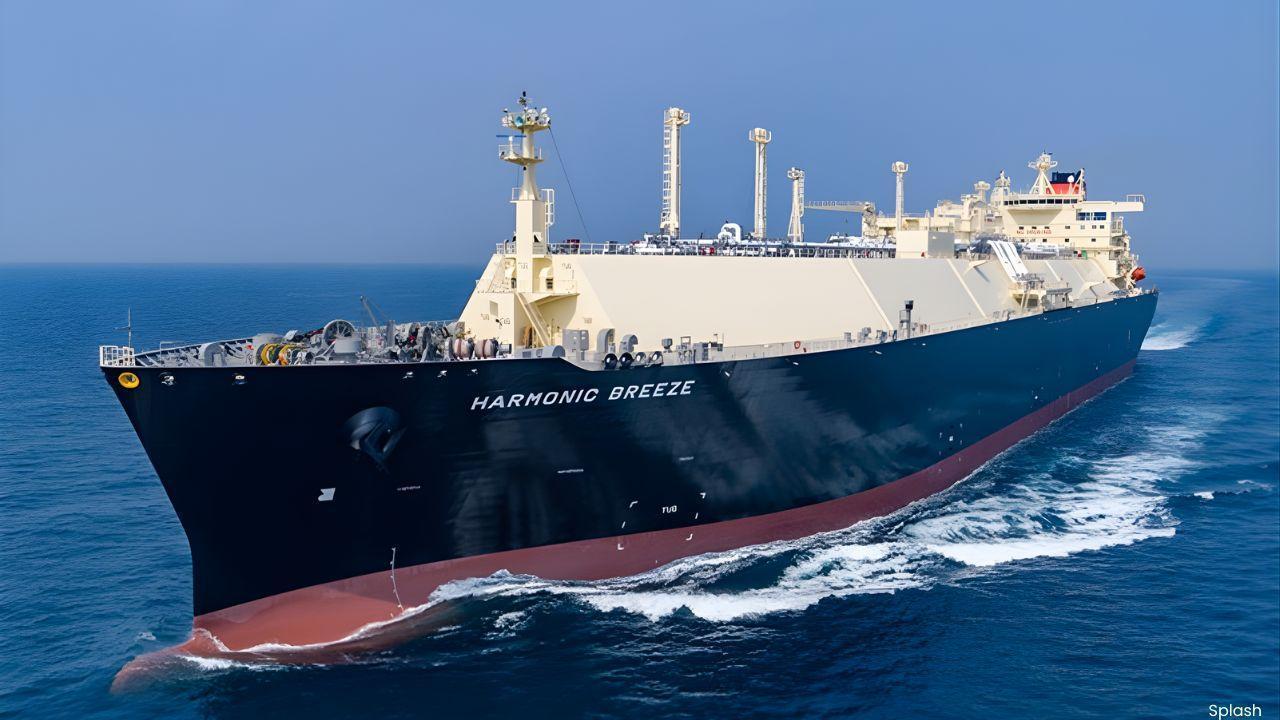
In a landmark moment for the global maritime industry, Mitsui O.S.K. Lines (MOL) has successfully retrofitted a coal carrier with its innovative hard sail wind propulsion system, marking the first time such technology has been installed on an in-service vessel. This development is not just a technological milestone, it represents a powerful shift in how the shipping industry is approaching decarbonisation in an era of tightening environmental regulations and rising fuel costs. By harnessing wind energy to assist propulsion, MOL is effectively bringing one of the oldest forms of maritime power into the most modern phase of shipping innovation. As the industry faces mounting pressure to reduce emissions while maintaining operational efficiency, this breakthrough demonstrates that alternative propulsion solutions are no longer theoretical—they are becoming commercially viable realities shaping the future of global transport.
At the heart of this innovation lies the “Wind Challenger,” a telescoping hard sail system developed jointly by MOL and Oshima Shipbuilding, designed to convert wind energy directly into propulsive force for large vessels. Unlike traditional sails, this system uses advanced materials and automated control mechanisms to optimize performance based on wind conditions, ensuring maximum efficiency without compromising operational safety.
The sail structure, which can extend vertically and adjust dynamically, allows vessels to capture wind energy even during long-haul voyages, reducing reliance on conventional fuel-based propulsion. This hybrid approach blends traditional engine systems with renewable energy inputs, creating a more sustainable and efficient operational model for bulk carriers transporting commodities such as coal.
What makes this achievement particularly significant is that it marks the first successful retrofit of the Wind Challenger system on an existing vessel, rather than a newly built ship. This distinction is crucial, as retrofitting offers a scalable pathway for decarbonising the current global fleet without waiting for new ship deliveries.
The vessel, now equipped with the hard sail system, will operate under long-term contracts transporting coal, demonstrating that even traditional energy supply chains can adopt greener technologies without disrupting operations. This sets a precedent for other shipping companies to follow, as retrofitting existing vessels is often more cost-effective and quicker to implement compared to building entirely new eco-friendly ships.
The introduction of wind-assisted propulsion is not just about sustainability it also delivers tangible economic benefits. Operational data from earlier deployments of the Wind Challenger system has shown fuel consumption reductions of up to 17% in optimal conditions and an average of 5% to 8% per voyage.
These savings translate directly into lower operating costs and reduced greenhouse gas emissions, making the technology attractive for shipowners navigating both environmental regulations and volatile fuel prices. In a sector where fuel accounts for a significant portion of operational expenses, even modest efficiency gains can have a substantial financial impact over time.
MOL’s investment in wind propulsion aligns with its broader ambition to achieve net-zero greenhouse gas emissions by 2050, reflecting a wider industry trend toward adopting alternative energy solutions. The company has already outlined plans to expand the use of Wind Challenger systems across its fleet, with targets to deploy dozens of such vessels in the coming years.
This move also highlights the growing importance of hybrid propulsion systems in bridging the gap between current fuel-based operations and future zero-emission technologies. As the maritime sector explores options such as hydrogen, ammonia, and electrification, wind-assisted propulsion offers an immediate, practical solution that can be integrated into existing fleets.
The successful retrofit of a hard sail wind system on a coal carrier marks a turning point in the evolution of maritime transport, where innovation meets tradition to create a more sustainable future. It demonstrates that even industries deeply rooted in fossil fuel supply chains can take meaningful steps toward reducing their environmental impact.
As global shipping continues to face increasing scrutiny over emissions and sustainability, breakthroughs like this will play a crucial role in shaping the next phase of maritime operations. The return of wind power once the backbone of global trade now reimagined through cutting-edge technology, signals a future where efficiency, sustainability, and innovation move forward together. In that future, the ships crossing the world’s oceans will not just carry cargo, they will carry the momentum of a cleaner, smarter, and more responsible global transport system.
#trending #latest#WindChallenger #GreenShipping #MOL #Decarbonisation #MaritimeInnovation









Advances in Aerospace Technology and Commercial Aviation Recovery
Insights into breakthrough aerospace technologies and commercial aviation’s recovery amid 2025 chall

Defense Modernization and Strategic Spending Trends
Explore key trends in global defense modernization and strategic military spending shaping 2025 secu

Tens of Thousands Protest in Serbia on Anniversary of Deadly Roof Collapse
Tens of thousands in Novi Sad mark a year since a deadly station roof collapse that killed 16, prote

Canada PM Carney Apologizes to Trump Over Controversial Reagan Anti-Tariff Ad
Canadian PM Mark Carney apologized to President Trump over an Ontario anti-tariff ad quoting Reagan,

The ad that stirred a hornets nest, and made Canadian PM Carney say sorry to Trump
Canadian PM Mark Carney apologizes to US President Trump after a tariff-related ad causes diplomatic

Bengaluru-Mumbai Superfast Train Approved After 30-Year Wait
Railways approves new superfast train connecting Bengaluru and Mumbai, ending a 30-year demand, easi



