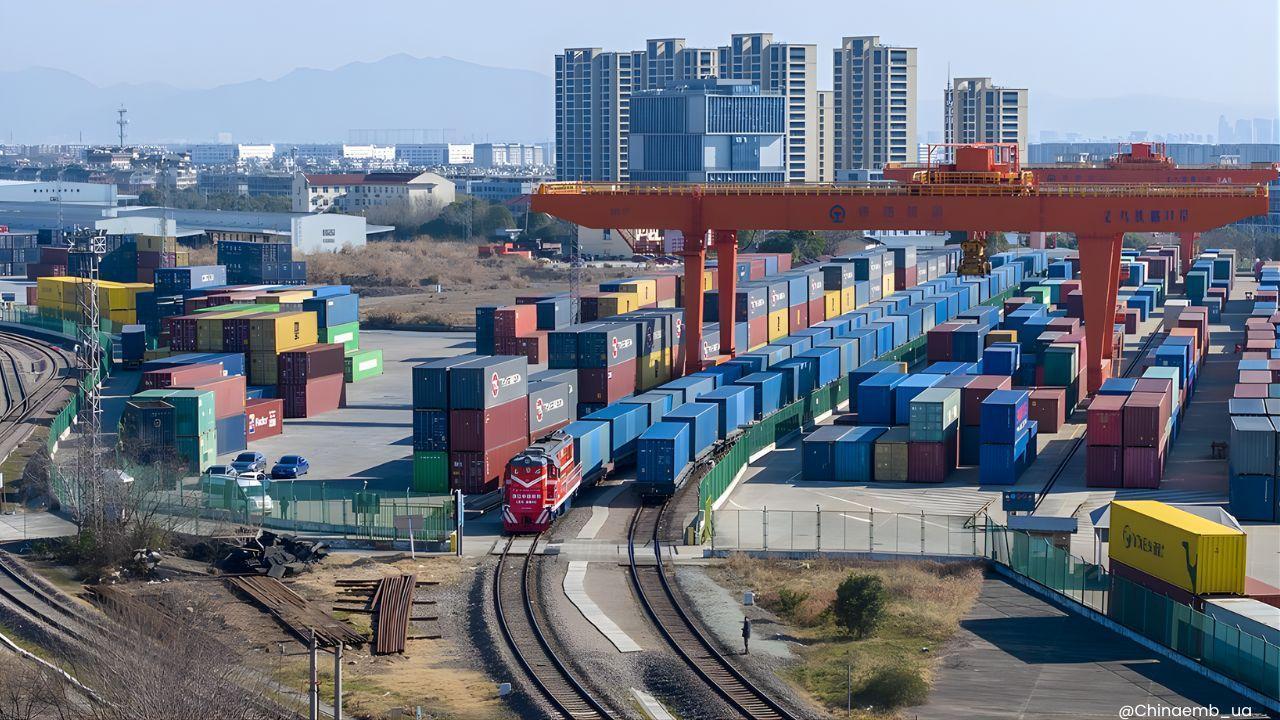
Post by : Avinab Raana
Photo : X / @Chinaemb_ua
In a significant step toward strengthening regional trade corridors, a new direct shipping service connecting India, Vietnam, and Thailand has officially commenced operations, with Gateway Terminals India (GTI) welcoming its first vessel marking the beginning of a transformative maritime link between South Asia and Southeast Asia. This development is more than just a new shipping route; it represents a strategic shift in how cargo moves across some of the world’s fastest-growing economies. By establishing a direct weekly service, the initiative eliminates reliance on traditional transshipment hubs, offering a faster, more reliable, and cost-efficient logistics pathway. As global trade increasingly prioritizes speed and efficiency, this new corridor positions India at the center of a rapidly evolving maritime network that is reshaping regional supply chains and unlocking new economic opportunities.
The newly launched Vietnam–Thailand–India (VTI) service introduces a direct weekly maritime connection, significantly reducing transit times by bypassing intermediate transshipment ports. This direct route ensures smoother cargo movement, minimizes handling delays, and enhances overall reliability factors that are becoming increasingly critical for time-sensitive shipments such as electronics, textiles, and industrial goods.
By streamlining logistics processes, the service addresses one of the biggest challenges in international trade: unpredictability. The elimination of multiple port transfers not only reduces the risk of delays but also lowers logistics costs, making the route more attractive for exporters and importers alike.
The launch of this shipping service comes at a time when trade between India and Southeast Asia is witnessing steady growth, driven by expanding economic ties and increasing demand for cross-border goods. The new corridor is expected to further accelerate this momentum by providing a reliable and efficient transportation link between key markets.
For India, this initiative aligns with its broader strategy of enhancing connectivity with ASEAN nations, supporting both export growth and supply chain diversification. For Vietnam and Thailand, the service offers improved access to Indian markets, enabling faster movement of goods and strengthening bilateral trade relationships.
The arrival of the first vessel at GTI underscores the terminal’s growing importance as a major logistics hub within India’s maritime ecosystem. Operated as a joint venture between global and domestic logistics players, GTI is playing a pivotal role in facilitating international trade by offering advanced infrastructure and efficient port operations.
By hosting this new service, GTI is reinforcing its position as a key gateway for cargo movement between India and Southeast Asia. The terminal’s ability to handle increasing volumes and support new shipping routes reflects the broader transformation of India’s port infrastructure, which is rapidly evolving to meet the demands of global trade.
The impact of this new shipping corridor extends beyond logistics, offering tangible benefits to a wide range of industries that depend on efficient trade routes. From manufacturing and agriculture to retail and electronics, improved connectivity translates into faster delivery times, reduced costs, and enhanced competitiveness in international markets.
In an era where supply chain resilience has become a top priority, the ability to move goods efficiently across regions is a critical advantage. This service provides an alternative route that reduces dependency on congested transshipment hubs, ensuring greater stability and reliability in global trade operations.
The launch of the India–Vietnam Thailand shipping service marks a pivotal moment in the evolution of regional maritime connectivity, highlighting how targeted infrastructure and strategic partnerships can reshape global trade dynamics. By creating a direct, efficient link between key markets, the initiative not only enhances logistics performance but also strengthens economic integration across regions.
As global trade continues to evolve, such developments will play a crucial role in determining how efficiently goods move across borders and how countries position themselves within international supply chains. This new service is more than just a shipping route. It is a symbol of a more connected, efficient, and resilient global trade network, where speed, reliability, and strategic vision define the future of maritime logistics.
#trending #latest#ShippingService #IndiaTrade #SoutheastAsia #MaritimeLogistics #GlobalTrade









Advances in Aerospace Technology and Commercial Aviation Recovery
Insights into breakthrough aerospace technologies and commercial aviation’s recovery amid 2025 chall

Defense Modernization and Strategic Spending Trends
Explore key trends in global defense modernization and strategic military spending shaping 2025 secu

Tens of Thousands Protest in Serbia on Anniversary of Deadly Roof Collapse
Tens of thousands in Novi Sad mark a year since a deadly station roof collapse that killed 16, prote

Canada PM Carney Apologizes to Trump Over Controversial Reagan Anti-Tariff Ad
Canadian PM Mark Carney apologized to President Trump over an Ontario anti-tariff ad quoting Reagan,

The ad that stirred a hornets nest, and made Canadian PM Carney say sorry to Trump
Canadian PM Mark Carney apologizes to US President Trump after a tariff-related ad causes diplomatic

Bengaluru-Mumbai Superfast Train Approved After 30-Year Wait
Railways approves new superfast train connecting Bengaluru and Mumbai, ending a 30-year demand, easi



