Post by : Saif
Oil prices fell by more than $1 on Thursday as investors reacted to hopes that diplomatic talks could help reopen the Strait of Hormuz and ease disruptions to global energy supplies.
Brent crude futures dropped $1.07, or 1.2%, to $86.77 a barrel, putting the benchmark on track for a fourth consecutive session of losses. West Texas Intermediate crude fell $1.13, or 1.4%, to $81.10 a barrel and was heading toward a fifth straight day of declines.
Expectations of progress in talks involving Iran and Qatar have reduced some concerns about prolonged disruptions through the Strait of Hormuz.
Iran and Oman are also working on details of an agreement related to control of the strategically important waterway, according to an Iranian source.
The prospect of improved access through the strait has encouraged traders to reduce some of the risk premium built into crude prices since the Middle East conflict disrupted energy shipments.
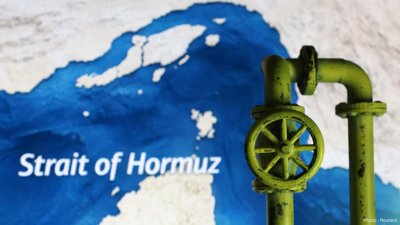
The Strait of Hormuz is one of the world's most important energy shipping routes.
Before the conflict began, oil and liquefied natural gas shipments passing through the waterway represented roughly one-fifth of global consumption of those fuels.
Oil flows through the strait have fallen sharply since Iran moved to restrict the waterway. Ship-tracking data indicates that current flows are around one-quarter of pre-war levels.
Any agreement that allows normal shipping activity to resume could significantly improve expectations for global crude supplies.
Qatar's prime minister is expected to travel to Iran to restart diplomatic efforts aimed at ending the conflict.
The war has continued for nearly six months, while diplomatic efforts have struggled to bridge differences between the parties.
The United States has halted attacks on Iran for about a month while continuing efforts to increase economic pressure on Tehran.
Markets have interpreted the pause and renewed diplomatic activity as possible signs that disruptions to Gulf energy supplies could eventually ease.
Despite the decline in oil prices, analysts continue to warn that the global supply outlook remains uncertain.
Iran and other countries involved in the conflict remain divided over the conditions needed to end the fighting.
Iran has also targeted shipping in the Gulf and the Strait of Hormuz as part of its efforts to maintain control over the waterway.
Iranian officials have said the strait would not fully reopen unless the United States met conditions linked to an interim ceasefire agreement reached in June that later broke down.
Analysts said some risk premium remains built into crude prices because of uncertainty surrounding Middle East supplies.
ANZ senior commodity strategist Daniel Hynes said crude prices had moved lower as expectations for a reopening of the Strait of Hormuz improved, but concerns about possible shortages remained.
Phillip Nova market insights head Priyanka Sachdeva said disagreements over Iran's nuclear programme were unlikely to be resolved quickly.
She also pointed to Iran's geographic position and control over the Strait of Hormuz as sources of continued leverage.
As long as supply risks remain, oil prices could continue to carry a premium linked to the conflict.
The impact of the Middle East conflict is also being felt in the global diesel market.
Refineries in the Middle East have suffered damage, while Ukrainian attacks on Russian refineries have affected production and exports from Russia, which has historically been a major diesel supplier.
Reduced refinery output is increasingly visible in inventory data.
Read more: South Korea Condemns Attack on Cargo Ship in Strait of Hormuz
US Energy Information Administration data showed that distillate inventories, which include diesel and heating oil, fell by 2.2 million barrels during the week ending August 21.
Inventories stood at 103.4 million barrels after the decline.
Falling stockpiles could add pressure to fuel markets if refinery disruptions and international supply problems continue.
Oil traders are closely monitoring diplomatic developments because any agreement that restores shipping through the Strait of Hormuz could bring more crude and fuel supplies to international markets.
A sustained reopening would likely reduce fears of shortages and put additional downward pressure on oil prices.
However, continued conflict, uncertainty over negotiations and damage to regional refining infrastructure could keep supply risks elevated.
#trending #latest #OilPrices #CrudeOil #BrentCrude #WTI #StraitOfHormuz #MiddleEast #Iran #Qatar #Oman #OilMarket #EnergyMarket #GlobalEconomy #OilSupply #EnergyCrisis #Geopolitics #MiddleEastCrisis #GlobalOil






Advances in Aerospace Technology and Commercial Aviation Recovery
Insights into breakthrough aerospace technologies and commercial aviation’s recovery amid 2025 chall

Defense Modernization and Strategic Spending Trends
Explore key trends in global defense modernization and strategic military spending shaping 2025 secu

Tens of Thousands Protest in Serbia on Anniversary of Deadly Roof Collapse
Tens of thousands in Novi Sad mark a year since a deadly station roof collapse that killed 16, prote

Canada PM Carney Apologizes to Trump Over Controversial Reagan Anti-Tariff Ad
Canadian PM Mark Carney apologized to President Trump over an Ontario anti-tariff ad quoting Reagan,

The ad that stirred a hornets nest, and made Canadian PM Carney say sorry to Trump
Canadian PM Mark Carney apologizes to US President Trump after a tariff-related ad causes diplomatic

Bengaluru-Mumbai Superfast Train Approved After 30-Year Wait
Railways approves new superfast train connecting Bengaluru and Mumbai, ending a 30-year demand, easi



