Post by : Avinab Raana
Photo : X / Splash
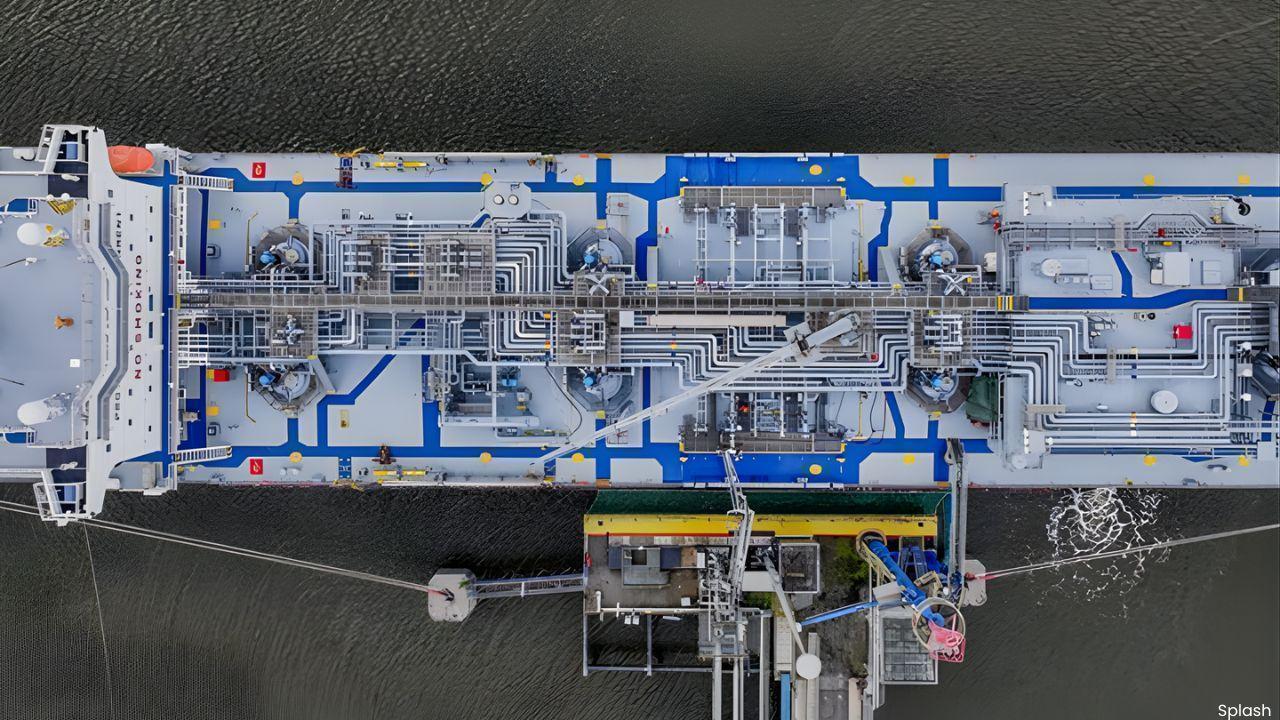
Singapore’s ambition to lead the global maritime energy transition has taken a decisive leap forward, as a new partnership focused on ammonia bunkering begins to reshape the future of marine fuel. At a time when the shipping industry is under immense pressure to cut emissions, this collaboration signals not just progress but a strategic acceleration toward a zero-carbon shipping ecosystem anchored in one of the world’s busiest ports.
The partnership brings together major players from shipping, fuel supply, and energy sectors to jointly explore the marketing and supply of low-carbon ammonia as a marine fuel. This move is particularly significant because it goes beyond theoretical frameworks, aiming to create a commercially viable ammonia supply chain in Singapore already the world’s largest bunkering hub. The involvement of global maritime leaders highlights a growing industry consensus that ammonia could become a cornerstone fuel in the decarbonization journey.
Ammonia is increasingly being viewed as one of the most promising alternatives to traditional marine fuels due to its ability to produce zero carbon dioxide emissions at the point of combustion. As global regulations tighten and shipping companies seek cleaner alternatives, ammonia offers a scalable and long-term solution. The latest collaboration reinforces this narrative, focusing on building infrastructure, supply chains, and market readiness, all critical factors for widespread adoption.
Singapore is not just participating in the energy transition, it is actively shaping it. The country has been steadily building an ammonia value chain that integrates both power generation and marine fuel applications. Government-backed initiatives led by maritime and energy authorities aim to position Singapore as a central hub for low- and zero-carbon fuels. This partnership aligns seamlessly with that broader vision, strengthening the port’s competitive edge in a rapidly evolving global market.
What sets this development apart is its focus on moving ammonia bunkering from experimental phases to real-world application. The collaboration is expected to address key challenges such as safety protocols, logistics infrastructure, and supply reliability areas that have historically slowed down adoption. With previous feasibility studies, vessel design initiatives, and demonstration projects already underway, the industry appears to be transitioning from concept to execution at an unprecedented pace.
The ripple effects of this partnership extend far beyond Singapore. As one of the most influential maritime hubs globally, developments here often set benchmarks for the rest of the industry. A successful ammonia bunkering ecosystem in Singapore could trigger similar investments and collaborations worldwide, accelerating the shift toward sustainable shipping. It also signals to shipowners, investors, and policymakers that the era of alternative fuels is no longer a distant goal but an immediate priority.
Despite the momentum, challenges remain. The safe handling of ammonia, infrastructure readiness, and cost competitiveness will determine how quickly the fuel gains mainstream acceptance. However, with strong industry collaboration and government backing, Singapore appears well-positioned to overcome these hurdles. The latest partnership is not just another agreement, it is a clear statement that the maritime industry is entering a transformative phase where innovation and sustainability will define the next era of global trade.
#trending #latest#AmmoniaBunkering #SingaporeShipping #GreenMarineFuel #Decarbonization






Advances in Aerospace Technology and Commercial Aviation Recovery
Insights into breakthrough aerospace technologies and commercial aviation’s recovery amid 2025 chall

Defense Modernization and Strategic Spending Trends
Explore key trends in global defense modernization and strategic military spending shaping 2025 secu

Tens of Thousands Protest in Serbia on Anniversary of Deadly Roof Collapse
Tens of thousands in Novi Sad mark a year since a deadly station roof collapse that killed 16, prote

Canada PM Carney Apologizes to Trump Over Controversial Reagan Anti-Tariff Ad
Canadian PM Mark Carney apologized to President Trump over an Ontario anti-tariff ad quoting Reagan,

The ad that stirred a hornets nest, and made Canadian PM Carney say sorry to Trump
Canadian PM Mark Carney apologizes to US President Trump after a tariff-related ad causes diplomatic

Bengaluru-Mumbai Superfast Train Approved After 30-Year Wait
Railways approves new superfast train connecting Bengaluru and Mumbai, ending a 30-year demand, easi



