Post by : Avinab Raana
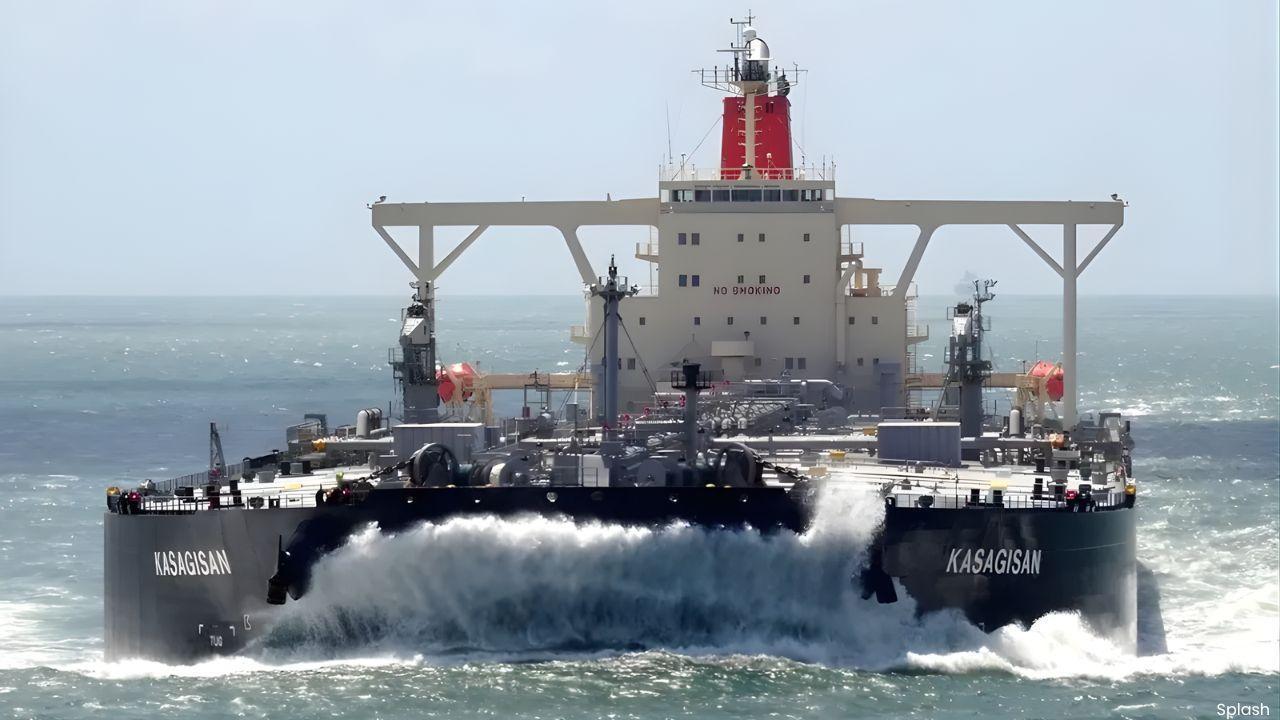
Photo : X / Splash
In an industry where every nautical mile translates into cost, emissions, and operational risk, BigOceanData has taken a decisive step toward redefining how ships navigate the world’s oceans. The company’s latest addition route optimisation integrated into its maritime platform signals a powerful shift toward smarter, data-driven voyage planning that goes far beyond traditional navigation practices. At a time when global shipping is grappling with rising fuel costs, tightening environmental regulations, and increasing operational complexity, this innovation positions BigOceanData at the forefront of a transformation where digital intelligence becomes the backbone of maritime decision-making. This is not just another software upgrade, it is a fundamental rethinking of how voyages are planned, executed, and optimized in real time, promising a future where efficiency and sustainability go hand in hand.
The newly launched capability integrates weather-aware routing, vessel-specific performance logic, and operational constraints into a unified workflow, allowing operators to evaluate multiple route options simultaneously. This marks a significant departure from conventional route planning, which has long relied on static charts and predefined paths. Instead, the system continuously processes real-time data, enabling maritime teams to adjust routes based on evolving conditions such as weather patterns, fuel consumption targets, and arrival schedules. By linking planning directly with live operational visibility, the platform ensures that decisions are not only informed but also adaptable, an essential requirement in today’s unpredictable shipping environment.
What makes this development particularly impactful is its ability to balance multiple operational priorities within a single system. Ship operators can now compare routes based on fuel efficiency, voyage duration, emissions output, and overall cost, creating a more holistic approach to decision-making. Fuel alone represents one of the largest expenses in shipping, and even marginal improvements in routing efficiency can lead to significant savings at scale. At the same time, the system supports compliance with carbon intensity regulations by embedding emissions considerations directly into everyday voyage planning, rather than treating them as a separate reporting exercise.
One of the most transformative aspects of BigOceanData’s route optimisation is its ability to evolve during a voyage. Unlike traditional systems that lock in routes before departure, this solution enables continuous re-optimisation as conditions change. Weather disruptions, port congestion, and operational delays can now be addressed dynamically, ensuring that vessels remain on the most efficient path throughout their journey. The platform’s integration of vessel tracking, maritime intelligence, and route optimisation creates a connected ecosystem where ship and shore teams operate with a shared, real-time understanding of voyage conditions. This level of coordination not only enhances efficiency but also improves safety and reliability across global shipping networks.
The introduction of route optimisation reflects a broader industry trend toward integrated digital platforms that unify data, analytics, and operational workflows. Shipping is no longer just about moving cargo, it is increasingly about managing information flows that drive smarter decisions. By embedding advanced routing capabilities into its platform, BigOceanData is addressing a critical gap in maritime operations, where fragmented tools have often limited efficiency. The ability to process millions of vessel data points and monitor thousands of ports globally further strengthens the platform’s value, offering a comprehensive view of maritime activity that can be leveraged for strategic planning and performance optimization.
As competition intensifies across global shipping routes, the ability to deliver faster, more efficient, and environmentally compliant services is becoming a key differentiator. Companies that adopt advanced voyage planning technologies are likely to gain a significant advantage, not only in reducing operational costs but also in meeting the growing expectations of regulators and customers. BigOceanData’s latest move positions it as a critical enabler of this shift, offering tools that transform raw data into actionable insights and measurable performance improvements.
The launch of route optimisation by BigOceanData marks a turning point in the evolution of maritime operations, where intelligence, adaptability, and connectivity define success. As the industry navigates an era of rapid change, solutions like this are set to become indispensable, reshaping how ships traverse the oceans and how companies manage their fleets. In a world where efficiency is no longer optional but essential, BigOceanData’s innovation sends a clear message, the future of shipping belongs to those who can think, adapt, and optimize in real time.
#trending #latest#RouteOptimisation #VoyagePlanning #BigOceanData #MaritimeTech #ShippingEfficiency









Advances in Aerospace Technology and Commercial Aviation Recovery
Insights into breakthrough aerospace technologies and commercial aviation’s recovery amid 2025 chall

Defense Modernization and Strategic Spending Trends
Explore key trends in global defense modernization and strategic military spending shaping 2025 secu

Tens of Thousands Protest in Serbia on Anniversary of Deadly Roof Collapse
Tens of thousands in Novi Sad mark a year since a deadly station roof collapse that killed 16, prote

Canada PM Carney Apologizes to Trump Over Controversial Reagan Anti-Tariff Ad
Canadian PM Mark Carney apologized to President Trump over an Ontario anti-tariff ad quoting Reagan,

The ad that stirred a hornets nest, and made Canadian PM Carney say sorry to Trump
Canadian PM Mark Carney apologizes to US President Trump after a tariff-related ad causes diplomatic

Bengaluru-Mumbai Superfast Train Approved After 30-Year Wait
Railways approves new superfast train connecting Bengaluru and Mumbai, ending a 30-year demand, easi



