Post by : Avinab Raana
Photo : X / SplashTech
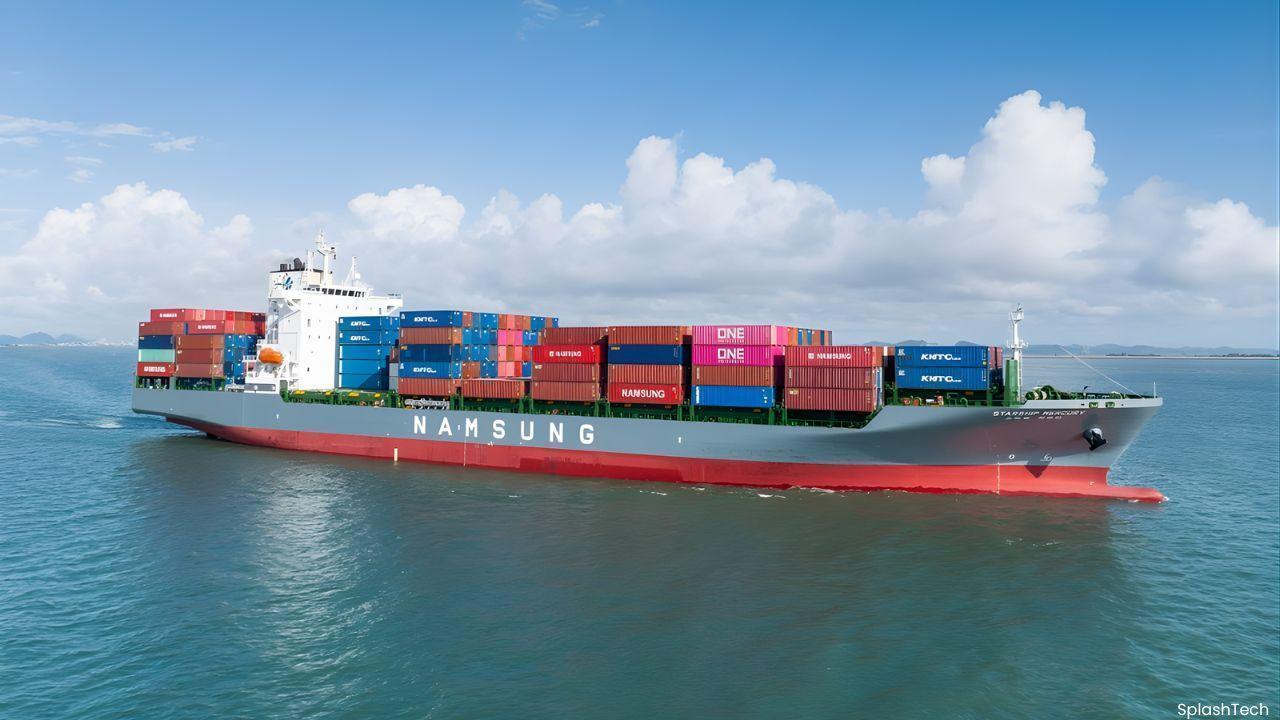
In a region where speed, cost efficiency, and reliability define success, Namsung Shipping is making a calculated move that could reshape the competitive dynamics of intra-Asia trade. By investing in smart container technology, the South Korean carrier is stepping into a new era of data-driven logistics, where visibility and control over cargo become as valuable as fleet size or route coverage. This strategic shift is not just about upgrading containers, it reflects a deeper transformation in how shipping companies compete in one of the world’s most crowded and fast-evolving maritime markets. As intra-Asia trade volumes continue to surge, driven by manufacturing hubs and regional supply chains, the ability to offer smarter, more transparent logistics solutions is quickly becoming a decisive advantage.
At the core of this strategy lies the integration of digital technology into traditional shipping containers, turning them into intelligent assets capable of transmitting real-time data on location, temperature, security, and cargo conditions. These smart containers function as mobile data hubs, enabling shipping lines and customers to monitor shipments throughout the journey with unprecedented precision. This shift is particularly significant in intra-Asia trade, where shorter routes and higher frequency services demand faster decision-making and operational agility. By embedding intelligence into containers, Namsung is effectively transforming its fleet into a connected logistics network, enhancing both operational efficiency and customer experience.
The intra-Asia shipping market is among the most competitive globally, dominated by regional carriers operating dense networks across key manufacturing and consumption hubs. Namsung, already active in these trade lanes with a fleet serving multiple regional routes, is now leveraging technology to differentiate itself beyond traditional metrics like pricing and capacity. In such a saturated market, innovation becomes the primary lever for growth. Smart containers offer a compelling value proposition reducing cargo delays, improving asset utilization, and providing actionable insights that can optimize supply chains end-to-end. This positions Namsung to not only retain existing customers but also attract new clients seeking reliability in increasingly volatile logistics environments.
Modern supply chains demand more than just transportation.They require visibility, predictability, and responsiveness. The rise of e-commerce, just-in-time manufacturing, and complex cross-border trade has pushed shipping companies to rethink their service offerings. Smart containers directly address these demands by enabling real-time tracking and predictive analytics, allowing shippers to anticipate disruptions and make informed decisions. In a region where port congestion, weather disruptions, and fluctuating demand can impact delivery timelines, such capabilities provide a significant competitive edge. For cargo owners, this translates into reduced risk and improved planning, making smart-enabled services increasingly attractive.
Namsung’s move aligns with a broader industry trend toward digitalization, where shipping is evolving into a technology-driven sector. From smart ports to automated terminals and AI-powered logistics platforms, the maritime industry is undergoing a rapid transformation. Smart containers represent a critical piece of this ecosystem, connecting physical cargo with digital intelligence. Industry-wide initiatives have already highlighted the potential of converting entire fleets into smart containers to optimize logistics performance and infrastructure planning. By entering this space, Namsung is positioning itself at the forefront of this transition, signaling a long-term commitment to innovation and sustainability.
The implications of this move extend beyond Namsung itself. As more carriers adopt smart technologies, the competitive landscape in intra-Asia shipping is likely to shift from cost-based competition to capability-driven differentiation. Companies that can offer integrated, tech-enabled logistics solutions will gain a significant advantage in attracting high-value cargo and long-term contracts. For ports and logistics hubs, this trend could accelerate investments in digital infrastructure, further transforming the region into a highly connected maritime ecosystem.
As the industry navigates a period of rapid change, Namsung’s investment in smart containers stands out as a forward-looking strategy that blends technology with operational excellence. It signals a future where containers are no longer passive units but active participants in the logistics chain, delivering data, insights, and efficiency at every stage of the journey. In the high-stakes world of intra-Asia trade, where margins are tight and competition is relentless, such innovation could prove to be the defining factor between market leaders and followers. For Namsung, this is not just a technological upgrade, it is a strategic statement that the next phase of shipping will be driven by intelligence, connectivity, and the relentless pursuit of efficiency.
#trending #latest#SmartContainers #NamsungShipping #IntraAsiaTrade #LogisticsInnovation #ContainerShipping








Advances in Aerospace Technology and Commercial Aviation Recovery
Insights into breakthrough aerospace technologies and commercial aviation’s recovery amid 2025 chall

Defense Modernization and Strategic Spending Trends
Explore key trends in global defense modernization and strategic military spending shaping 2025 secu

Tens of Thousands Protest in Serbia on Anniversary of Deadly Roof Collapse
Tens of thousands in Novi Sad mark a year since a deadly station roof collapse that killed 16, prote

Canada PM Carney Apologizes to Trump Over Controversial Reagan Anti-Tariff Ad
Canadian PM Mark Carney apologized to President Trump over an Ontario anti-tariff ad quoting Reagan,

The ad that stirred a hornets nest, and made Canadian PM Carney say sorry to Trump
Canadian PM Mark Carney apologizes to US President Trump after a tariff-related ad causes diplomatic

Bengaluru-Mumbai Superfast Train Approved After 30-Year Wait
Railways approves new superfast train connecting Bengaluru and Mumbai, ending a 30-year demand, easi



