Post by : Avinab Raana
Photo : X / AeroTime
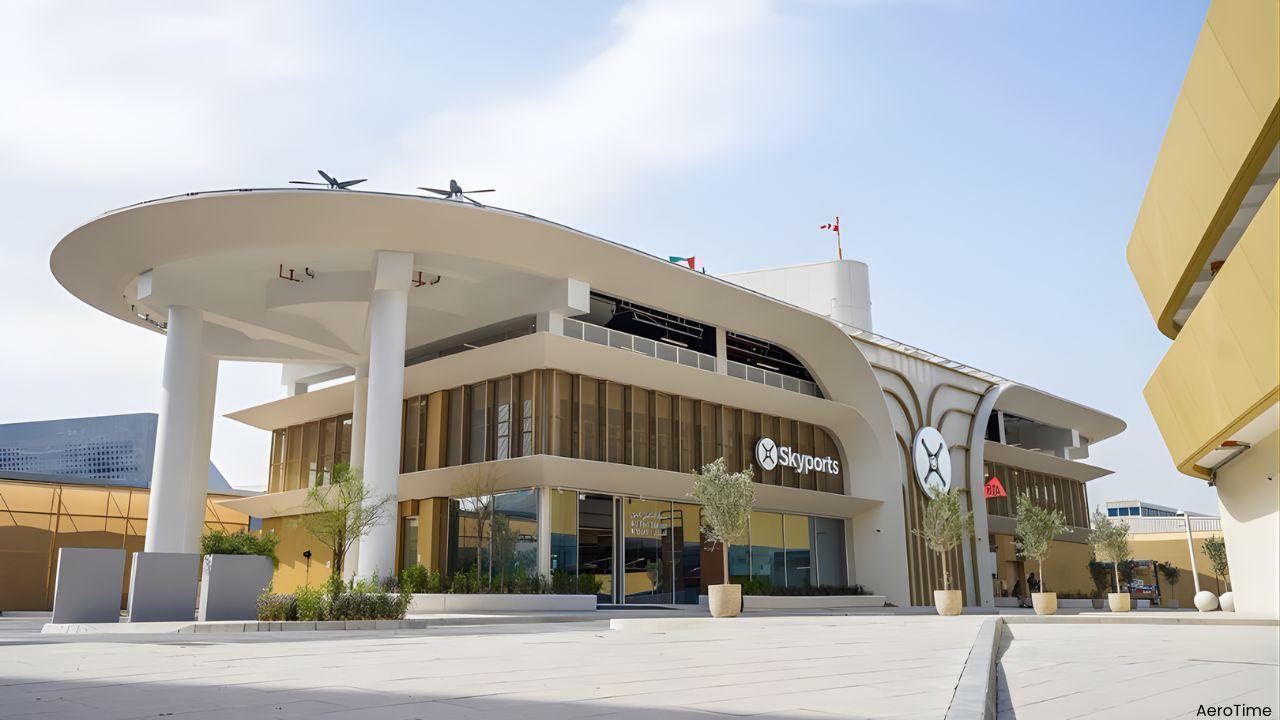
Dubai has once again positioned itself at the forefront of futuristic mobility by unveiling the world’s first commercial air taxi vertiport near Dubai International Airport. This milestone marks a transformative moment in urban transportation, as the city moves closer to integrating aerial mobility into everyday travel. Designed to support electric vertical take-off and landing (eVTOL) aircraft, the vertiport is not just infrastructure, it is the foundation of a new transport ecosystem that could redefine how cities move people.
The flagship facility, often referred to as DXV, is strategically located adjacent to Dubai International Airport and forms the centerpiece of a broader air taxi network being developed across the city. Built by Skyports Infrastructure in collaboration with Joby Aviation and Dubai’s Roads and Transport Authority, the vertiport is designed to seamlessly integrate with existing transport systems, including airports and urban mobility hubs.
Spanning multiple levels, the vertiport includes dedicated landing pads, charging stations for electric aircraft, passenger lounges, and operational zones, all engineered to handle high-frequency aerial operations. This design ensures that the facility is not only functional but also scalable, capable of supporting growing demand as air taxi services expand.
Dubai’s ambitious vision is set to materialize quickly, with commercial air taxi operations expected to begin in 2026. The vertiport will support Joby Aviation’s all-electric eVTOL aircraft, which are capable of carrying passengers across the city at high speeds while producing zero operational emissions.
The service is designed to dramatically reduce travel times, turning journeys that typically take 45 minutes by road into flights of just 10–15 minutes. This efficiency is expected to revolutionize urban commuting, particularly in a city known for heavy traffic and rapid growth.
The DXV vertiport is just the beginning. Dubai plans to establish a network of at least four initial vertiports across key locations, including downtown areas, tourist hubs, and major transport nodes.
This interconnected system will enable point-to-point aerial travel, creating a seamless urban air mobility network that complements existing road and rail infrastructure. The integration of vertiports into high-traffic areas ensures that passengers can transition smoothly between ground and air transport, enhancing overall travel efficiency.
At the core of this initiative is a commitment to sustainability and innovation. The air taxis operating from the vertiport are fully electric, designed to be quiet, energy-efficient, and environmentally friendly. This aligns with Dubai’s broader vision of becoming a global leader in smart and sustainable mobility solutions.
The vertiport itself is built to meet the highest international safety and operational standards, incorporating advanced air traffic management systems and digital infrastructure to ensure safe and efficient operations in a dense urban environment.
Dubai’s move is not just about transportation, it is a strategic play to lead the global urban air mobility market. By becoming the first city to deploy a commercial air taxi network, Dubai is setting a benchmark that other cities are likely to follow.
The project is expected to attract investment, drive innovation, and create new economic opportunities across sectors such as aerospace, infrastructure, and digital mobility. It also strengthens Dubai’s position as a global hub for advanced transportation technologies, reinforcing its reputation as a city that embraces bold, future-focused initiatives.
The launch of the world’s first commercial vertiport marks a turning point in how cities approach mobility. It signals the beginning of a new era where airspace becomes an extension of urban infrastructure, offering faster, cleaner, and more efficient travel options.
As Dubai prepares for the full rollout of its air taxi network, the implications extend far beyond the city itself. This initiative provides a glimpse into the future of transportation. One where congestion is bypassed, distances shrink, and the sky becomes an integral part of everyday commuting. The question is no longer if urban air mobility will become mainstream, but how quickly the rest of the world will follow Dubai’s lead.
#trending #latest#DubaiAirTaxi #Vertiport #UrbanAirMobility #JobyAviation #Skyports







Advances in Aerospace Technology and Commercial Aviation Recovery
Insights into breakthrough aerospace technologies and commercial aviation’s recovery amid 2025 chall

Defense Modernization and Strategic Spending Trends
Explore key trends in global defense modernization and strategic military spending shaping 2025 secu

Tens of Thousands Protest in Serbia on Anniversary of Deadly Roof Collapse
Tens of thousands in Novi Sad mark a year since a deadly station roof collapse that killed 16, prote

Canada PM Carney Apologizes to Trump Over Controversial Reagan Anti-Tariff Ad
Canadian PM Mark Carney apologized to President Trump over an Ontario anti-tariff ad quoting Reagan,

The ad that stirred a hornets nest, and made Canadian PM Carney say sorry to Trump
Canadian PM Mark Carney apologizes to US President Trump after a tariff-related ad causes diplomatic

Bengaluru-Mumbai Superfast Train Approved After 30-Year Wait
Railways approves new superfast train connecting Bengaluru and Mumbai, ending a 30-year demand, easi



