Post by : Saif
US airlines are increasingly choosing higher ticket prices over filling every seat as rising jet fuel costs put pressure on profits. Major carriers are trying to protect their profit margins by limiting discounts and carefully managing flight schedules, even as some signs point to weaker passenger traffic.
Delta Air Lines, United Airlines, American Airlines, Southwest Airlines and Alaska Airlines have all focused on earning more revenue from each passenger rather than simply increasing the number of people flying.
The strategy has helped airlines generate stronger revenue despite limited growth in passenger numbers. However, soaring fuel prices have reduced the benefits, forcing several major carriers to lower their annual earnings forecasts.
US airlines have increased ticket prices as operating expenses continue to rise. According to US Labor Department data cited in the report, average airfares increased nearly 23% year-on-year during the seven months through September, compared with a 3.6% rise in overall consumer prices.
Passenger revenue at five major US airlines rose by nearly $8.8 billion, or 18%, in the third quarter compared with the same period last year. Passenger traffic, however, increased by less than 1%.
The difference shows that airlines are generating more money mainly by charging higher fares and attracting passengers willing to pay for premium services, rather than relying on significant growth in passenger numbers.
Airlines are also trying to avoid price cuts that could increase bookings but leave them with lower earnings per seat.
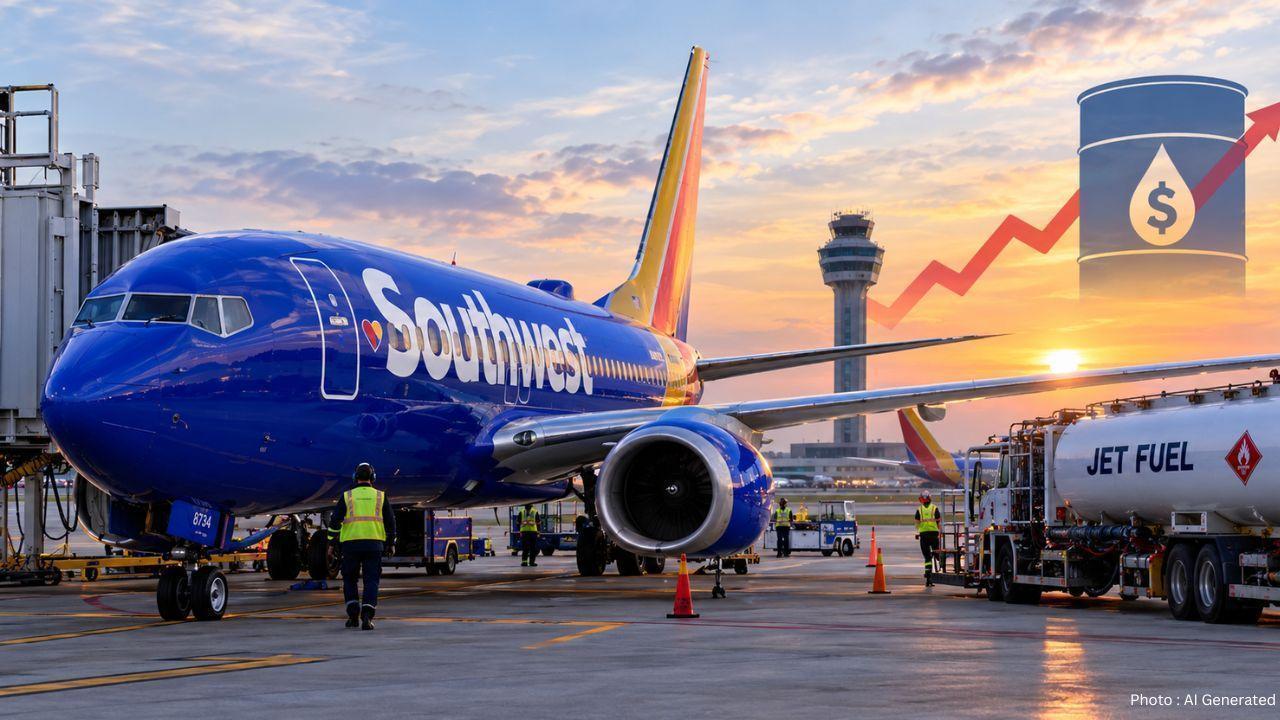
Fuel has become one of the biggest challenges for US airlines. Jet fuel prices have climbed sharply since the US-Israeli war on Iran began in February 2026.
According to US Energy Information Administration data, Gulf Coast spot jet fuel prices increased from $2.43 per gallon before the conflict to $4.63 on October 20.
The increase has raised operating costs across the aviation industry. Even when airlines earn more from ticket sales, higher fuel bills can reduce the amount left as profit.
Delta and Southwest have lowered their annual earnings forecasts, while American Airlines expects to report a full-year loss despite a substantial increase in passenger revenue.
Airline executives are therefore placing greater emphasis on ticket prices, flight capacity and operating efficiency to manage the impact of expensive fuel.
Airlines traditionally balance ticket prices against how many seats they fill. When demand weakens, carriers often reduce fares to attract more passengers. But the current cost environment has encouraged them to take a different approach.
United Airlines reported that its leisure travel load factor, which measures the share of available seats occupied, fell by 1.3 percentage points in the third quarter. The airline's commercial chief, Andrew Nocella, acknowledged that higher fares had affected some demand but said the trade-off was acceptable.
American Airlines also carried passengers at lower occupancy levels during the quarter, even as passenger revenue per mile increased by more than 18%.
Delta CEO Ed Bastian said the company was managing its business with a focus on profit margins.
These decisions reflect a broader industry strategy: airlines would rather leave some seats empty than sell tickets at prices that fail to cover the cost of operating a flight.
Several airlines are continuing to push ticket prices higher. JetBlue Airways introduced a $10 increase in published one-way domestic fares on Wednesday, according to an analysis cited in the report.
United had introduced a similar increase the previous week, which Southwest subsequently matched.
Higher prices could make domestic air travel more expensive for American families and business travellers. They could also discourage price-sensitive passengers from booking flights, particularly if fuel costs remain elevated.
The US Transportation Security Administration screened 2.9% fewer people at American airports during the third quarter than a year earlier. The decline has raised questions about whether rising fares are beginning to affect travel demand.
Other factors, including limited growth in airline capacity and the shutdown of budget carrier Spirit Airlines, have also influenced passenger traffic.
Southwest CEO Bob Jordan said the airline had not seen evidence that higher fares were significantly reducing passenger volumes. The company reported that average passenger fares rose nearly 22% during the first nine months of 2026.
Read more: Singapore Airshow Opens as Aviation Industry Faces Supply Chain Pressure and Rising Asia Demand
The industry faces another challenge next year as airlines prepare to increase the number of available flights.
Data from Airlines for America, based on Cirium figures, indicates that six major US airlines plan to increase domestic capacity by 3% in the fourth quarter of 2026 compared with a year earlier. Growth is expected to accelerate to 3.8% in the first quarter of 2027, compared with just 0.2% in the third quarter of 2026.
More flights could intensify competition for passengers and make it harder for airlines to maintain the large fare increases seen this year.
Carriers are reviewing their expansion plans to ensure that additional flights generate enough revenue to cover their costs. American Airlines plans to slow its growth considerably next year, while Southwest has said it will not prioritise expansion at the expense of profitability.
United executives have also warned that the industry's published capacity plans for 2027 may not all become reality.
US airlines are attempting to protect profits at a time when fuel expenses remain high and travellers face increasingly expensive tickets.
Maintaining limited capacity could help carriers support higher fares, but operating fewer flights can also increase costs per available seat. Raising prices too aggressively could further discourage travellers and weaken demand.
The industry's approach will depend on fuel prices, passenger spending and the number of flights airlines ultimately operate in 2027.
For now, major US carriers are focusing on fare increases, careful capacity planning and higher revenue per passenger. Whether this strategy can protect profits will depend on how long fuel costs remain elevated and whether travellers continue to accept higher ticket prices.
#trending #latest #USAirlines #AirlineIndustry #RisingFuelCosts #AirfarePrices #AviationNews #JetFuel #TravelNews #AirlineProfits #USNews







Advances in Aerospace Technology and Commercial Aviation Recovery
Insights into breakthrough aerospace technologies and commercial aviation’s recovery amid 2025 chall

Defense Modernization and Strategic Spending Trends
Explore key trends in global defense modernization and strategic military spending shaping 2025 secu

Tens of Thousands Protest in Serbia on Anniversary of Deadly Roof Collapse
Tens of thousands in Novi Sad mark a year since a deadly station roof collapse that killed 16, prote

Canada PM Carney Apologizes to Trump Over Controversial Reagan Anti-Tariff Ad
Canadian PM Mark Carney apologized to President Trump over an Ontario anti-tariff ad quoting Reagan,

The ad that stirred a hornets nest, and made Canadian PM Carney say sorry to Trump
Canadian PM Mark Carney apologizes to US President Trump after a tariff-related ad causes diplomatic

Bengaluru-Mumbai Superfast Train Approved After 30-Year Wait
Railways approves new superfast train connecting Bengaluru and Mumbai, ending a 30-year demand, easi