Post by : Saif
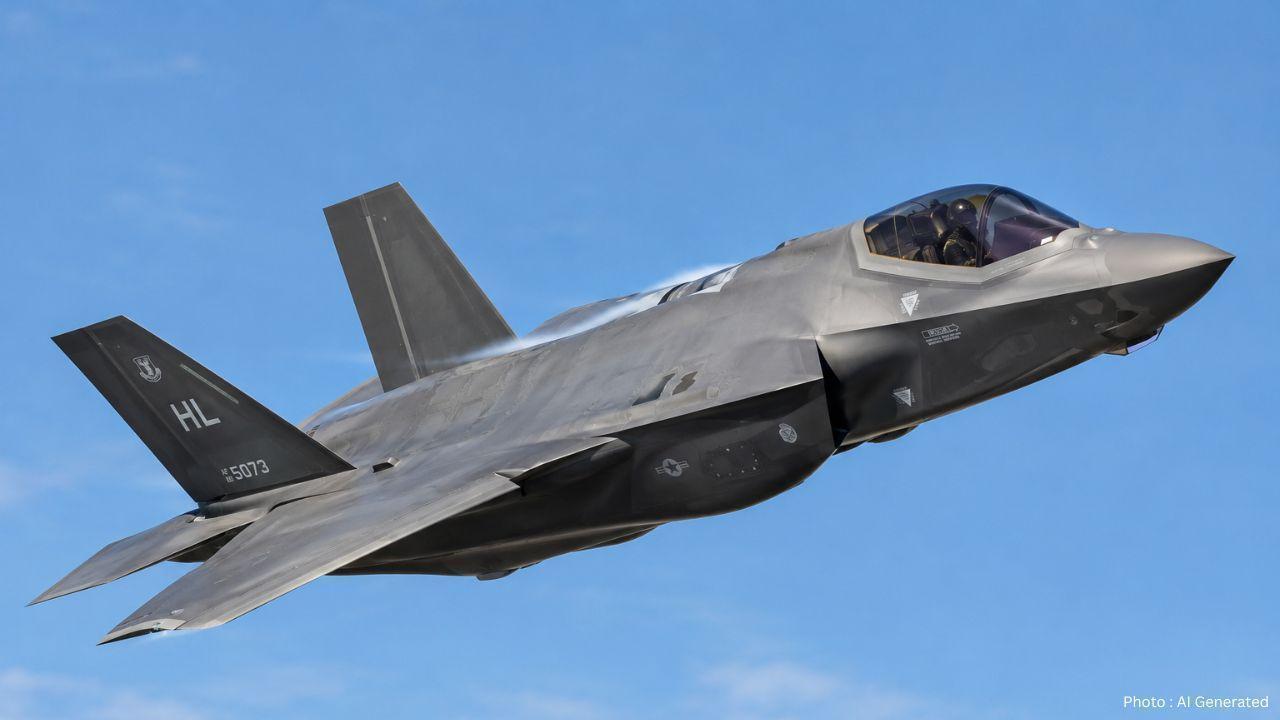
Lockheed Martin and the US Department of Defense have reached an initial agreement covering the production and maintenance of at least 850 F-35 Lightning II fighter jets over the next 10 years. Announced on October 22, 2026, the arrangement aims to support long-term aircraft production, strengthen the American defence industry and improve the supply of military equipment.
The agreement sets a framework for future production and sustainment activities, but it does not represent a final order for the aircraft. Both sides must complete further steps before a formal contract can be awarded.
Under the initial agreement, Lockheed Martin aims to maintain annual production at 156 F-35 fighter jets. The plan is designed to provide greater stability for manufacturing operations and help meet demand from the United States and international customers.
The F-35 Lightning II is a fifth-generation fighter aircraft equipped with stealth technology designed to reduce its visibility to enemy radar systems. It also combines advanced sensors, electronic systems and weapons capabilities, making it a central part of modern air combat operations.
The aircraft is widely used by the US military and several international partners. Its production programme is a major part of Lockheed Martin's aeronautics business, which contributes a significant share of the company's revenue.
Lockheed Martin has committed to funding at least $7 billion in initiatives supporting the F-35 programme, according to the US Department of Defense.
The investment is intended to improve production capacity, strengthen the supply chain and help the company deliver aircraft and supporting equipment more efficiently. Manufacturing fighter jets requires a large network of suppliers providing raw materials, electronic components, engines and specialised parts.
Supply-chain delays and rising demand have placed pressure on defence manufacturers. The new arrangement seeks to address these challenges by encouraging investment and aligning financial incentives with production performance.
US Under Secretary of Defense Michael Duffey said the agreement was designed to improve the country's ability to produce military equipment at greater speed and scale. He also highlighted the importance of linking financial incentives to actual performance.
Although the initial agreement covers at least 850 aircraft over the next decade, it is not itself a final purchase order.
Lockheed Martin said the F-35 Joint Program Office and the company would work to finalise contract terms, pricing and delivery schedules if the necessary multi-year contracting authority is granted in the coming months.
The arrangement also covers international F-35 orders, initial spare parts and modification kits. These elements are important for maintaining aircraft readiness and supporting fleets already in service.
A formal contract award will establish the detailed commercial terms and production commitments. Until that process is completed, the initial agreement should be understood as a framework for long-term cooperation rather than a completed aircraft purchase.
Lockheed Martin estimates that the agreement could support approximately 317,000 jobs in the United States and generate nearly $79 billion in annual economic activity over the next decade.
The programme involves a broad industrial network, including factories, component manufacturers, engineering teams and maintenance providers. Increased production could create additional opportunities for suppliers and workers involved in aircraft manufacturing and defence technology.
The company also expects the agreement to reduce production costs and ease supply-chain constraints, from the procurement of raw materials to the delivery of finished components.
However, these figures represent the company's estimates of the agreement's potential economic impact rather than guaranteed outcomes.
The agreement comes as governments continue to invest in military aircraft, air defence systems and other advanced weapons amid ongoing international security challenges.
Lockheed Martin and other American defence companies have benefited from increased global defence spending. Countries are seeking to strengthen their military capabilities, replace ageing aircraft and improve their ability to respond to emerging security threats.
For the United States, maintaining a steady F-35 production rate is important for meeting domestic military requirements while fulfilling commitments to international partners.
The aircraft's long-term programme also requires continued investment in maintenance, upgrades and spare parts to keep existing fleets operational.
The initial deal provides a framework for sustained F-35 production and could help Lockheed Martin plan manufacturing activities over a longer period. The proposed investment, annual production target and focus on supply-chain improvements are intended to make deliveries more predictable.
Still, the final outcome will depend on formal contract approval, agreed pricing, production schedules and the industry's ability to overcome supply constraints.
#trending #latest #LockheedMartin #F35LightningII #F35FighterJet #Pentagon #USDefense #DefenseIndustry #MilitaryAviation #StealthFighter #DefenseNews #AerospaceIndustry #USMilitary #GlobalSecurity









Advances in Aerospace Technology and Commercial Aviation Recovery
Insights into breakthrough aerospace technologies and commercial aviation’s recovery amid 2025 chall

Defense Modernization and Strategic Spending Trends
Explore key trends in global defense modernization and strategic military spending shaping 2025 secu

Tens of Thousands Protest in Serbia on Anniversary of Deadly Roof Collapse
Tens of thousands in Novi Sad mark a year since a deadly station roof collapse that killed 16, prote

Canada PM Carney Apologizes to Trump Over Controversial Reagan Anti-Tariff Ad
Canadian PM Mark Carney apologized to President Trump over an Ontario anti-tariff ad quoting Reagan,

The ad that stirred a hornets nest, and made Canadian PM Carney say sorry to Trump
Canadian PM Mark Carney apologizes to US President Trump after a tariff-related ad causes diplomatic

Bengaluru-Mumbai Superfast Train Approved After 30-Year Wait
Railways approves new superfast train connecting Bengaluru and Mumbai, ending a 30-year demand, easi