Post by : Avinab Raana
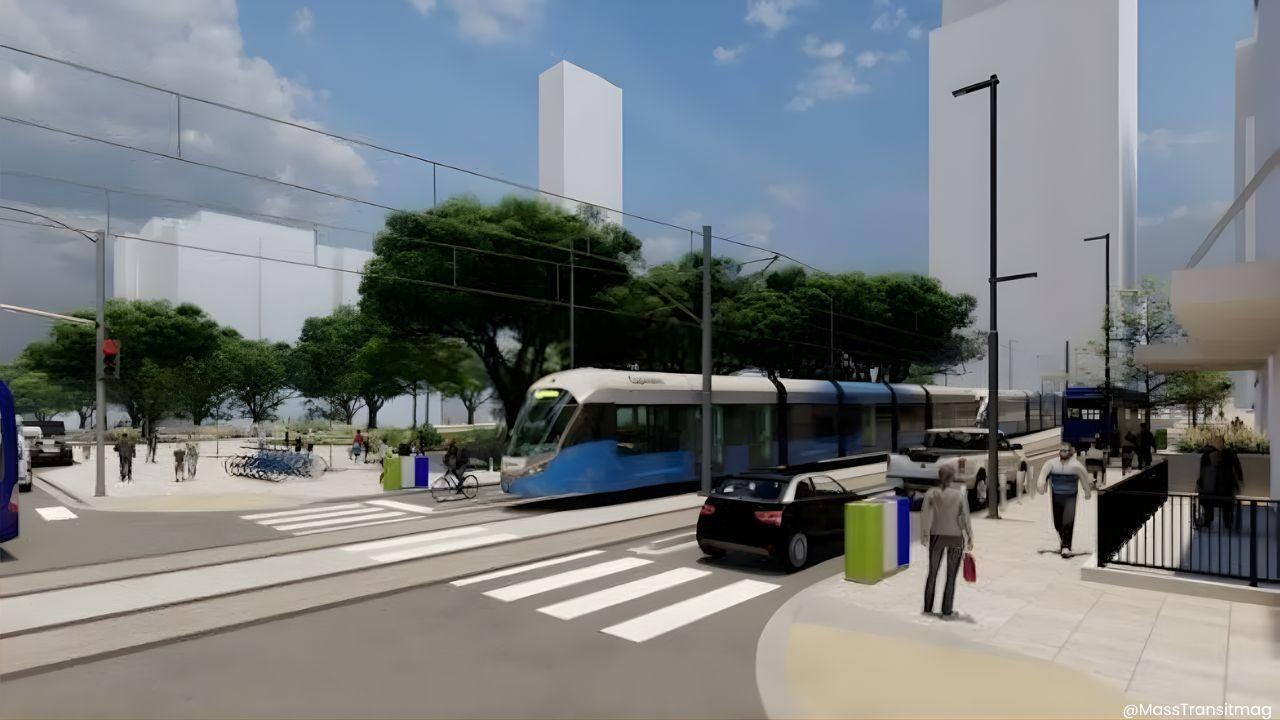
Photo : X / @MassTransitmag
Austin’s long-awaited light rail system has taken a decisive step forward, with the Austin Transit Partnership appointing a key contractor to deliver the project’s Operations and Maintenance Facility, a critical backbone of the entire transit network. In a city experiencing rapid population growth and rising mobility challenges, this development signals more than just construction progress; it marks the transition from planning to real execution. As one of the most ambitious urban transit projects in the United States, Austin’s light rail is steadily moving closer to becoming a transformative reality for the region.
The Austin Transit Partnership has selected Kiewit Austin Partnership, a joint venture between Kiewit Building Group and Austin Commercial, as the design-build contractor for the facility. This partnership brings together national infrastructure expertise with deep local construction experience, creating a delivery model designed for both efficiency and long-term sustainability.
The appointment allows the project to move into its next phase, including detailed design, permitting processes, and early construction preparation. This step is crucial, as it ensures that the foundational infrastructure required to support the rail system is developed in parallel with the broader network construction.
While tracks and stations often dominate public attention, the Operations and Maintenance Facility (OMF) is the true operational core of any rail network. This facility will serve as the central hub where trains are stored, cleaned, maintained, and dispatched daily.
Beyond technical functions, the OMF will also act as a workplace for operators, engineers, and maintenance teams responsible for ensuring system reliability. Without such a facility, even the most advanced rail systems cannot function efficiently. By prioritizing its development early, Austin Transit Partnership is laying a strong operational foundation for long-term success.
The maintenance facility is a key component of Austin’s broader light rail initiative under the Project Connect program, a multi-billion-dollar investment aimed at transforming the city’s transportation landscape.
Phase one of the project includes nearly 10 miles of light rail track and 15 stations, designed to connect major residential, commercial, and employment hubs across the city. With construction expected to begin in the coming years and operations targeted for the early 2030s, the project represents one of the most significant infrastructure upgrades in Austin’s history.
The selection of a major contractor is also expected to deliver significant economic benefits across Central Texas. Infrastructure projects of this scale typically generate thousands of jobs, both directly and indirectly, spanning construction, engineering, and long-term operations.
By involving a joint venture that includes a strong local partner, the project ensures that economic value remains within the region. This approach aligns with broader infrastructure strategies across the United States, where local workforce development and community impact are becoming central to project planning.
Austin’s rapid urban expansion has placed increasing pressure on its existing transportation systems, with congestion and travel times becoming key concerns for residents and businesses alike. The light rail project is designed to address these challenges by offering a high-capacity, sustainable alternative to road-based transport.
The appointment of the OMF contractor comes at a critical time, as cities worldwide accelerate investments in rail-based transit solutions to reduce congestion, lower emissions, and improve urban connectivity. Austin’s move reflects a broader shift toward integrated, future-ready mobility systems that prioritize efficiency and environmental sustainability.
The appointment of a contractor for the light rail maintenance facility is more than a procedural milestone. It is a signal that Austin’s vision for a modern, efficient transit system is steadily becoming reality. By focusing on both infrastructure and operations, the project is being built with long-term resilience in mind.
As construction phases begin to unfold, Austin is positioning itself among the next generation of global cities investing in smart, scalable transportation networks. The real impact of this project will not just be measured in miles of track, but in how it reshapes mobility, economic growth, and urban living for decades to come.
#trending #latest#AustinLightRail #RailInfrastructure #TransitDevelopment #UrbanMobility #USInfrastructure









Advances in Aerospace Technology and Commercial Aviation Recovery
Insights into breakthrough aerospace technologies and commercial aviation’s recovery amid 2025 chall

Defense Modernization and Strategic Spending Trends
Explore key trends in global defense modernization and strategic military spending shaping 2025 secu

Tens of Thousands Protest in Serbia on Anniversary of Deadly Roof Collapse
Tens of thousands in Novi Sad mark a year since a deadly station roof collapse that killed 16, prote

Canada PM Carney Apologizes to Trump Over Controversial Reagan Anti-Tariff Ad
Canadian PM Mark Carney apologized to President Trump over an Ontario anti-tariff ad quoting Reagan,

The ad that stirred a hornets nest, and made Canadian PM Carney say sorry to Trump
Canadian PM Mark Carney apologizes to US President Trump after a tariff-related ad causes diplomatic

Bengaluru-Mumbai Superfast Train Approved After 30-Year Wait
Railways approves new superfast train connecting Bengaluru and Mumbai, ending a 30-year demand, easi



