Post by : Avinab Raana
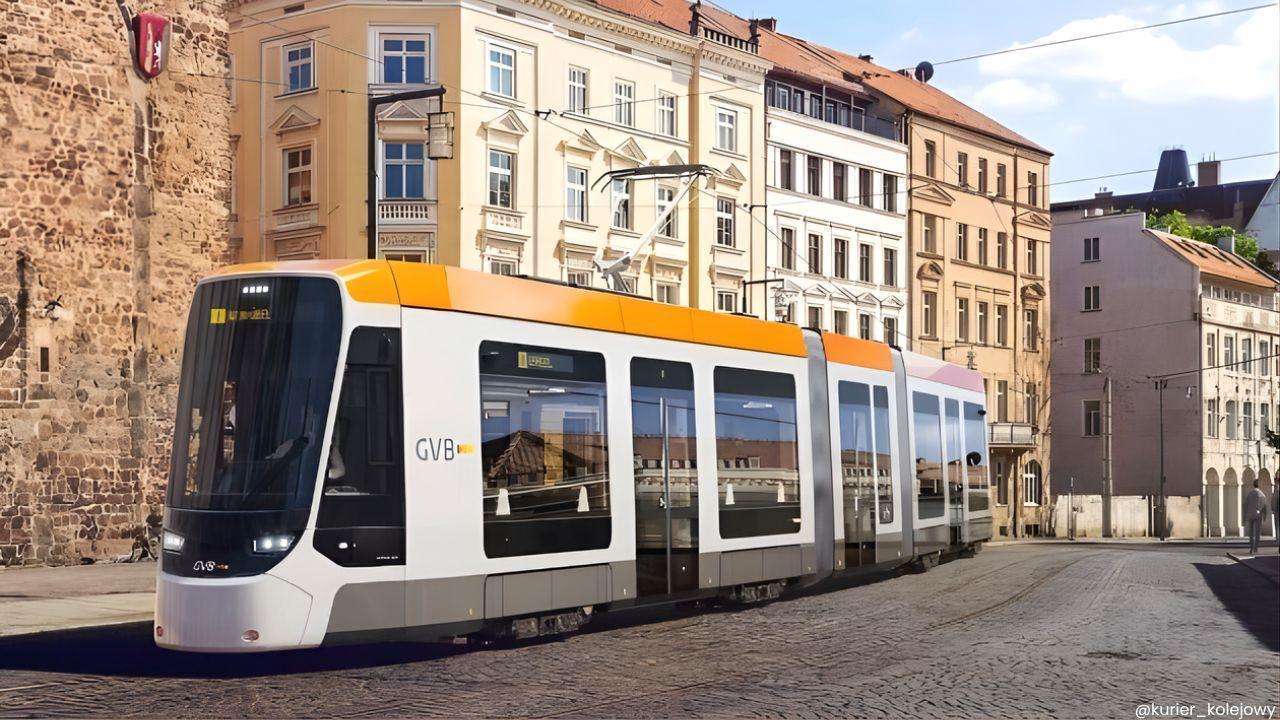
Photo : X / @kurier_kolejowy
Germany’s push toward modern, accessible, and sustainable urban transport has taken a major step forward as Stadler secures a contract to supply 14 next-generation TINA trams for the cities of Görlitz and Zwickau. At a time when European cities are rapidly upgrading aging transit fleets, this deal reflects a broader shift toward smarter, more inclusive mobility solutions. The project not only strengthens Germany’s public transport infrastructure but also highlights how innovation in tram technology is becoming central to urban mobility transformation.
Under the agreement, Stadler will deliver eight trams to Görlitz and six to Zwickau, with entry into service expected by 2028. These new vehicles will replace older rolling stock, ensuring improved reliability and performance across both cities’ tram networks.The joint procurement approach adopted by the two municipalities reflects a strategic move to optimize costs and streamline fleet modernization. By combining orders, both cities can benefit from economies of scale while ensuring that their transit systems evolve in a coordinated and future-ready manner.
At the heart of the deal lies Stadler’s TINA (Total Integrated Low-Floor Drive) platform, a modern tram design that has already gained traction across several European cities. These vehicles are fully low-floor, enabling step-free access throughout the cabin, a feature that significantly enhances accessibility for passengers with reduced mobility, families, and elderly commuters.The trams, approximately 30 meters in length, are designed with wide doors, spacious interiors, and multifunctional areas to accommodate diverse passenger needs. High ceilings and large panoramic windows create an open, comfortable environment, while full air-conditioning ensures year-round passenger comfort.This focus on inclusivity and passenger experience reflects a broader industry trend where public transport systems are being designed not just for efficiency, but for user-centric mobility.
Beyond passenger comfort, the TINA trams are equipped with advanced onboard technologies that enhance safety and operational efficiency. Driver assistance systems, including collision warning features, support safer navigation in dense urban environments.Additionally, integrated control systems centralize vehicle functions, simplifying operations for drivers while improving system reliability. These smart features ensure that the trams are not only technologically advanced but also easier to maintain and operate, reducing long-term lifecycle costs for transit operators.
Sustainability is a key pillar of the TINA platform, with the trams designed for high energy efficiency and reduced environmental impact. Lightweight construction, optimized propulsion systems, and regenerative braking contribute to lower energy consumption, aligning with Europe’s ambitious climate goals.As cities increasingly prioritize green mobility solutions, investments in energy-efficient tram systems are becoming critical. The adoption of TINA trams by Görlitz and Zwickau reinforces the role of electric urban transit in reducing carbon emissions and promoting sustainable city development.
The new trams will be manufactured at Stadler’s production facility in Poland, reflecting the company’s integrated European manufacturing network. This approach ensures timely delivery while maintaining high production standards, enabling the project to meet its 2028 deployment timeline.The flexibility of the TINA platform also allows for scalability, with both cities retaining options to order additional vehicles in the future. This ensures that the fleet can expand in line with growing passenger demand and evolving urban mobility requirements.
The Stadler contract marks more than just a fleet upgrade, it represents a strategic shift toward future-ready public transport systems. As cities like Görlitz and Zwickau modernize their networks, the focus is increasingly on accessibility, efficiency, and sustainability.This development underscores a broader transformation across Europe’s transportation landscape, where investments in smart tram systems are becoming a cornerstone of urban mobility strategies. By integrating advanced technology with passenger-centric design, projects like this are setting new benchmarks for how cities move people efficiently and sustainably.
The introduction of 14 TINA trams is not just about replacing old vehicles, it is about redefining what urban transport can achieve. With improved accessibility, enhanced comfort, and cutting-edge technology, these trams represent the next generation of city mobility. As Germany continues to invest in modern transit solutions, the success of projects like this will play a crucial role in shaping the future of urban transportation not only in Europe but across global cities striving to build smarter, greener, and more connected mobility networks.
#trending #latest#Stadler #TINATrams #UrbanMobility #SmartTransit #RailInnovation







Advances in Aerospace Technology and Commercial Aviation Recovery
Insights into breakthrough aerospace technologies and commercial aviation’s recovery amid 2025 chall

Defense Modernization and Strategic Spending Trends
Explore key trends in global defense modernization and strategic military spending shaping 2025 secu

Tens of Thousands Protest in Serbia on Anniversary of Deadly Roof Collapse
Tens of thousands in Novi Sad mark a year since a deadly station roof collapse that killed 16, prote

Canada PM Carney Apologizes to Trump Over Controversial Reagan Anti-Tariff Ad
Canadian PM Mark Carney apologized to President Trump over an Ontario anti-tariff ad quoting Reagan,

The ad that stirred a hornets nest, and made Canadian PM Carney say sorry to Trump
Canadian PM Mark Carney apologizes to US President Trump after a tariff-related ad causes diplomatic

Bengaluru-Mumbai Superfast Train Approved After 30-Year Wait
Railways approves new superfast train connecting Bengaluru and Mumbai, ending a 30-year demand, easi



