Post by : Avinab Raana
Photo : X / Trenvista
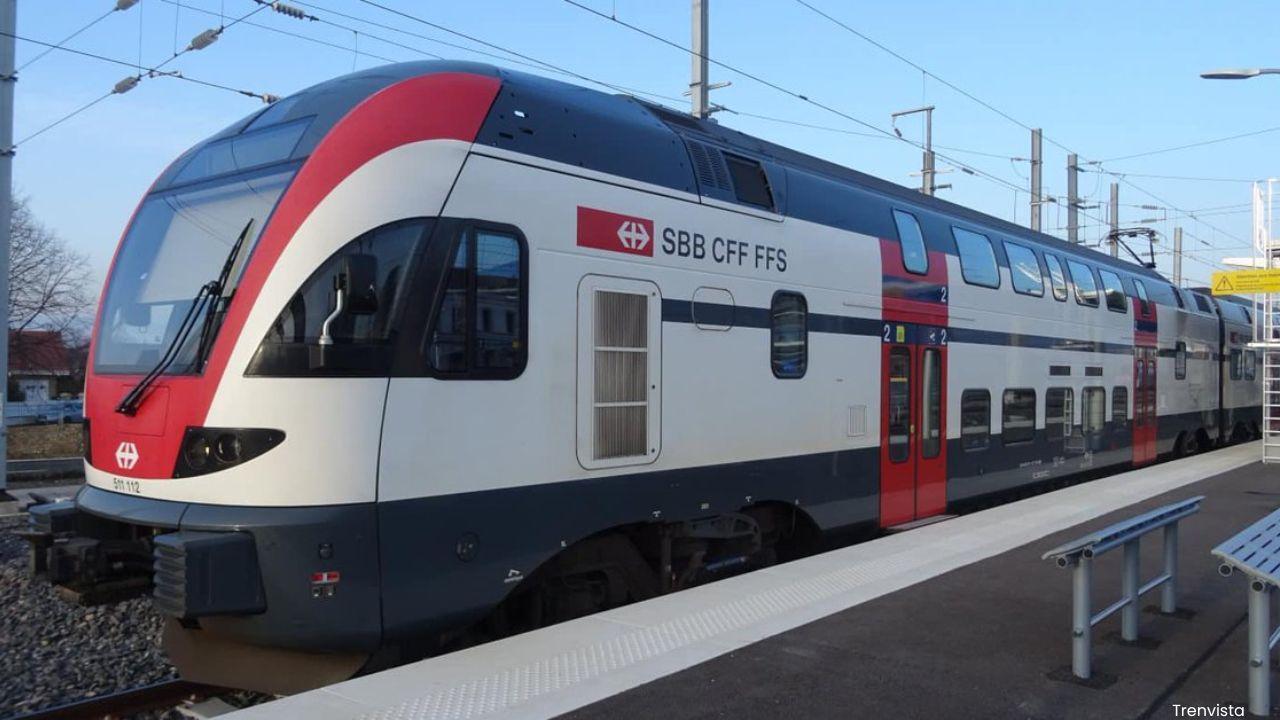
In a significant development that is set to influence the European rail manufacturing landscape, Stadler has officially withdrawn its legal appeal against the Swiss Federal Railways (SBB) contract decision bringing an end to one of the most closely watched procurement disputes in recent months. The move clears the path for Siemens Mobility to proceed with a multi-billion-dollar contract for double-decker trains, marking a decisive moment in the competition among global rolling stock giants.This withdrawal is not just a legal conclusion, it signals a shift in how major rail contracts are contested and accepted in an increasingly competitive and technologically evolving market.
At the center of the dispute was a massive framework agreement involving up to 200 double-decker electric multiple units, with an initial confirmed order of 116 trains valued at approximately $2.4 billion.
The contract, awarded by SBB to Siemens Mobility in late 2025, immediately drew scrutiny from Stadler, a domestic manufacturer with a strong track record and an established fleet already operating within Switzerland. The scale of the deal and its long-term implications made it one of the most strategically important rail contracts in Europe.
Stadler initially filed the appeal seeking transparency and an independent review of the evaluation process, questioning how the final decision favored Siemens’ proposal. The company argued that its own double-decker train platform was already proven in service, while the selected Siemens design was yet to be deployed.
However, after reviewing court documents, Stadler concluded that there were insufficient grounds to continue legal proceedings. The documentation provided during the process was heavily redacted, limiting access to key evaluation details. Despite gaining partial insight, the company ultimately determined that pursuing the appeal further would not change the outcome.This decision reflects a pragmatic shift from contesting the outcome to refocusing on future opportunities.
With the appeal officially withdrawn, Siemens Mobility now has a clear path to move forward with the contract. The project is expected to deliver a new generation of double-decker trains, with the first units scheduled for deployment in the early 2030s.
For SBB, the decision reinforces its procurement strategy, which involved extensive evaluation by a large team of specialists. The railway operator has maintained that the selection process was objective and based on clearly defined technical and economic criteria. This outcome strengthens Siemens’ position in the European rail market, further consolidating its role as a leading supplier of advanced rolling stock.
Beyond the immediate contract, this development highlights the intense competition within the global rail manufacturing sector. Companies are not just competing on price they are battling over innovation, reliability, and long-term lifecycle performance.
Stadler’s withdrawal also underscores a critical industry reality: even established players with proven technologies can face challenges when procurement decisions prioritize new designs or different evaluation criteria. It reflects how rail operators are increasingly willing to take calculated risks on next-generation platforms.
While the outcome may appear as a setback, Stadler has signaled its intent to maintain a strong relationship with SBB and continue its long-standing collaboration.
This approach indicates a broader strategic realignment focusing on future tenders, expanding into international markets, and leveraging its expertise in alternative propulsion technologies such as hydrogen and battery-powered trains.Rather than prolonging a legal battle, the company is choosing to channel its efforts into growth and innovation.
The conclusion of this dispute offers valuable insights into the future of rail procurement. Transparency, evaluation criteria, and technological risk are becoming central to how contracts are awarded and contested.
As governments and operators invest heavily in modernizing rail networks, the stakes will only continue to rise. Manufacturers will need to balance proven performance with innovation, while also navigating complex procurement frameworks.
In the end, this case is more than just a contract decision—it is a reflection of a rapidly evolving industry where adaptability, strategy, and timing are just as critical as engineering excellence. And as the dust settles, one thing is clear: the competition for the future of rail has only just begun.
#trending #latest,#Stadler #SBB #SiemensMobility #RailContracts #EuropeanRail





Advances in Aerospace Technology and Commercial Aviation Recovery
Insights into breakthrough aerospace technologies and commercial aviation’s recovery amid 2025 chall

Defense Modernization and Strategic Spending Trends
Explore key trends in global defense modernization and strategic military spending shaping 2025 secu

Tens of Thousands Protest in Serbia on Anniversary of Deadly Roof Collapse
Tens of thousands in Novi Sad mark a year since a deadly station roof collapse that killed 16, prote

Canada PM Carney Apologizes to Trump Over Controversial Reagan Anti-Tariff Ad
Canadian PM Mark Carney apologized to President Trump over an Ontario anti-tariff ad quoting Reagan,

The ad that stirred a hornets nest, and made Canadian PM Carney say sorry to Trump
Canadian PM Mark Carney apologizes to US President Trump after a tariff-related ad causes diplomatic

Bengaluru-Mumbai Superfast Train Approved After 30-Year Wait
Railways approves new superfast train connecting Bengaluru and Mumbai, ending a 30-year demand, easi



