Post by : Amit
Photo: Linkdin
A powerful consortium led by Siemens Mobility, together with Siemens Ltd India and Dineshchandra R Agrawal Infracon (DRA Infra), has emerged as the lowest bidder and secured a ₹4,100 crore (₹41 billion) contract from the National High Speed Rail Corporation Ltd (NHSRCL) for the signalling, telecommunications, and operation control systems of India’s first bullet train—the Mumbai–Ahmedabad High-Speed Rail Corridor (MAHSR).
Their bid of ₹4,140 crore significantly undercut the only rival—the Alstom–L&T consortium—which quoted around ₹12,686 crore
Scope & Technology
Signal & telecom setup: Includes design, manufacture, supply, installation, integration, testing, commissioning, and maintenance of:
European Train Control System (ETCS) Level 2 for train signalling
Digital Shinkansen–ATC systems
Telecom networks and the Operation Control Centre
Proven technology: The corridor will be equipped with ETCS Level 2—a world-class, communication‑based signalling system used on many high‑speed lines globally. The “Digital Shinkansen” approach adds automatic train control for enhanced safety
The tender launched in January 2025, with technical bids opened by April,
Why the big price gap?
Industry analysts and officials were surprised by the huge difference: the Siemens–DRA Infra bid was less than a third of its closest competitor. Some speculated:
While the official award was pending as of mid‑May, sources said it was already moving steadily through evaluation.
Strategic & national impact
Landmark for India’s high-speed network
A major step toward delivering the first section of India’s centerpiece bullet train. Complementing the civil works (viaducts, tunnels) already progressing in Gujarat and Maharashtra, system integration now gains momentum.
Home‑grown signalling championed
ETCS Level 2 brings in global best practices. This contract also includes training and operation of Indian-built signalling components—showing an effort to build domestic expertise.
Technology transfer & job creation
Execution of ETCS and digital ATC systems will generate specialised employment and skill transfer. NHSRCL estimates more than 90,000 jobs overall in the corridor’s development.
Foundation for future bullet lines
India’s forthcoming corridors (e.g., Delhi–Varanasi, Chennai–Bengaluru) are likely to adopt similar signalling architectures, benefiting from this project’s legacy.
What happens next?
India has taken a significant leap forward in railway modernization by adopting the European Train Control System (ETCS) Level 2, marking its entry into the league of advanced rail nations. This international signalling benchmark represents not only a technological upgrade but also a major stride in aligning Indian rail infrastructure with global best practices. By shifting to communication-based signalling, the country is enhancing public safety and operational efficiency. This advanced system reduces reliance on manual inputs, thereby lowering the risk of human error while enabling higher levels of automation and increased train capacity on existing tracks.
Beyond the technological triumph, this move sends a strong signal to global and domestic investors. The successful implementation of such a sophisticated yet cost-effective system underscores India's capability to execute complex rail projects, including its ambitious bullet train network. This achievement is likely to boost investor confidence, suggesting that the country is not only committed to high-speed rail but is also building a robust, future-ready foundation for it.
Perhaps most importantly, India’s adoption of ETCS Level 2 sets a compelling precedent for the future. It provides a scalable and replicable model for signalling integration across other railway corridors in the country. By demonstrating the feasibility and advantages of this technology in one corridor, Indian Railways now has a proven approach that can be expanded nationwide, paving the way for a smarter, safer, and more connected rail network.
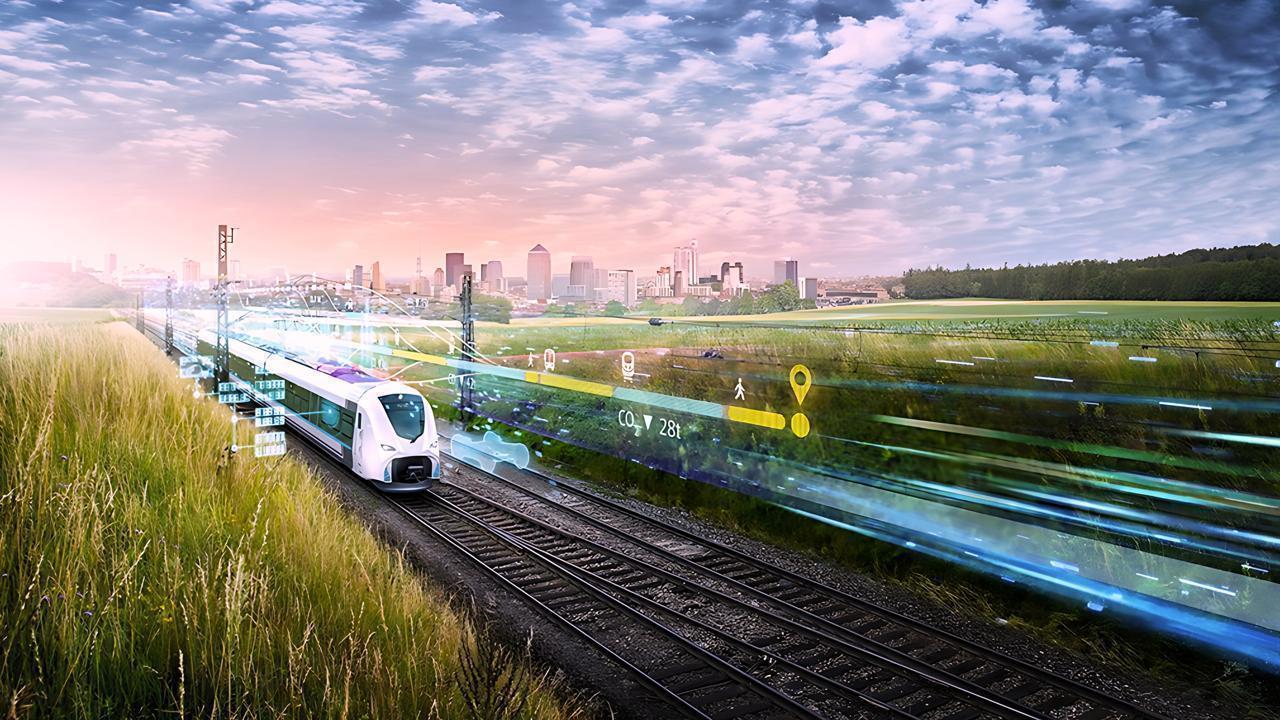
Siemens bullet train






Advances in Aerospace Technology and Commercial Aviation Recovery
Insights into breakthrough aerospace technologies and commercial aviation’s recovery amid 2025 chall

Defense Modernization and Strategic Spending Trends
Explore key trends in global defense modernization and strategic military spending shaping 2025 secu

Tens of Thousands Protest in Serbia on Anniversary of Deadly Roof Collapse
Tens of thousands in Novi Sad mark a year since a deadly station roof collapse that killed 16, prote

Canada PM Carney Apologizes to Trump Over Controversial Reagan Anti-Tariff Ad
Canadian PM Mark Carney apologized to President Trump over an Ontario anti-tariff ad quoting Reagan,

The ad that stirred a hornets nest, and made Canadian PM Carney say sorry to Trump
Canadian PM Mark Carney apologizes to US President Trump after a tariff-related ad causes diplomatic

Bengaluru-Mumbai Superfast Train Approved After 30-Year Wait
Railways approves new superfast train connecting Bengaluru and Mumbai, ending a 30-year demand, easi



