Post by : Avinab Raana
Photo : X / WorldCargo News
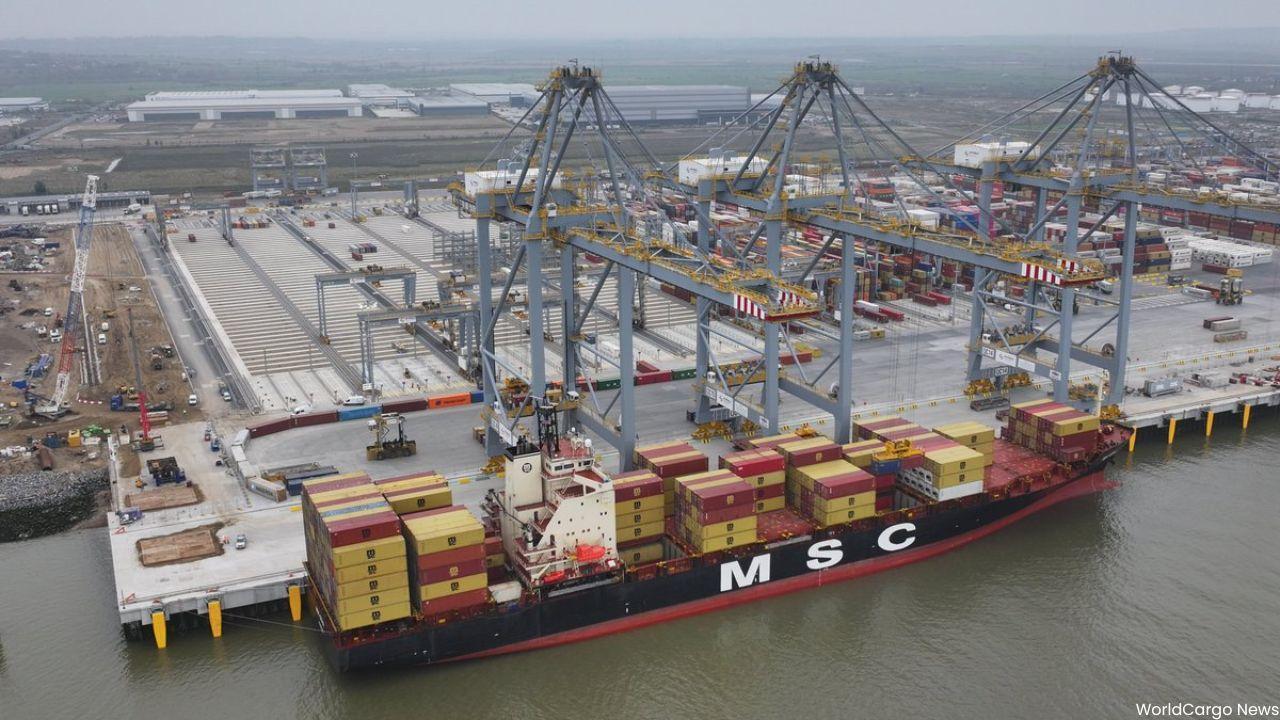
India’s maritime sector is witnessing a powerful shift as DP World’s Vallarpadam International Container Transshipment Terminal (ICTT) finds itself under intense pressure, with transshipment traffic plunging nearly 50% in FY26. This sharp decline has brought the terminal back into the spotlight—not for growth, but for survival in an increasingly competitive port ecosystem driven by the rapid rise of Vizhinjam port.
What was once envisioned as India’s gateway to global transshipment is now facing a defining moment, as cargo flows begin to realign toward newer, more strategically positioned infrastructure. The shift is not just operational, it signals a deeper transformation in how maritime logistics hubs compete and evolve in real time.
At the center of this disruption is Vizhinjam port, a deep-water transshipment hub that has quickly emerged as a game-changer in India’s maritime network. Its natural depth and proximity to major international shipping lanes give it a significant advantage over older ports, allowing it to attract large container vessels with greater efficiency.
This advantage has translated directly into cargo diversion. Shipping lines, always driven by cost efficiency and turnaround time, are increasingly favoring Vizhinjam, leading to a noticeable drop in volumes at Vallarpadam. The nearly 50% fall in transshipment traffic highlights how quickly market dynamics can shift when a more competitive alternative enters the scene.
While competition has accelerated the decline, Vallarpadam’s challenges are not entirely new. Since its inception, the terminal has struggled to achieve its full potential as a major transshipment hub. Limitations such as relatively lower draft depth and higher vessel-related costs have historically made it less competitive compared to regional giants.
Despite significant investments exceeding ₹2,000 crore and capacity upgrades to handle around 1.4 million TEUs, the terminal has often functioned more as a gateway port rather than a true transshipment hub. The arrival of Vizhinjam has amplified these existing weaknesses, accelerating a shift that was already underway.
The sharp decline in Vallarpadam’s volumes is more than just a local issue—it is a wake-up call for India’s broader maritime strategy. For years, the country has depended heavily on foreign ports like Colombo, Singapore, and Dubai for transshipment, leading to increased costs and logistical inefficiencies.
Projects like Vallarpadam were designed to reverse this dependency, but their success depends on continuous adaptation to global shipping trends. The rise of Vizhinjam demonstrates that infrastructure alone is not enough location, cost competitiveness, and operational efficiency are equally critical.
While the decline may appear concerning, it also reflects a healthy evolution of India’s port ecosystem. Competition between ports like Vallarpadam and Vizhinjam is pushing operators to innovate, reduce costs, and enhance service quality.
DP World and the Cochin Port Authority are already exploring measures such as channel deepening and capacity upgrades to regain competitiveness. These efforts underline a broader industry reality: ports must continuously evolve to retain relevance in a rapidly changing global logistics network.
The unfolding situation raises important questions about the future of transshipment in India. Will Vallarpadam regain its footing through strategic upgrades, or will Vizhinjam consolidate its position as the country’s primary transshipment hub?
The answer will depend on how quickly stakeholders respond to changing market conditions. Investments in deeper drafts, competitive pricing, and improved connectivity could help Vallarpadam recover, but the window for action is narrowing.
The nearly 50% drop in transshipment traffic at Vallarpadam is not just a statistic—it is a signal of transformation. It highlights how global shipping patterns are being reshaped by infrastructure innovation, strategic location advantages, and shifting economic priorities.
As India positions itself to become a global maritime powerhouse, the competition between its ports will play a decisive role in determining success. In this high-stakes race, adaptability will be the key differentiator.
Because in today’s logistics-driven world, ports are no longer just entry points—they are battlegrounds for global trade dominance. And right now, that battle is unfolding on India’s southern coast.
#trending #latest,#DPWorld #Vallarpadam #VizhinjamPort #Transshipment #MaritimeLogistics







Advances in Aerospace Technology and Commercial Aviation Recovery
Insights into breakthrough aerospace technologies and commercial aviation’s recovery amid 2025 chall

Defense Modernization and Strategic Spending Trends
Explore key trends in global defense modernization and strategic military spending shaping 2025 secu

Tens of Thousands Protest in Serbia on Anniversary of Deadly Roof Collapse
Tens of thousands in Novi Sad mark a year since a deadly station roof collapse that killed 16, prote

Canada PM Carney Apologizes to Trump Over Controversial Reagan Anti-Tariff Ad
Canadian PM Mark Carney apologized to President Trump over an Ontario anti-tariff ad quoting Reagan,

The ad that stirred a hornets nest, and made Canadian PM Carney say sorry to Trump
Canadian PM Mark Carney apologizes to US President Trump after a tariff-related ad causes diplomatic

Bengaluru-Mumbai Superfast Train Approved After 30-Year Wait
Railways approves new superfast train connecting Bengaluru and Mumbai, ending a 30-year demand, easi



