Post by : Avinab Raana
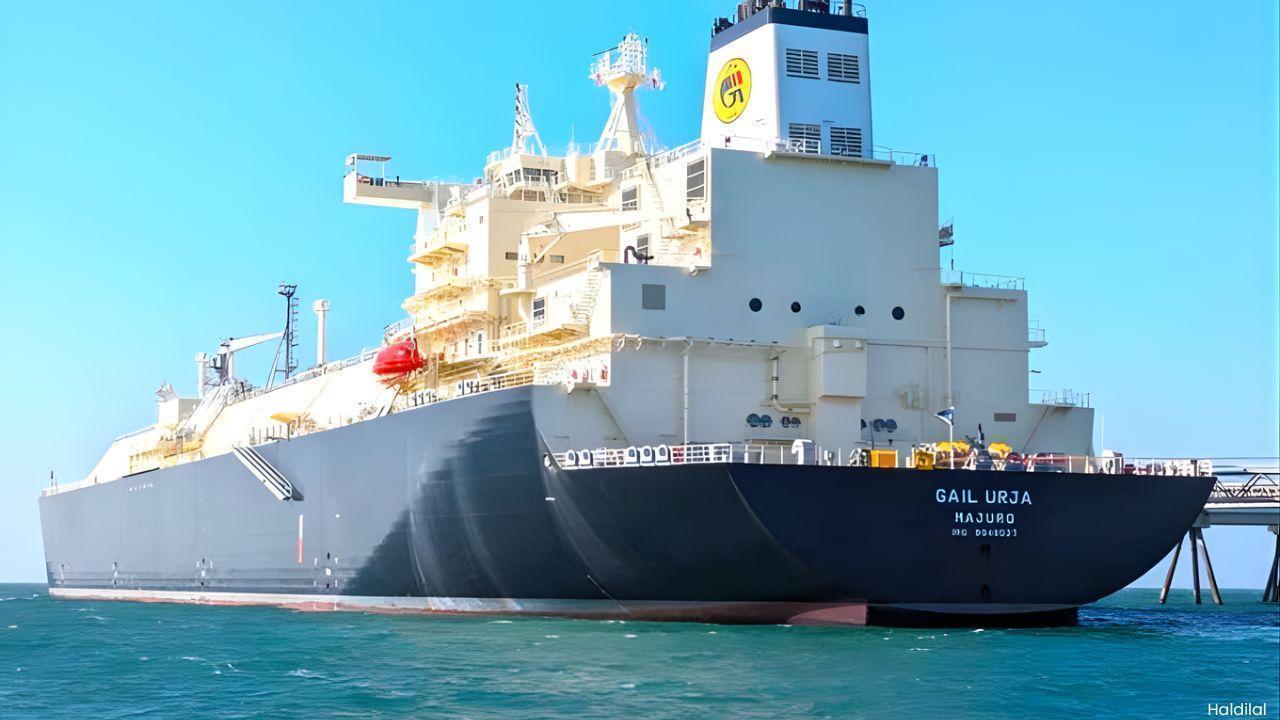
Photo : X / Haldilal
India’s long-standing ambition to become a global transshipment hub has taken a decisive step forward as Vizhinjam International Seaport records its first-ever 100% transshipment vessel call with MSC Krystal. This milestone is more than a routine port operation—it represents a breakthrough moment for India’s maritime ecosystem, signaling its readiness to compete with established global hubs like Colombo, Singapore, and Klang.
For decades, a significant portion of India’s container cargo has been transshipped through foreign ports, leading to increased costs and logistical inefficiencies. The successful handling of a full transshipment call at Vizhinjam marks a turning point, indicating that India is now capable of retaining a larger share of its own cargo within domestic infrastructure.
The arrival and handling of MSC Krystal as a fully transshipment-focused vessel demonstrates the port’s growing operational maturity. Unlike conventional port calls where cargo is loaded or unloaded for domestic consumption, a 100% transshipment operation involves transferring containers between vessels for onward global distribution.
This requires seamless coordination, high-speed handling, and world-class infrastructure capabilities that Vizhinjam has now successfully demonstrated. The milestone reinforces confidence among global shipping lines that India’s newest deepwater port can deliver the efficiency and scale required for international transshipment operations.
Vizhinjam’s success is deeply rooted in its strategic geographic positioning. Located just a few nautical miles from one of the busiest international shipping lanes connecting Europe, the Middle East, and Asia, the port offers a natural advantage in reducing diversion time for vessels.
This proximity allows large container ships to make quick port calls without deviating significantly from their main routes, making it highly attractive for global carriers. Combined with its natural deep draft of around 24 meters, the port is capable of accommodating ultra-large container vessels, a critical factor in modern maritime trade. These advantages position Vizhinjam as a strong contender in the transshipment market, where efficiency, speed, and scale determine competitiveness.
India has historically depended on foreign ports to handle a majority of its transshipment cargo, with estimates suggesting that nearly 75% of such traffic has been routed through overseas hubs. This reliance has not only increased costs but also exposed supply chains to external disruptions.
The successful transshipment call at Vizhinjam signals the beginning of a shift toward self-reliance in maritime logistics. By retaining cargo within domestic ports, India stands to save significant foreign exchange, improve turnaround times, and strengthen its position in global trade networks.
The milestone achieved with MSC Krystal is part of a broader vision to develop Vizhinjam into a world-class maritime hub. As India’s first deepwater transshipment port, the facility has been designed with future scalability in mind, incorporating advanced automation, modern container terminals, and integrated logistics infrastructure.
The port’s development under a public-private partnership model further enhances its operational efficiency, combining global expertise with domestic ambition. As additional phases are completed, Vizhinjam is expected to significantly expand its capacity, enabling it to handle a larger share of global container traffic.
The MSC Krystal transshipment call is not just a milestone, it is a signal of intent. It demonstrates that India is no longer content with being a peripheral player in global shipping but is actively positioning itself at the center of international trade routes.
As global supply chains continue to evolve, the ability to control and manage transshipment operations domestically will become increasingly important. Vizhinjam’s early success suggests that India is on the right path, with the potential to transform its maritime sector into a key driver of economic growth and global competitiveness.
Vizhinjam transshipment port, MSC Krystal India, India hub port ambition, container transshipment India









Advances in Aerospace Technology and Commercial Aviation Recovery
Insights into breakthrough aerospace technologies and commercial aviation’s recovery amid 2025 chall

Defense Modernization and Strategic Spending Trends
Explore key trends in global defense modernization and strategic military spending shaping 2025 secu

Tens of Thousands Protest in Serbia on Anniversary of Deadly Roof Collapse
Tens of thousands in Novi Sad mark a year since a deadly station roof collapse that killed 16, prote

Canada PM Carney Apologizes to Trump Over Controversial Reagan Anti-Tariff Ad
Canadian PM Mark Carney apologized to President Trump over an Ontario anti-tariff ad quoting Reagan,

The ad that stirred a hornets nest, and made Canadian PM Carney say sorry to Trump
Canadian PM Mark Carney apologizes to US President Trump after a tariff-related ad causes diplomatic

Bengaluru-Mumbai Superfast Train Approved After 30-Year Wait
Railways approves new superfast train connecting Bengaluru and Mumbai, ending a 30-year demand, easi



