Post by : Saif
Global oil prices have shown a sharp reaction after the United States decided to pause attacks on Iran’s energy infrastructure. The decision, announced by Donald Trump, has given temporary relief to markets that were already under pressure due to the ongoing conflict in the Middle East.
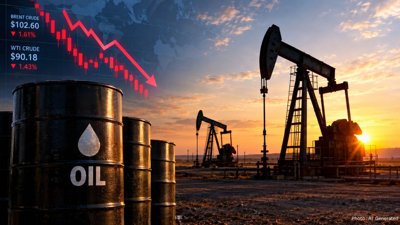
The pause in military action has reduced immediate fears about oil supply disruptions. As a result, crude oil prices fell in global markets. Reports indicate that both major oil benchmarks dropped by around 2% after the announcement, showing how sensitive prices are to political developments.
The conflict between the United States, Israel, and Iran has already caused major disturbances in global energy supply. Since the war began, oil prices have risen sharply due to fears that key supply routes could be blocked. The Strait of Hormuz, which handles a large share of the world’s oil shipments, has been at the center of these concerns.
In this tense situation, any sign of easing conflict quickly affects markets. The decision to pause attacks on Iranian energy facilities signaled a possible shift toward diplomacy. This reduced the risk of further damage to oil infrastructure, which is a major factor in determining global supply levels.
Earlier in the week, oil prices had surged due to fears of escalation. Threats to target energy facilities and disruptions in shipping routes had pushed prices higher. However, once the pause was announced, markets responded by lowering prices, reflecting reduced immediate risk.
The decision to pause attacks is also linked to ongoing talks between the United States and Iran. While details of these discussions remain limited, officials have suggested that negotiations are moving in a positive direction. This has given hope that tensions may decrease, at least in the short term.
Despite this temporary relief, the overall situation remains uncertain. The war has already removed a significant amount of oil from global supply, and experts warn that prices could rise again if the conflict continues or worsens.
The impact of oil price changes is felt worldwide. When prices rise, it affects fuel costs, transportation, and even the prices of everyday goods. For countries like India, which depend heavily on imported oil, such changes can have a direct effect on the economy and household expenses.
The fall in prices, even if temporary, provides some relief to consumers and businesses. Lower oil prices can help control inflation and reduce pressure on governments. However, experts caution that this relief may not last long if tensions return.
The situation also highlights how closely global markets are tied to geopolitical events. Decisions made by political leaders can quickly influence prices and economic conditions around the world.
Another important point is the role of uncertainty. Even when prices fall, markets remain cautious. Investors and traders continue to watch the situation closely, as any new development could change the direction of prices again.
The pause in attacks may also serve as a test for diplomacy. If talks between the United States and Iran lead to a longer-term agreement, it could bring stability to the region and to global energy markets. On the other hand, if negotiations fail, the conflict could escalate again, pushing prices higher.
For now, the drop in oil prices reflects a moment of reduced tension. It shows how quickly markets can respond to changes in the political environment.
In the coming days, the focus will remain on whether this pause leads to meaningful progress or is only a short break in a longer conflict. The outcome will not only shape the future of the region but also influence the global economy.
In the end, this development is a reminder that energy, politics, and economics are deeply connected. A single decision can have far-reaching effects, impacting millions of people around the world.
#trending #latest #OilPrices #DonaldTrump #IranConflict #GlobalMarkets #EnergyCrisis #MiddleEast #WorldNews #Economy







Advances in Aerospace Technology and Commercial Aviation Recovery
Insights into breakthrough aerospace technologies and commercial aviation’s recovery amid 2025 chall

Defense Modernization and Strategic Spending Trends
Explore key trends in global defense modernization and strategic military spending shaping 2025 secu

Tens of Thousands Protest in Serbia on Anniversary of Deadly Roof Collapse
Tens of thousands in Novi Sad mark a year since a deadly station roof collapse that killed 16, prote

Canada PM Carney Apologizes to Trump Over Controversial Reagan Anti-Tariff Ad
Canadian PM Mark Carney apologized to President Trump over an Ontario anti-tariff ad quoting Reagan,

The ad that stirred a hornets nest, and made Canadian PM Carney say sorry to Trump
Canadian PM Mark Carney apologizes to US President Trump after a tariff-related ad causes diplomatic

Bengaluru-Mumbai Superfast Train Approved After 30-Year Wait
Railways approves new superfast train connecting Bengaluru and Mumbai, ending a 30-year demand, easi



