Post by : Avinab Raana
Photo : X / Ezequiel Sicardi
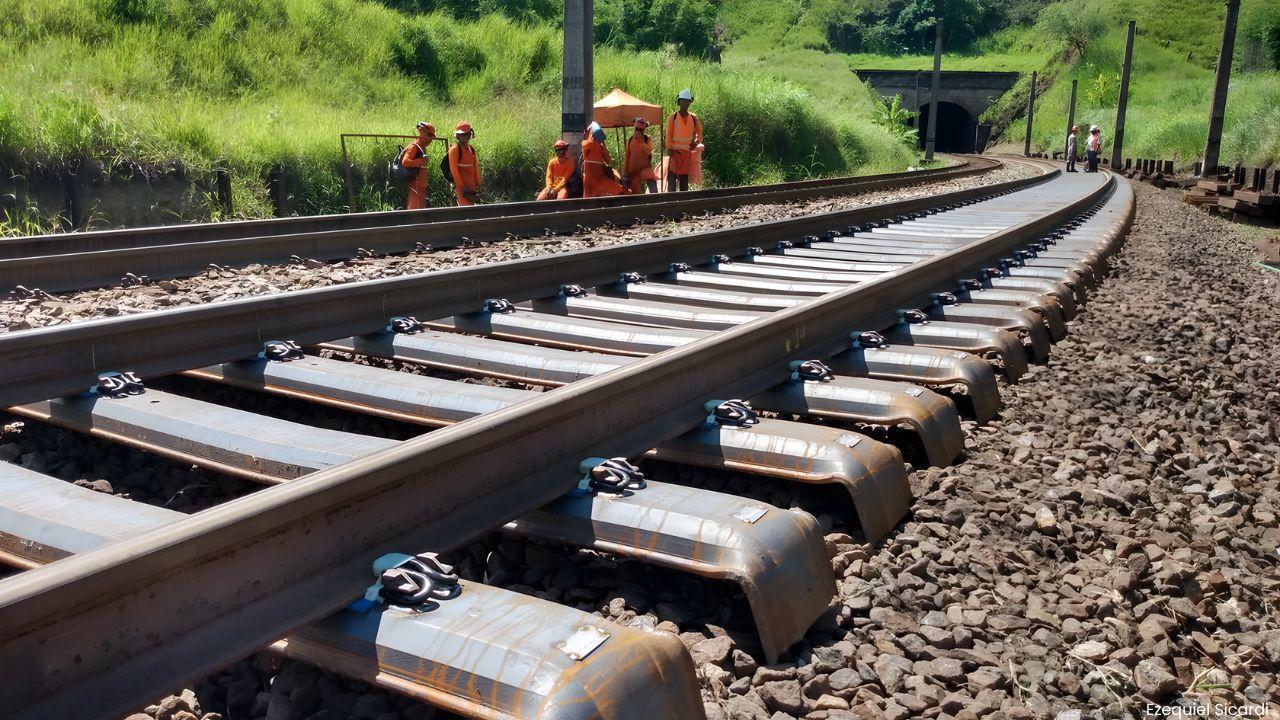
In the complex world of railway infrastructure, where high-speed trains and advanced signalling systems often dominate headlines, one critical component continues to operate quietly beneath the surface literally. Concrete sleepers, often overlooked, are emerging as one of the most vital elements in ensuring rail safety, performance, and long-term efficiency.
While they may appear to be simple blocks supporting the rails, their role is far more sophisticated. They form the essential connection between rails, fastening systems, and ballast, acting as the structural backbone that keeps entire railway networks stable under immense pressure.
Concrete sleepers play a dual role that is fundamental to railway operations. First, they transfer the enormous vertical loads generated by passing trains into the ballast below, distributing pressure evenly across the track structure. Second, they provide lateral stability, preventing track movement caused by thermal expansion and dynamic forces.
Without this stability, tracks could deform or shift, significantly increasing the risk of derailments. This makes sleepers not just a supporting element, but a safety-critical component that ensures trains remain securely aligned even under extreme operating conditions.
Over the years, concrete has established itself as the preferred material for sleepers, outperforming traditional alternatives such as wood and steel. With a lifespan of up to 50 years, concrete sleepers offer unmatched durability and resistance to environmental stress, including temperature fluctuations and weather exposure.
In contrast, wooden sleepers require chemical treatment for longevity, raising environmental concerns, while steel alternatives often fall short in stability and carbon efficiency. Concrete sleepers, on the other hand, strike a balance between performance and sustainability, making them the industry standard for modern rail networks.
Despite their widespread use, designing concrete sleepers is far from straightforward. Engineers face a constant challenge maximizing load distribution while ensuring compatibility with existing track maintenance systems. Increasing the bearing surface can reduce ballast wear, but any major design changes must align with the limitations of track-laying and tamping machinery.
This balance between innovation and practicality defines the future of sleeper technology. The goal is to create designs that enhance performance without disrupting existing infrastructure processes, a challenge that continues to drive research and development in the sector.
The future of railway infrastructure is being shaped by advanced sleeper designs that go beyond traditional expectations. New-generation sleepers feature wider rail seat areas and optimized shapes that improve load distribution and reduce stress on the ballast.
These innovations not only extend the lifespan of the track system but also reduce maintenance requirements, a critical advantage as rail networks worldwide face increasing traffic volumes. With demand expected to double by 2040, infrastructure components like sleepers must evolve to handle higher loads without increasing downtime.
Another major advancement lies in the materials used to produce concrete sleepers. Modern manufacturing techniques are incorporating low-carbon cement alternatives, such as granulated blast furnace slag, significantly reducing CO₂ emissions associated with production.
This shift reflects a broader industry trend toward sustainable infrastructure, where even the most basic components are being redesigned to align with environmental goals. By reducing emissions at the material level, railway systems can achieve meaningful progress toward greener operations.
Concrete sleepers may not capture public attention, but their impact on railway performance is undeniable. They influence everything from track stability and safety to maintenance costs and environmental sustainability.
As rail networks expand and modernize, the importance of these “invisible” components will only grow. In an industry driven by speed, efficiency, and reliability, the future of rail may very well depend on how effectively we innovate the elements beneath the tracks.Because in railway engineering, true strength doesn’t just lie in what moves it lies in what holds everything together.
#trending #latest,#RailInfrastructure #ConcreteSleepers #TrackTechnology #RailSafety #SustainableRail









Advances in Aerospace Technology and Commercial Aviation Recovery
Insights into breakthrough aerospace technologies and commercial aviation’s recovery amid 2025 chall

Defense Modernization and Strategic Spending Trends
Explore key trends in global defense modernization and strategic military spending shaping 2025 secu

Tens of Thousands Protest in Serbia on Anniversary of Deadly Roof Collapse
Tens of thousands in Novi Sad mark a year since a deadly station roof collapse that killed 16, prote

Canada PM Carney Apologizes to Trump Over Controversial Reagan Anti-Tariff Ad
Canadian PM Mark Carney apologized to President Trump over an Ontario anti-tariff ad quoting Reagan,

The ad that stirred a hornets nest, and made Canadian PM Carney say sorry to Trump
Canadian PM Mark Carney apologizes to US President Trump after a tariff-related ad causes diplomatic

Bengaluru-Mumbai Superfast Train Approved After 30-Year Wait
Railways approves new superfast train connecting Bengaluru and Mumbai, ending a 30-year demand, easi



