Post by : Avinab Raana
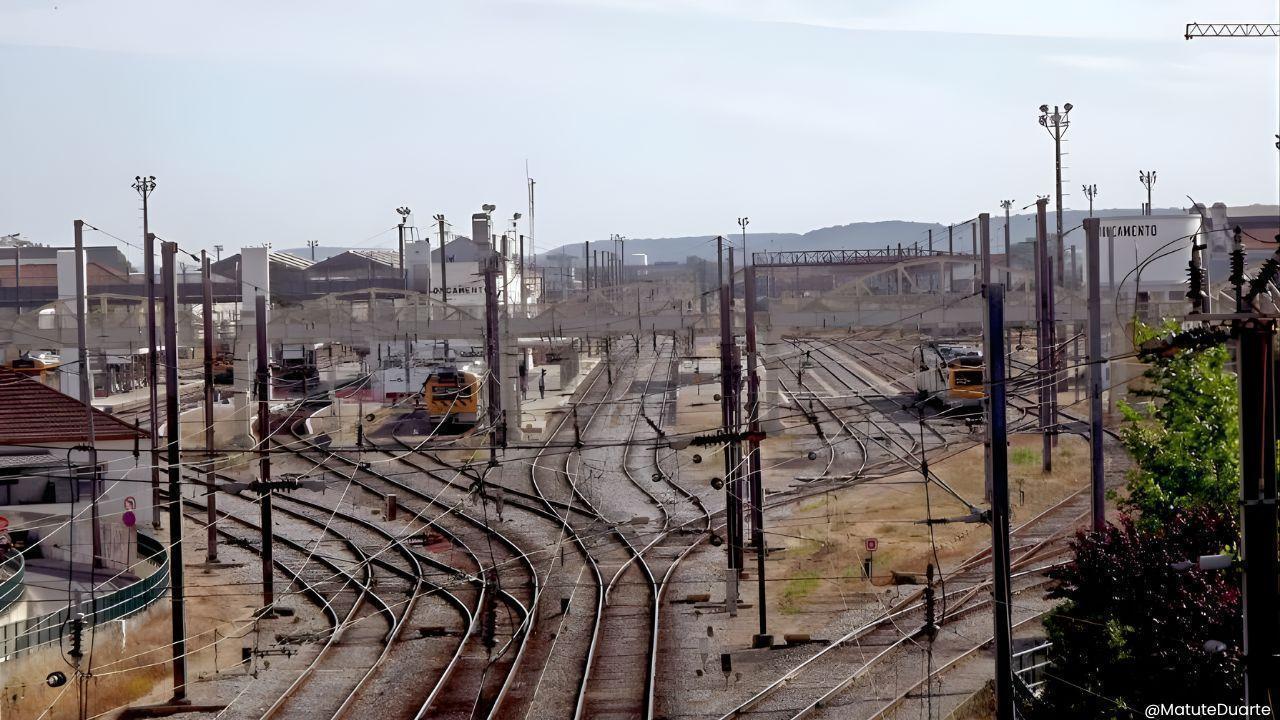
Photo : X / @MatuteDuarte
Portugal’s railway transformation has taken a decisive step forward as Hitachi Rail secures a key contract to develop and certify a new signalling module that will reshape how trains operate across the national network. At a time when European rail systems are accelerating toward digitalisation and interoperability, this development marks a strategic milestone not just for Portugal, but for the broader shift toward unified rail standards across the continent. The project reflects a growing urgency to modernise ageing infrastructure while ensuring seamless operations during the transition.
The project centers around the development of an External Specific Transmission Module (STM), a critical interface that enables compatibility between Portugal’s legacy CONVEL train protection system and the modern European Train Control System (ETCS). This dual-system capability ensures that trains can operate smoothly across both upgraded and non-upgraded lines during the transition phase, avoiding disruptions to daily services.As Portugal advances its national roadmap toward ERTMS deployment, the ability to maintain operational continuity becomes essential. The STM effectively acts as a technological bridge, allowing older infrastructure to coexist with next-generation signalling systems while gradual upgrades are implemented across the network.
At the heart of this initiative lies the concept of interoperability, a key objective of Europe’s rail modernisation strategy. By aligning with ERTMS standards, Portugal is ensuring that its rail network can integrate seamlessly with cross-border European operations, enabling smoother and more efficient international rail traffic.This transformation is particularly significant in a region where rail connectivity is increasingly viewed as a cornerstone of sustainable mobility. ERTMS technology allows trains to operate across different countries without requiring system changes, reducing delays, improving efficiency, and enhancing passenger experience across international corridors.
Beyond technology, the development of a second STM for Portugal represents a strategic move to diversify the country’s rail supply chain. By introducing an additional solution into the market, the project reduces reliance on a single provider, fostering greater competition and resilience within the railway ecosystem.This approach aligns with broader industry trends where governments and operators are seeking to mitigate risks associated with supply chain concentration. A more competitive environment not only drives innovation but also ensures long-term sustainability in procurement and system integration.
The development of the STM will be carried out through a collaborative effort involving engineering teams across Portugal, Sweden, and Italy. This multi-country approach combines local expertise with global technical experience, ensuring that the solution is tailored to Portugal’s specific network requirements while leveraging proven European signalling technologies.Such collaboration highlights the increasingly interconnected nature of modern rail projects, where innovation is driven by cross-border expertise and shared technological standards. It also reinforces Hitachi Rail’s position as a key player in Europe’s digital rail transformation journey.
The introduction of advanced signalling systems like ERTMS is expected to deliver significant operational benefits, including improved safety, higher network capacity, and enhanced reliability. By enabling real-time communication between trains and infrastructure, the system ensures better control over speed, braking, and traffic flow reducing risks and optimizing performance.For passengers, this translates into more punctual services, fewer disruptions, and a smoother travel experience. For operators, it means greater efficiency and the ability to manage increasingly complex rail networks with precision and confidence.
The development of this new STM is more than a technical upgrade.It is a cornerstone of Portugal’s broader vision for a modern, integrated, and future-ready railway system. As the country moves closer to full ERTMS deployment, projects like this will play a crucial role in shaping the next generation of rail mobility. In a rapidly evolving transportation landscape, where digitalisation and sustainability are redefining industry standards, Portugal’s investment in advanced signalling technology signals a clear commitment to staying ahead. The journey toward a smarter railway network is well underway—and with innovations like this, the future of rail travel is set to become faster, safer, and more connected than ever before.
#trending #latest#HitachiRail #ERTMS #RailSignalling #SmartRail #PortugalRail








Advances in Aerospace Technology and Commercial Aviation Recovery
Insights into breakthrough aerospace technologies and commercial aviation’s recovery amid 2025 chall

Defense Modernization and Strategic Spending Trends
Explore key trends in global defense modernization and strategic military spending shaping 2025 secu

Tens of Thousands Protest in Serbia on Anniversary of Deadly Roof Collapse
Tens of thousands in Novi Sad mark a year since a deadly station roof collapse that killed 16, prote

Canada PM Carney Apologizes to Trump Over Controversial Reagan Anti-Tariff Ad
Canadian PM Mark Carney apologized to President Trump over an Ontario anti-tariff ad quoting Reagan,

The ad that stirred a hornets nest, and made Canadian PM Carney say sorry to Trump
Canadian PM Mark Carney apologizes to US President Trump after a tariff-related ad causes diplomatic

Bengaluru-Mumbai Superfast Train Approved After 30-Year Wait
Railways approves new superfast train connecting Bengaluru and Mumbai, ending a 30-year demand, easi



