Post by : Avinab Raana
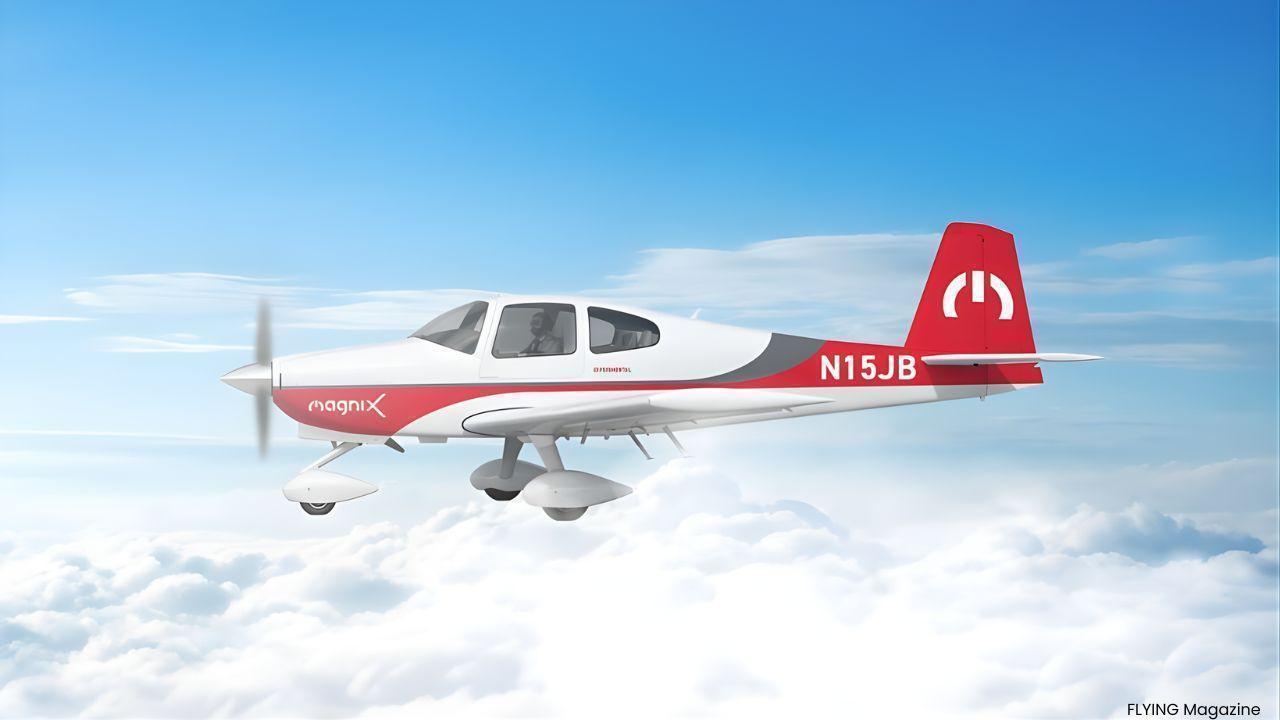
Photo : X / FLYING Magazine
The future of aviation is no longer a distant ambition, it is accelerating into reality. MagniX has unveiled its latest electric motor designed specifically for light aircraft, marking a significant step toward transforming general aviation and flight training. At a time when the aviation industry is grappling with rising fuel costs, environmental pressures, and a growing pilot shortage, this innovation arrives as a timely disruption. It is not just about electrification. It is about redefining accessibility, affordability, and sustainability in aviation’s most foundational segment.
At the center of this breakthrough is the magniAIR electric motor, an air-cooled propulsion system engineered to replace traditional piston engines in light aircraft. Delivering around 175 kW (approximately 230–235 horsepower) while weighing just about 55 kilograms, the engine offers a class-leading power-to-weight ratio, making it highly competitive with conventional aviation engines.
Designed for applications such as flight training, recreational aviation, and light sport aircraft, the magniAIR system brings electric propulsion into a segment that has long relied on decades-old technology. Its compatibility with existing aircraft platforms means operators can retrofit older fleets, unlocking immediate efficiency gains without requiring entirely new aircraft designs.
One of the most compelling advantages of electric propulsion lies in its operational economics. Traditional aviation engines are heavily dependent on fuel, which not only drives up costs but also exposes operators to volatile global energy markets. MagniAIR eliminates fuel consumption entirely, replacing it with a battery-powered system that significantly reduces operating expenses and maintenance requirements.
For flight training institutions, this shift could be transformative. Many training aircraft in use today date back to the 1970s, and rising fuel and maintenance costs have made pilot training increasingly expensive. By offering a cleaner, quieter, and more cost-efficient alternative, electric propulsion could lower barriers to entry for aspiring pilots while addressing the global pilot shortage.
MagniX’s approach goes beyond a standalone motor, it introduces a fully integrated electric powertrain ecosystem. The magniAIR engine is designed to work seamlessly with the company’s proprietary battery systems and power electronics, creating a complete solution for electrifying aircraft.
The company is already integrating this system into a Van’s RV-10 kit aircraft, with a first flight expected soon. This move highlights a strategic focus on scalability, allowing electric propulsion to expand from experimental platforms to mainstream general aviation. The broader vision includes applications across helicopters, hybrid-electric systems, and even regional aircraft, signaling a long-term commitment to electrifying the skies.
A key factor driving the adoption of electric aviation is evolving regulatory frameworks. New rules under the FAA’s MOSAIC program are expected to expand the definition of light sport aircraft, enabling alternative propulsion systems like electric motors to gain certification and enter commercial use more rapidly.
This regulatory shift is critical, as it removes long-standing barriers that have slowed innovation in general aviation. By aligning technological advancements with updated certification pathways, the industry is creating a more favorable environment for electric aircraft to scale and compete with traditional systems.
MagniX’s latest development reflects a broader transformation sweeping across the aviation industry. As airlines and manufacturers explore ways to reduce carbon emissions and operating costs, electric propulsion is emerging as a key solution—particularly for short-haul and light aircraft operations.
The introduction of magniAIR signals that electric aviation is moving beyond experimental demonstrations into practical, market-ready solutions. It represents a shift toward a future where flying is not only more sustainable but also more accessible and economically viable for a wider range of users.
While large commercial electric aircraft may still be years away, the transformation of light aviation is happening now. By targeting the general aviation and training sectors, MagniX is laying the foundation for a broader electrification movement that could eventually extend to regional and commercial aviation.
This moment marks more than just a product launch, it is a turning point for the industry. As electric propulsion continues to evolve, it promises to reshape how we think about flight, from cost structures to environmental impact. The skies ahead are not just faster, they are cleaner, quieter, and more inclusive than ever before.
#trending #latest#ElectricAircraft #MagniX #SustainableAviation #FlightTraining #AerospaceInnovation









Advances in Aerospace Technology and Commercial Aviation Recovery
Insights into breakthrough aerospace technologies and commercial aviation’s recovery amid 2025 chall

Defense Modernization and Strategic Spending Trends
Explore key trends in global defense modernization and strategic military spending shaping 2025 secu

Tens of Thousands Protest in Serbia on Anniversary of Deadly Roof Collapse
Tens of thousands in Novi Sad mark a year since a deadly station roof collapse that killed 16, prote

Canada PM Carney Apologizes to Trump Over Controversial Reagan Anti-Tariff Ad
Canadian PM Mark Carney apologized to President Trump over an Ontario anti-tariff ad quoting Reagan,

The ad that stirred a hornets nest, and made Canadian PM Carney say sorry to Trump
Canadian PM Mark Carney apologizes to US President Trump after a tariff-related ad causes diplomatic

Bengaluru-Mumbai Superfast Train Approved After 30-Year Wait
Railways approves new superfast train connecting Bengaluru and Mumbai, ending a 30-year demand, easi



