Post by : Amit
Photo : X / FlightGlobal
A Bold Partnership Aiming to Rewrite Aviation’s Future
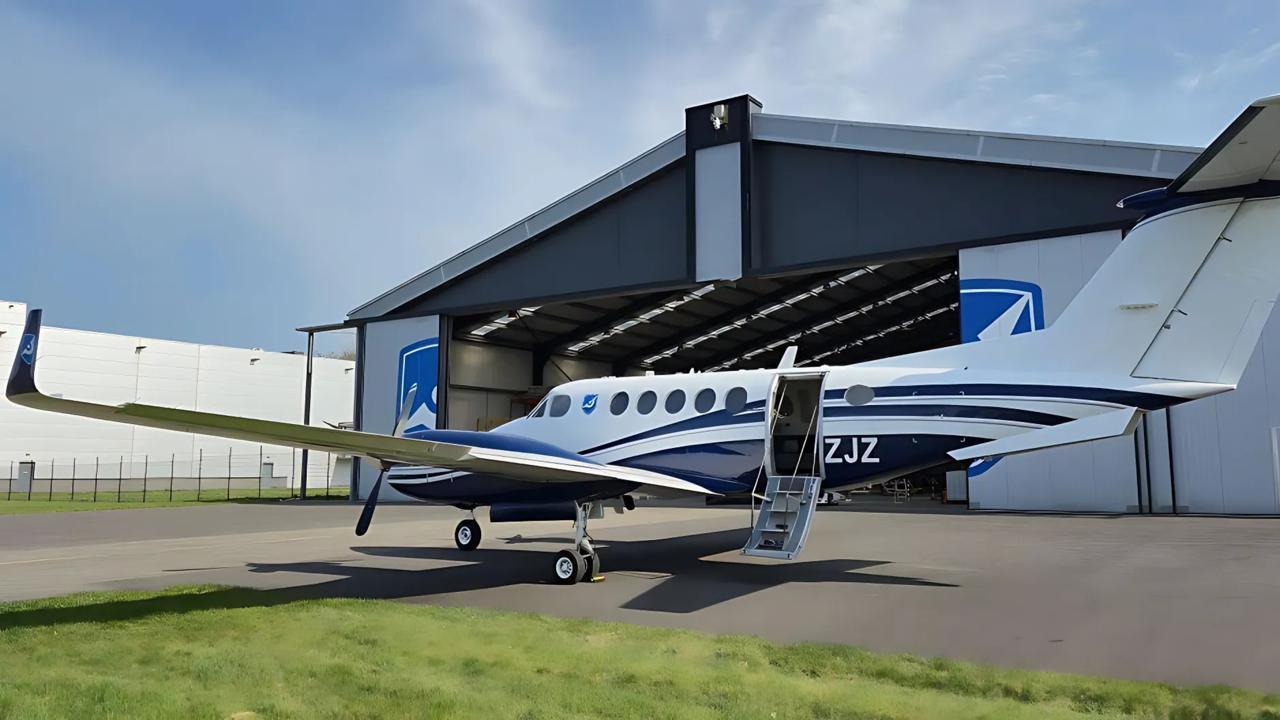
In what could prove to be a pivotal step for the future of regional and business aviation, Dutch operator Zeusch Aviation has joined hands with Australian innovator Dovetail Electric Aviation to explore the conversion of Beechcraft King Air aircraft into hybrid-electric machines. The collaboration, if successful, could not only shake up the industry but also mark a crucial leap toward aviation’s green transition—a path every corner of the sector is now racing to follow.
By bringing together Zeusch’s operational expertise and Dovetail’s forward-thinking electric technology, the partnership is setting its sights on making hybrid-electric aviation not just a possibility, but a commercial reality.
Building a Greener Vision Together
The aviation world finds itself at a crossroads. With mounting pressure to cut emissions and move towards cleaner technologies, the industry is in desperate need of solutions that can deliver real change—quickly. Zeusch Aviation and Dovetail’s decision to join forces is a direct response to this challenge.
The two companies have formalized their collaboration through a memorandum of understanding (MoU), where they will jointly explore ways to retrofit existing King Air aircraft with hybrid-electric propulsion systems. This move could drastically lower carbon emissions and operating costs while retaining the robust performance for which the King Air is known across the globe.
Why the Beechcraft King Air Makes the Perfect Candidate
The choice of aircraft is no coincidence. The Beechcraft King Air has earned its reputation as one of the most versatile and trusted platforms in aviation, flying in roles that range from corporate transport and air ambulance services to surveillance and short-haul charters. It is, quite simply, everywhere.
With more than 7,500 units still in operation globally, the King Air fleet represents an enormous opportunity for meaningful change. Retrofitting even a portion of these aircraft could lead to a significant reduction in aviation’s environmental impact while ensuring the machines continue to deliver on the reliability and flexibility that operators depend on.
Dovetail’s Expertise: Pioneering Electric Aviation from the Ground Up
Dovetail Electric Aviation, based in Australia, has steadily built its reputation as one of the leaders in the push toward electric and hybrid-powered aircraft. Unlike some companies starting from scratch with new aircraft designs, Dovetail focuses on transforming existing aircraft into greener versions—an approach that slashes development time, costs, and regulatory hurdles.
By choosing to retrofit rather than rebuild, Dovetail not only makes adoption faster and more accessible but also gives operators a practical path to sustainability without replacing entire fleets. The King Air project aligns perfectly with Dovetail’s belief in a cleaner, quieter, more efficient aviation future.
Zeusch Aviation: Committing to Cleaner Skies
From its base in the Netherlands, Zeusch Aviation has long operated a fleet of King Airs for diverse missions including medevac, surveillance, and charter services. The company has made it clear that sustainability is no longer optional—it's essential.
By teaming up with Dovetail, Zeusch is taking deliberate steps to shrink its environmental footprint. Hybrid-electric propulsion promises more than just emissions cuts; it brings real-world advantages like lower fuel costs and quieter operations, which could help the company meet tightening environmental regulations and satisfy communities increasingly sensitive to noise.
Aviation’s Decarbonization Clock is Ticking
The facts are hard to ignore: aviation currently accounts for around 2.5% of global CO2 emissions, and air traffic is only expected to increase in the coming decades. The urgency to cut emissions has never been sharper, and the industry knows it must change course.
Hybrid-electric technology, while not yet a silver bullet, offers a tangible way to reduce emissions right now—especially for smaller aircraft like the King Air that operate short to medium-haul routes. The partnership between Zeusch and Dovetail is one of several promising examples of how industry players are taking incremental, but important, steps toward greener aviation.
Engineering the Hybrid King Air: A Technical Balancing Act
The exact technical roadmap for the King Air conversion is still being developed, but the broad outlines are clear. The retrofit could involve replacing or supplementing the traditional turboprop engines with electric propulsion components, possibly powered by batteries, hybrid generators, or a combination of both.
The big challenge? Balancing weight, range, speed, and safety. Every component added for electric propulsion must meet rigorous safety standards and still allow the aircraft to perform as expected. But both Zeusch and Dovetail are optimistic that advancements in battery density and electric motor design will soon make the vision of a hybrid King Air feasible.
The Market Potential: Global Reach, Local Impact
The market for hybrid-electric King Air conversions is enormous. Thousands of these aircraft crisscross skies on every continent, performing missions in business, health, government, and security sectors. Even a modest rate of adoption could yield significant environmental gains on a global scale.
Operators who stand to benefit most are those in regional airline services, emergency medical flights, and surveillance—sectors where fuel savings, quieter operations, and compliance with tightening emissions rules are rapidly becoming make-or-break factors.
Economic Sense Meets Environmental Good
The environmental benefits of hybrid-electric aviation are clear, but what’s equally important is the economic case. Fuel is one of the biggest cost drivers for aviation operators, and hybrid-electric systems promise substantial savings. Maintenance costs could also fall, as electric systems tend to be simpler and less prone to wear and tear compared to conventional engines.
Noise reduction is another game-changing advantage. Hybrid-electric aircraft can operate more quietly, which may open doors for additional flight routes near urban centers where noise concerns have historically limited operations.
Navigating Regulatory Challenges on the Road to Certification
As promising as the technology is, one of the biggest hurdles remains certification. Regulatory bodies like EASA and the FAA are still in the process of creating clear certification pathways for hybrid and electric aircraft. This is uncharted territory for both regulators and innovators.
Zeusch and Dovetail are already engaging with authorities to ensure their project aligns with evolving standards. By moving early, the two companies not only position themselves ahead of the competition but also have the chance to influence how future hybrid-electric regulations are shaped.
What Comes Next?
Though the project is still in its early days, both Zeusch and Dovetail are determined to move quickly. The first prototype is expected to take shape within the next few years, aligning with broader global trends that anticipate the arrival of hybrid and electric aircraft in commercial operations by the late 2020s.
For now, the partners are bringing stakeholders—including technology providers, regulatory agencies, and end users—into the conversation to ensure that the final product meets both environmental goals and operational realities.
A Step Toward Greener Skies
The collaboration between Zeusch Aviation and Dovetail Electric Aviation is about more than just retrofitting a single aircraft type—it represents a mindset shift in an industry long dominated by fossil fuels. By targeting one of the world’s most popular turboprops for hybrid conversion, the project offers a practical path to cleaner aviation that could make a real difference within this decade.
In an era where climate change and environmental accountability are non-negotiable, projects like this offer both hope and action. The sky may still be the limit, but now it’s time to make sure those skies are cleaner, quieter, and more sustainable for generations to come.
Aviation, Aircraft, Partnership





Advances in Aerospace Technology and Commercial Aviation Recovery
Insights into breakthrough aerospace technologies and commercial aviation’s recovery amid 2025 chall

Defense Modernization and Strategic Spending Trends
Explore key trends in global defense modernization and strategic military spending shaping 2025 secu

Tens of Thousands Protest in Serbia on Anniversary of Deadly Roof Collapse
Tens of thousands in Novi Sad mark a year since a deadly station roof collapse that killed 16, prote

Canada PM Carney Apologizes to Trump Over Controversial Reagan Anti-Tariff Ad
Canadian PM Mark Carney apologized to President Trump over an Ontario anti-tariff ad quoting Reagan,

The ad that stirred a hornets nest, and made Canadian PM Carney say sorry to Trump
Canadian PM Mark Carney apologizes to US President Trump after a tariff-related ad causes diplomatic

Bengaluru-Mumbai Superfast Train Approved After 30-Year Wait
Railways approves new superfast train connecting Bengaluru and Mumbai, ending a 30-year demand, easi



