Post by : Avinab Raana
Photo : X / Reuters
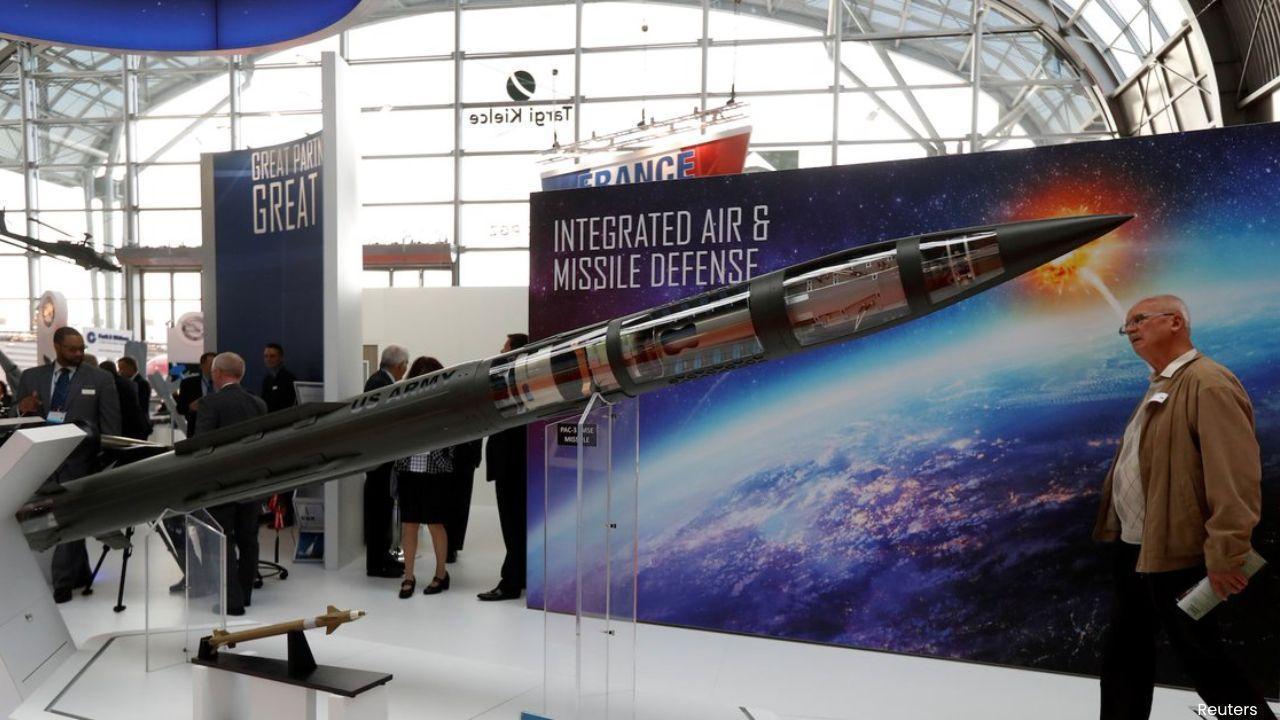
The United States Army has taken a decisive step to reinforce its air defense capabilities by awarding a multi-billion-dollar contract to Lockheed Martin for the production of advanced PAC-3 Missile Segment Enhancement (MSE) interceptors. Valued at approximately $4.7 billion, the deal underscores a growing urgency within global defense frameworks, where missile threats and aerial warfare are evolving at unprecedented speed. This contract is not just another procurement, it is a strategic move aimed at strengthening both domestic defense readiness and allied security networks in an increasingly volatile geopolitical environment.
At the heart of this agreement lies the PAC-3 MSE interceptor, one of the most advanced air and missile defense systems in operation today. Designed as part of the Patriot defense system, the PAC-3 MSE is engineered to intercept ballistic missiles, cruise missiles, and advanced aerial threats with pinpoint accuracy. Its “hit-to-kill” technology eliminates targets through direct impact, ensuring high reliability in high-stakes combat scenarios.
The interceptor has evolved significantly over decades, transitioning from a Cold War-era defense mechanism into a highly sophisticated system capable of countering next-generation threats. With each unit valued in the millions, the system represents not only technological superiority but also a critical investment in national and allied security.
One of the most defining aspects of the new contract is its focus on scaling production. Lockheed Martin is already in the process of significantly increasing its manufacturing capacity, with long-term plans to more than triple annual output from around 600 units to nearly 2,000 missiles per year.
This expansion is being driven by a surge in global demand, as nations across Europe, the Middle East, and Asia seek to strengthen their missile defense systems. The current geopolitical climate, marked by rising tensions and active conflicts, has exposed the gap between existing stockpiles and real-world consumption rates. The new contract aims to bridge this gap, ensuring faster replenishment and sustained operational readiness.
Beyond domestic use, a significant portion of the contract is expected to support foreign military sales, reinforcing the United States’ role as a key supplier of advanced defense systems to its allies. This aspect of the deal highlights the interconnected nature of modern defense strategies, where collective security often depends on shared technologies and coordinated capabilities.
The PAC-3 MSE system has already been deployed by multiple allied nations, proving its effectiveness in real-world scenarios. By expanding production, the US Army and Lockheed Martin are not only addressing immediate defense needs but also strengthening long-term strategic partnerships across regions.
The contract also reflects a broader transformation in defense procurement and industrial strategy. Traditional acquisition models are being replaced with more agile frameworks that prioritize speed, scalability, and long-term collaboration between government and industry.
Lockheed Martin’s ongoing investments in infrastructure and production technologies are central to this shift. By streamlining manufacturing processes and leveraging advanced engineering techniques, the company is positioning itself to meet the increasing demand without compromising on quality or performance. This transformation is critical in a landscape where delays can have significant operational consequences.
The timing of this contract is particularly significant. As missile and drone threats continue to evolve, defense systems must adapt to counter more sophisticated and unpredictable challenges. The PAC-3 MSE interceptor is designed to operate within integrated air defense networks, providing layered protection against a wide range of threats.
This capability is becoming increasingly important as adversaries develop advanced missile technologies that can evade traditional defenses. By investing in next-generation interceptors, the US Army is ensuring that it remains ahead of the curve in both capability and readiness.
The $4.7 billion PAC-3 MSE contract represents more than just a financial milestone. It is a clear signal of how modern warfare is being reshaped by technology, demand, and strategic urgency. As production ramps up and global deployment expands, the interceptor is set to play an even more critical role in shaping the future of air and missile defense.
In a world where threats are becoming faster, smarter, and more complex, the ability to respond with equal speed and precision will define the next era of defense. This deal positions the United States and its allies at the forefront of that transformation, reinforcing a simple but powerful reality, the future of security will be built on innovation, scale, and readiness.
#trending #latest#PAC3MSE #LockheedMartin #MissileDefense #USArmyContract #DefenseTechnology










Advances in Aerospace Technology and Commercial Aviation Recovery
Insights into breakthrough aerospace technologies and commercial aviation’s recovery amid 2025 chall

Defense Modernization and Strategic Spending Trends
Explore key trends in global defense modernization and strategic military spending shaping 2025 secu

Tens of Thousands Protest in Serbia on Anniversary of Deadly Roof Collapse
Tens of thousands in Novi Sad mark a year since a deadly station roof collapse that killed 16, prote

Canada PM Carney Apologizes to Trump Over Controversial Reagan Anti-Tariff Ad
Canadian PM Mark Carney apologized to President Trump over an Ontario anti-tariff ad quoting Reagan,

The ad that stirred a hornets nest, and made Canadian PM Carney say sorry to Trump
Canadian PM Mark Carney apologizes to US President Trump after a tariff-related ad causes diplomatic

Bengaluru-Mumbai Superfast Train Approved After 30-Year Wait
Railways approves new superfast train connecting Bengaluru and Mumbai, ending a 30-year demand, easi



