Post by : Avinab Raana
Photo : X / PiQ Newswire
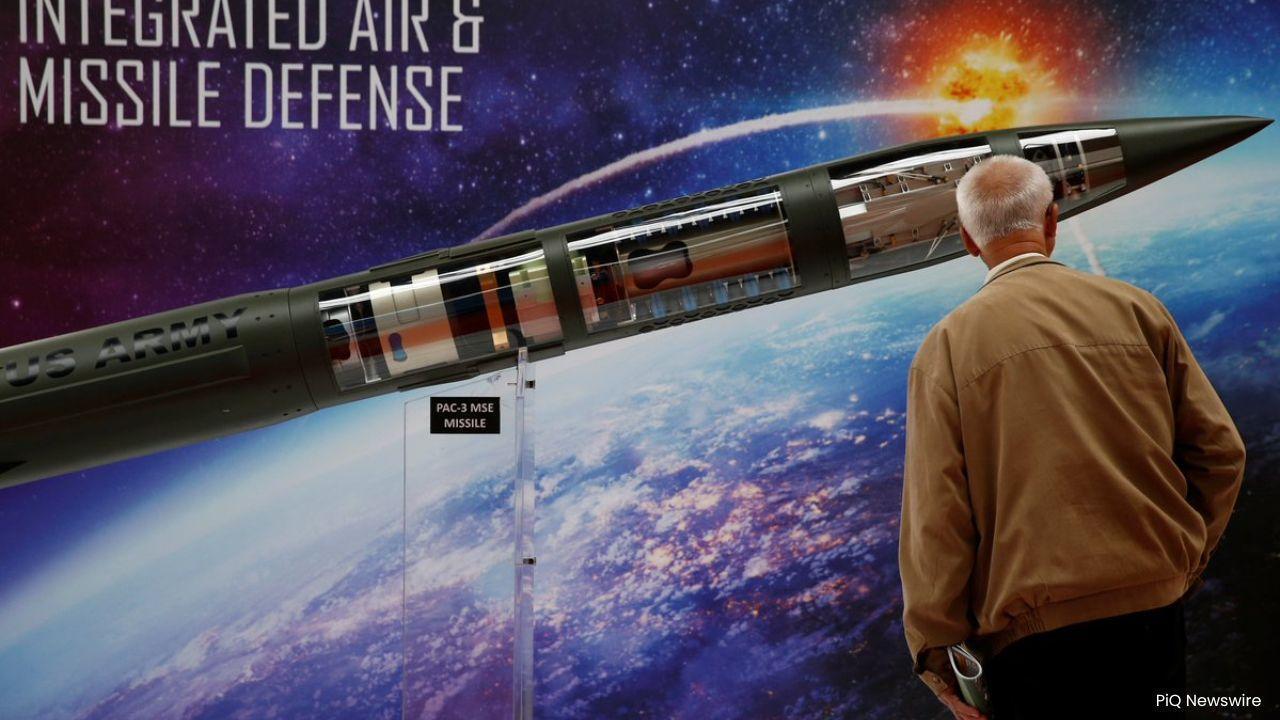
In a major escalation of defense manufacturing efforts, the U.S. Pentagon has secured a long-term agreement with Boeing and Lockheed Martin to significantly boost production of PAC-3 Missile Segment Enhancement (MSE) seekers, one of the most critical components in modern air defense systems. The initiative, structured as a seven-year framework, aims to dramatically scale output and strengthen supply chains amid rising global security challenges and increasing demand for advanced missile interception technologies.This move reflects a broader shift in defense strategy, where rapid production and industrial readiness are becoming just as important as technological superiority. With conflicts intensifying across multiple regions, the ability to replenish and expand missile inventories has emerged as a top priority for military planners.
At the core of this expansion lies the PAC-3 MSE system, a key component of the Patriot air defense platform widely used by the United States and its allies. The seeker technology plays a decisive role in detecting, tracking, and intercepting incoming threats, including ballistic missiles, cruise missiles, and advanced aerial targets.Unlike traditional systems, the PAC-3 MSE interceptor uses “hit-to-kill” technology destroying targets through direct impact rather than explosive detonation. This precision capability makes it one of the most effective solutions in modern missile defense, particularly in high-threat environments where accuracy and response time are critical.As global conflicts increasingly involve sophisticated missile and drone attacks, demand for such systems has surged, placing unprecedented pressure on production capacity.
The newly announced agreement is designed to more than triple production capacity over the coming years, marking one of the most aggressive expansions in the defense manufacturing sector in recent history. Lockheed Martin, the prime contractor for the PAC-3 system, has already been working to scale up output from around 600 units annually to a target of approximately 2,000 per year under the new framework. At the same time, Boeing is playing a critical role in producing the seekers themselves, with existing contracts already targeting the delivery of thousands of units through the end of the decade.This coordinated expansion across multiple industry players highlights a growing emphasis on strengthening the defense industrial base ensuring that production can keep pace with operational demands.
The push to ramp up production is being driven by a sharp rise in global demand for missile defense systems, particularly among allied nations facing evolving security threats. From Europe to the Middle East and the Indo-Pacific, countries are increasingly investing in air defense capabilities to counter advanced missile and drone attacks.This surge in demand has exposed vulnerabilities in existing supply chains, prompting governments and defense contractors to adopt new acquisition models that prioritize speed, scalability, and long-term planning. The Pentagon’s framework agreement is a direct response to these challenges, offering industry partners greater certainty while enabling them to invest in expanded manufacturing capacity and workforce development.
Beyond the immediate production boost, this development signals a fundamental transformation in how defense systems are manufactured and delivered. The focus is shifting toward long-term industrial partnerships, streamlined procurement processes, and the rapid scaling of proven technologies.For companies like Boeing and Lockheed Martin, the agreement represents both an opportunity and a responsibility to deliver at unprecedented scale while maintaining the precision and reliability that modern defense systems demand. For the Pentagon, it marks a strategic pivot toward ensuring readiness in an increasingly uncertain global landscape.As geopolitical tensions continue to shape defense priorities, the ability to produce advanced systems quickly and efficiently will become a defining factor in maintaining security and strategic advantage. The expansion of PAC-3 MSE production is not just about meeting today’s needs, it is about preparing for the future of warfare.
#trending #latest,#Boeing #LockheedMartin #PAC3MSE #MissileDefense #AerospaceIndustry










Advances in Aerospace Technology and Commercial Aviation Recovery
Insights into breakthrough aerospace technologies and commercial aviation’s recovery amid 2025 chall

Defense Modernization and Strategic Spending Trends
Explore key trends in global defense modernization and strategic military spending shaping 2025 secu

Tens of Thousands Protest in Serbia on Anniversary of Deadly Roof Collapse
Tens of thousands in Novi Sad mark a year since a deadly station roof collapse that killed 16, prote

Canada PM Carney Apologizes to Trump Over Controversial Reagan Anti-Tariff Ad
Canadian PM Mark Carney apologized to President Trump over an Ontario anti-tariff ad quoting Reagan,

The ad that stirred a hornets nest, and made Canadian PM Carney say sorry to Trump
Canadian PM Mark Carney apologizes to US President Trump after a tariff-related ad causes diplomatic

Bengaluru-Mumbai Superfast Train Approved After 30-Year Wait
Railways approves new superfast train connecting Bengaluru and Mumbai, ending a 30-year demand, easi



