Post by : Avinab Raana
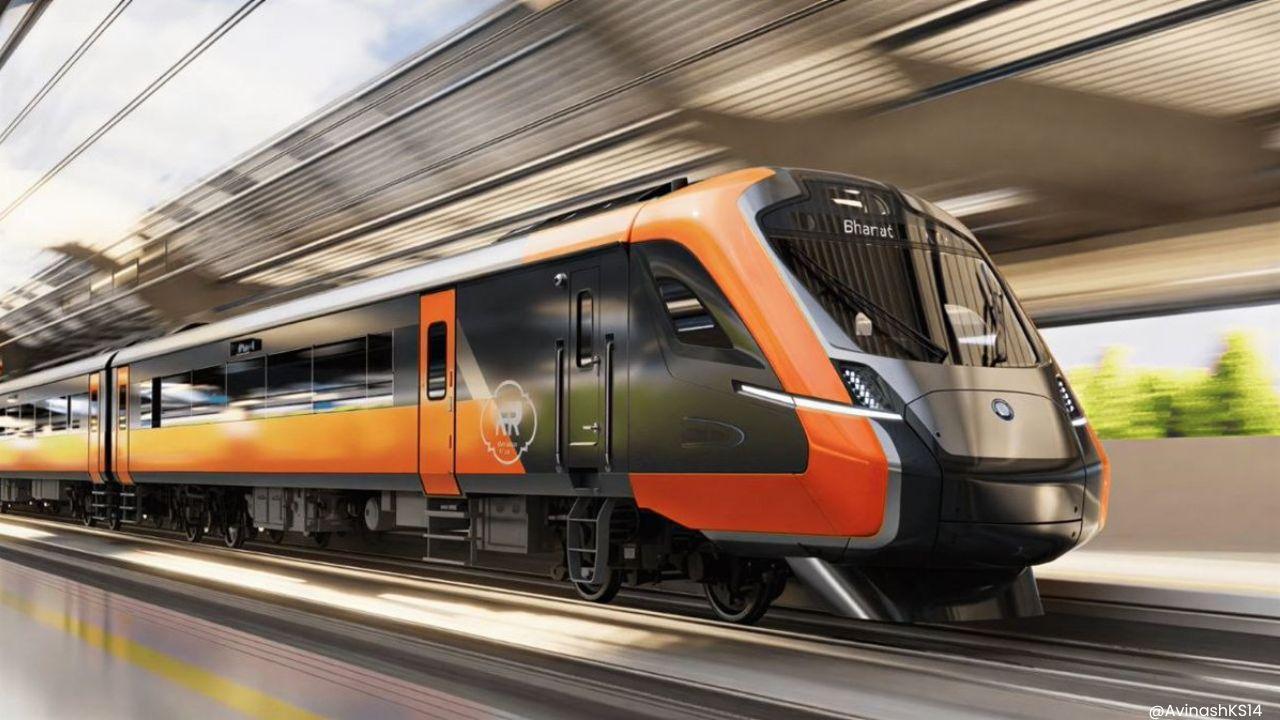
Photo : X / @AvinashKS14
India’s railway sector is entering a bold new phase as the Ministry of Railways clears next-generation trainsets capable of reaching speeds of 220 kmph surpassing the current Vande Bharat platform. This development is more than just a technological upgrade; it signals India’s growing ambition to compete with global semi-high-speed rail standards. As passenger demand rises and mobility expectations evolve, the announcement marks a decisive step toward redefining how India moves—faster, smarter, and more efficiently than ever before.
For years, the Vande Bharat Express has been the symbol of India’s modern rail transformation, with a design speed of 180 kmph. However, the newly approved trainsets push this benchmark significantly higher, introducing a design speed of 220 kmph and an operational capability of around 200 kmph.
This leap is not just about numbers, it represents a strategic evolution in engineering, signaling a shift from incremental upgrades to a new generation of high-performance trainsets. With over 80 Vande Bharat services already operational across the country, the new trains are expected to build on this success while addressing the need for higher speed and efficiency in intercity travel.
The upcoming trainsets will feature 16-car configurations built on India’s broad-gauge network, maintaining compatibility with existing infrastructure while enhancing performance.
Unlike earlier lightweight designs, these trains are expected to incorporate steel-bodied coaches, offering improved structural strength and durability key factors for sustained high-speed operations. The focus on robust engineering reflects Indian Railways’ intent to balance speed with long-term reliability and safety.
The project is also closely linked to domestic manufacturing capabilities, with Integral Coach Factory and industry partners playing a central role in design and production. This aligns with India’s broader push toward self-reliance in rail technology and advanced manufacturing.The Railway Board has included two of these next-generation trainsets under the Coach Production Programme for 2027–28, setting a clear timeline for rollout.
While the initial phase involves just two trainsets, the move is widely seen as a pilot for a larger transformation. If successful, these trains could pave the way for mass production and deployment across key high-density corridors, significantly reducing travel times between major cities.
India’s current rail network operates largely below 160 kmph due to infrastructure limitations, with true high-speed rail (above 300 kmph) still under development through projects like the Mumbai-Ahmedabad bullet train. The new 220 kmph trainsets strategically position themselves in the middle—bridging the gap between conventional rail and ultra-high-speed systems.
This approach allows Indian Railways to maximize existing infrastructure while gradually upgrading tracks, signalling systems, and safety mechanisms. It also provides a more cost-effective pathway to faster travel, avoiding the massive capital investments required for dedicated high-speed corridors.
The introduction of these trainsets is part of a larger modernization drive that includes AI-based track monitoring, improved welding technologies, and the adoption of composite sleepers to enhance performance and safety.
Such innovations indicate that the focus is not limited to rolling stock alone but extends to the entire rail ecosystem. By integrating advanced technologies across infrastructure and operations, Indian Railways is building a foundation for sustained high-speed performance.
For passengers, the impact of these next-generation trainsets could be transformative. Faster speeds mean shorter travel times, improved connectivity between economic hubs, and a more competitive alternative to air travel on short and medium routes.
Beyond convenience, the development also carries significant economic implications. Enhanced rail connectivity can boost regional development, facilitate business travel, and reduce congestion on roads and airports. As India continues to urbanize, such advancements are critical for supporting long-term growth.
The approval of 220 kmph trainsets marks a defining moment in India’s transportation journey. It reflects a clear shift from catching up to global standards to actively shaping the future of rail innovation.
As these trains move from blueprint to reality, they will not only redefine speed but also reshape expectations of what Indian Railways can achieve. In the race toward faster, smarter mobility, this is not just an upgrade, it is the beginning of a new era on India’s tracks.
#trending #latest#IndianRailways #220KmphTrains #VandeBharatUpgrade #HighSpeedRailIndia #RailInnovation








Advances in Aerospace Technology and Commercial Aviation Recovery
Insights into breakthrough aerospace technologies and commercial aviation’s recovery amid 2025 chall

Defense Modernization and Strategic Spending Trends
Explore key trends in global defense modernization and strategic military spending shaping 2025 secu

Tens of Thousands Protest in Serbia on Anniversary of Deadly Roof Collapse
Tens of thousands in Novi Sad mark a year since a deadly station roof collapse that killed 16, prote

Canada PM Carney Apologizes to Trump Over Controversial Reagan Anti-Tariff Ad
Canadian PM Mark Carney apologized to President Trump over an Ontario anti-tariff ad quoting Reagan,

The ad that stirred a hornets nest, and made Canadian PM Carney say sorry to Trump
Canadian PM Mark Carney apologizes to US President Trump after a tariff-related ad causes diplomatic

Bengaluru-Mumbai Superfast Train Approved After 30-Year Wait
Railways approves new superfast train connecting Bengaluru and Mumbai, ending a 30-year demand, easi



