Post by : Avinab Raana
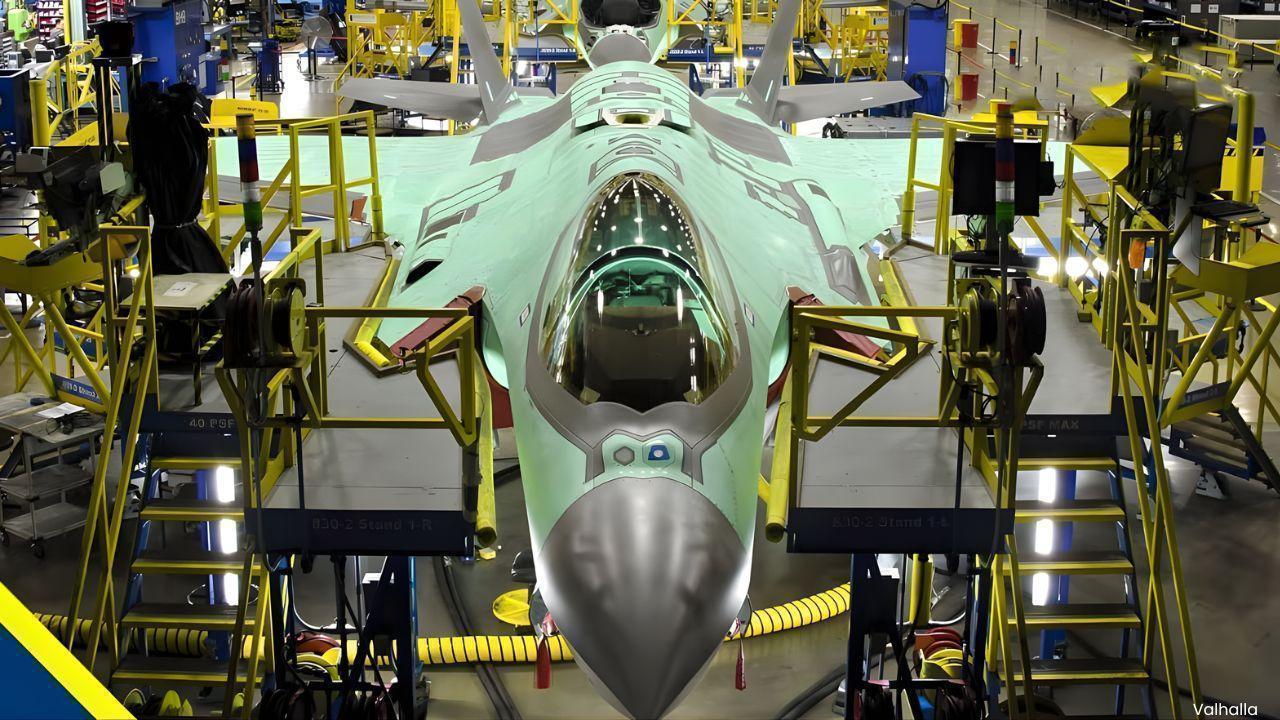
Photo : X / Valhalla
Finland’s ambitious transition to the F-35 Lightning II is encountering a major strategic hurdle as delays in the Block 4 upgrade program begin to ripple across its defense roadmap. While the Nordic nation committed to acquiring 64 advanced fighter jets to replace its aging fleet, the reality unfolding is far more complex—aircraft deliveries will proceed, but without the full spectrum of capabilities initially promised. This development is not just a technical delay; it is a recalibration of expectations in one of Europe’s most closely watched defense procurements.
At the core of the issue lies the Block 4 modernization program, a comprehensive upgrade package designed to enhance the F-35 with next-generation sensors, weapons systems, and electronic warfare capabilities. Originally envisioned as a transformative leap in combat performance, the program has faced persistent delays, with completion now expected no earlier than 2031 roughly five years behind schedule.
This timeline shift has forced a significant reduction in the number of planned capabilities, as developers prioritize what can realistically be delivered within revised deadlines. What was once a sweeping upgrade of more than 75 enhancements is now being restructured into a more limited, phased rollout, fundamentally altering the aircraft’s near-term operational profile.
One of the most striking aspects of the situation is the financial burden now falling on Finland. Despite receiving aircraft that do not fully meet the originally anticipated specifications, the country will not receive compensation from the manufacturer. Instead, it will be responsible for funding extensive post-delivery upgrades, spanning both software and hardware modifications.
These retrofits are expected to extend well into the mid-2030s, meaning Finland’s fleet will undergo continuous modernization long after initial operational capability is achieved. The cost implications remain uncertain, but they are likely to be absorbed through a combination of procurement budgets and long-term operational funding. This introduces a new layer of financial complexity to a program already valued at approximately €10 billion.
The challenges are not limited to software and avionics. The Block 4 upgrade demands significantly higher power and cooling capacity, exposing limitations in the current engine configuration. Plans for a completely new engine were ultimately shelved due to cost and timeline concerns, replaced instead by a core upgrade to the existing powerplant.
However, this engine modernization effort is itself delayed and is not expected to enter production before 2031. As a result, several advanced capabilities dependent on enhanced power systems will be postponed even further, potentially pushing full operational potential into the mid-2030s.
Finland’s situation is not an isolated case, it reflects broader systemic challenges within the global F-35 program. Delays linked to the Technology Refresh 3 (TR-3) hardware package have already impacted delivery schedules worldwide, with aircraft arriving later than planned and lacking full combat-ready configurations.
These challenges highlight the growing complexity of integrating advanced digital systems into modern fighter aircraft. As capabilities become increasingly software-driven, development timelines are becoming more unpredictable, and cost overruns are becoming harder to contain. For international partners like Finland, this means adapting to a moving target in terms of both performance and budget.
For Finland, the delay arrives at a critical moment as it strengthens its defense posture amid evolving geopolitical tensions in Europe. While the F-35 remains one of the most advanced fighter platforms in the world, the gap between delivery and full capability introduces operational challenges.
In the short term, Finland will operate aircraft that are highly capable but not fully optimized. In the long term, the country must navigate a complex upgrade path that balances technological advancement with fiscal responsibility. This dynamic underscores a broader reality facing modern militaries—cutting-edge defense systems often come with extended timelines and evolving cost structures.
The unfolding situation with Finland’s F-35 fleet serves as a critical test case for the future of large-scale defense programs. It raises important questions about procurement transparency, technological risk management, and the balance between ambition and execution.
As Block 4 continues to evolve, its success or failure will have far-reaching implications not just for Finland, but for every nation invested in the F-35 ecosystem. In an era where air superiority depends as much on software as hardware, the true battle may be fought not in the skies, but in development timelines and system integration.
#trending #latest#F35Block4 #FinlandAirForce #DefenseAviation #LockheedMartin #MilitaryModernization



Advances in Aerospace Technology and Commercial Aviation Recovery
Insights into breakthrough aerospace technologies and commercial aviation’s recovery amid 2025 chall

Defense Modernization and Strategic Spending Trends
Explore key trends in global defense modernization and strategic military spending shaping 2025 secu

Tens of Thousands Protest in Serbia on Anniversary of Deadly Roof Collapse
Tens of thousands in Novi Sad mark a year since a deadly station roof collapse that killed 16, prote

Canada PM Carney Apologizes to Trump Over Controversial Reagan Anti-Tariff Ad
Canadian PM Mark Carney apologized to President Trump over an Ontario anti-tariff ad quoting Reagan,

The ad that stirred a hornets nest, and made Canadian PM Carney say sorry to Trump
Canadian PM Mark Carney apologizes to US President Trump after a tariff-related ad causes diplomatic

Bengaluru-Mumbai Superfast Train Approved After 30-Year Wait
Railways approves new superfast train connecting Bengaluru and Mumbai, ending a 30-year demand, easi



