Post by : Avinab Raana
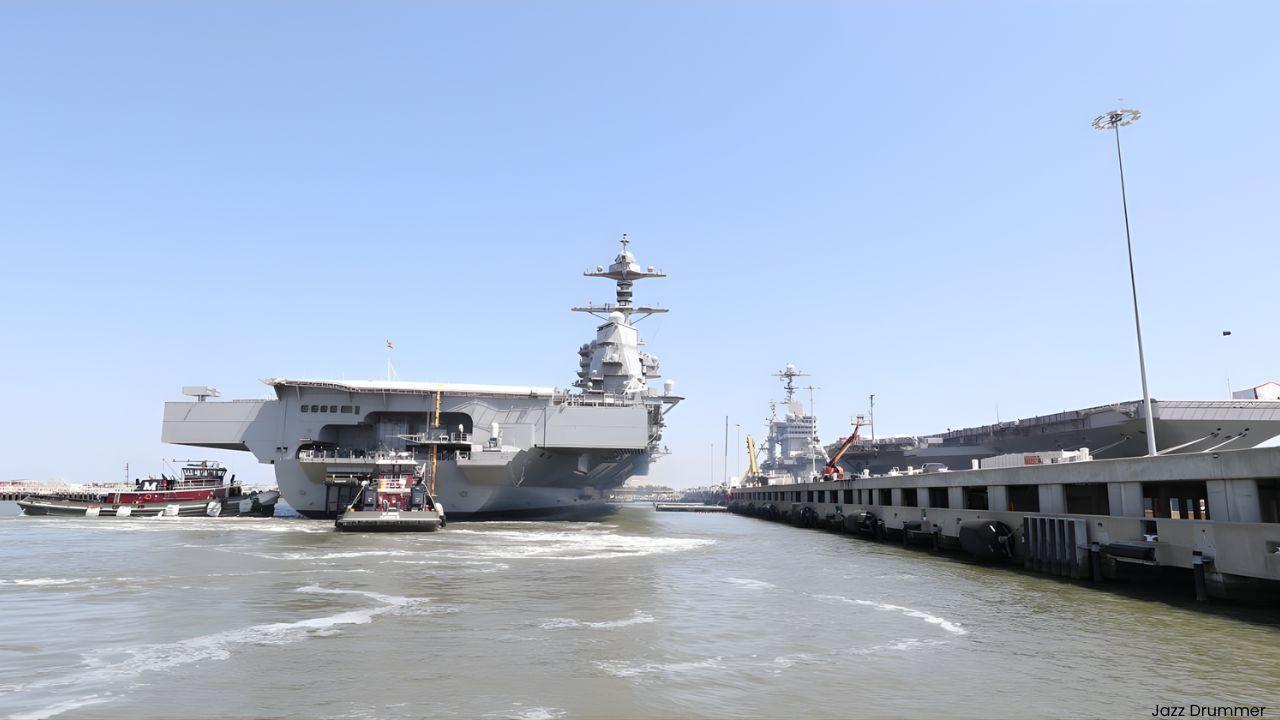
Photo : X / Jazz Drummer
The global shipbuilding industry is entering a new era as Huntington Ingalls Industries (HII), the largest military shipbuilder in the United States, moves to integrate advanced robotics into some of its most labor-intensive shipyard processes. By introducing AI-powered robotic systems for grinding, blasting, and painting, HII is targeting a critical transformation in how modern naval vessels are built faster, safer, and more efficiently.
This shift is particularly significant because it goes beyond traditional automation areas like welding and cutting, focusing instead on the often-overlooked yet essential finishing processes that determine quality, durability, and operational readiness of ships.
HII’s collaboration with robotics firm GrayMatter Robotics focuses on automating surface treatment processes such as grinding, sandblasting, coating, and inspection—tasks that have traditionally relied heavily on manual labor.
These processes are not only physically demanding but also require high levels of precision and consistency. By deploying AI-enabled robotic arms equipped with advanced control software, HII aims to improve accuracy while significantly reducing human strain. The robots are designed to adapt to complex and variable surfaces within shipyards, a key challenge that has historically limited automation in shipbuilding environments.
One of the most compelling advantages of this robotic integration is the potential increase in productivity. According to industry insights, these systems can deliver up to 12 times the throughput of manual labor while reducing rework by as much as 95% due to improved consistency.
For a company like HII, which builds a majority of the U.S. Navy’s large surface combatants, even marginal efficiency gains can translate into significant improvements in delivery timelines and production capacity.
The company has already reported a 14% increase in shipbuilding throughput in 2025 and is targeting an additional 15% growth in 2026, with robotics and AI playing a central role in achieving these goals.
Beyond efficiency, this move addresses one of the biggest challenges facing the shipbuilding industry—skilled labor shortages. Many of the tasks being automated are physically intense and repetitive, making them difficult to scale with a limited workforce.
Rather than replacing workers, HII’s strategy focuses on augmenting human capabilities. By allowing robots to handle repetitive and hazardous tasks, skilled workers can shift toward higher-value roles that require expertise and decision-making.This approach reflects a broader trend across industrial sectors, where automation is being used to enhance productivity while supporting workforce sustainability.
The timing of this initiative is critical, as global demand for naval vessels continues to rise amid evolving security challenges. For the U.S. Navy, shipbuilding capacity is directly tied to national defense readiness.
By integrating robotics into its production lines, HII is not only improving efficiency but also strengthening the broader maritime industrial base. The initiative aligns with efforts to accelerate production timelines, reduce bottlenecks, and ensure that shipbuilding keeps pace with strategic defense requirements. It also signals a shift toward “smart shipyards,” where AI, robotics, and digital engineering converge to create highly optimized manufacturing environments.
HII’s adoption of robotics sets a precedent for shipyards worldwide. As competition intensifies and demand for faster delivery increases, other shipbuilders are likely to follow suit, investing in automation technologies to remain competitive.
This transformation is particularly important in an industry where traditional processes have remained largely unchanged for decades. By modernizing core operations, companies can unlock new levels of efficiency, quality, and scalability.
The integration of robotics into shipyard operations marks a turning point for the maritime industry. What was once considered too complex to automate is now becoming a reality, thanks to advancements in AI and adaptive robotics.
For HII, this move is not just about improving production—it is about redefining the future of shipbuilding. As automation continues to evolve, shipyards of tomorrow will be smarter, faster, and more resilient, capable of meeting the growing demands of global maritime and defense sectors.
#trending #latest#Shipbuilding #Robotics #AIinManufacturing #NavalEngineering #MaritimeInnovation






Advances in Aerospace Technology and Commercial Aviation Recovery
Insights into breakthrough aerospace technologies and commercial aviation’s recovery amid 2025 chall

Defense Modernization and Strategic Spending Trends
Explore key trends in global defense modernization and strategic military spending shaping 2025 secu

Tens of Thousands Protest in Serbia on Anniversary of Deadly Roof Collapse
Tens of thousands in Novi Sad mark a year since a deadly station roof collapse that killed 16, prote

Canada PM Carney Apologizes to Trump Over Controversial Reagan Anti-Tariff Ad
Canadian PM Mark Carney apologized to President Trump over an Ontario anti-tariff ad quoting Reagan,

The ad that stirred a hornets nest, and made Canadian PM Carney say sorry to Trump
Canadian PM Mark Carney apologizes to US President Trump after a tariff-related ad causes diplomatic

Bengaluru-Mumbai Superfast Train Approved After 30-Year Wait
Railways approves new superfast train connecting Bengaluru and Mumbai, ending a 30-year demand, easi



