Post by : Avinab Raana
Photo : X / Electrek.co
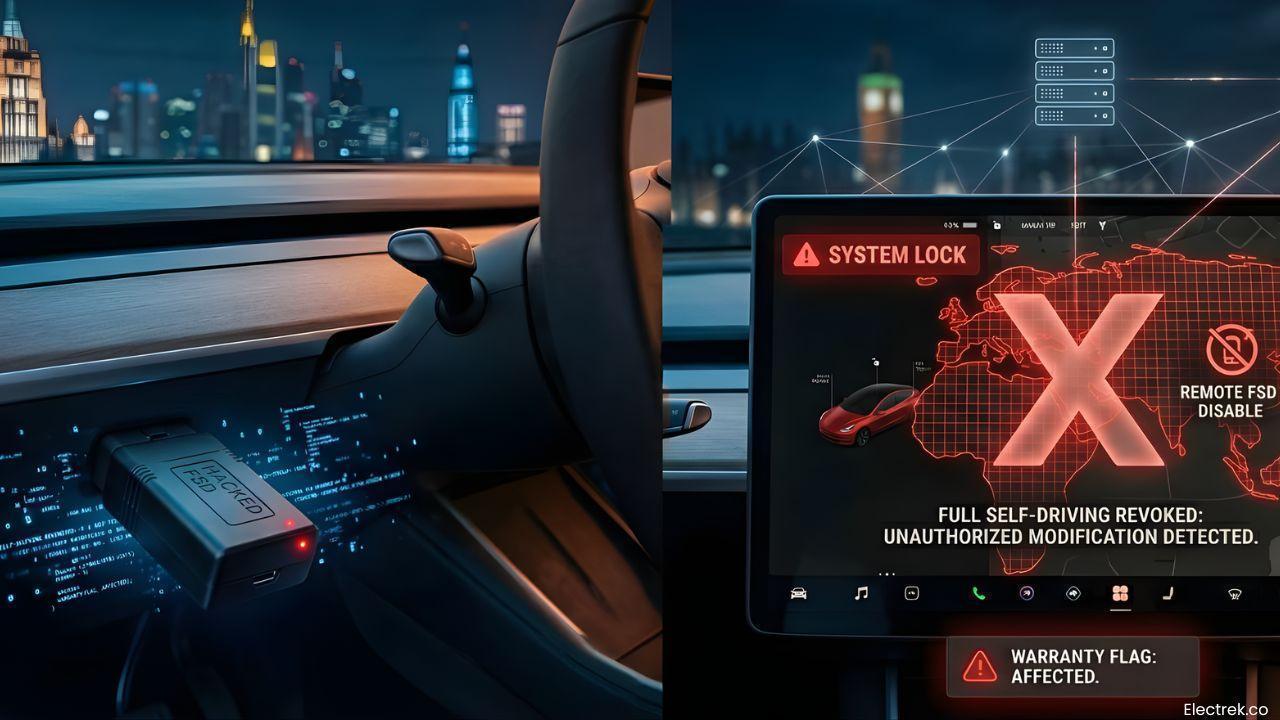
Tesla has launched a sweeping global crackdown on unauthorized Full Self-Driving (FSD) hack devices, remotely disabling access for vehicles found using illegal modifications. The move marks a decisive shift in how automakers are asserting control over software-defined vehicles, where features can be activated or revoked instantly through over-the-air systems.
This is not just a technical enforcement action; it represents a larger turning point in the relationship between automakers and vehicle owners, especially in an era where cars are increasingly governed by software rather than hardware.
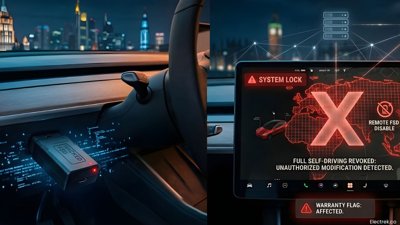
At the center of this controversy are third-party “jailbreak” devices, small hardware modules that plug into a vehicle’s Controller Area Network (CAN) bus and bypass Tesla’s regional software restrictions. These devices, often sold for around €500, allow users to activate FSD features in countries where the system has not yet received regulatory approval.
Their popularity surged in regions like Europe and Asia, where delays in regulatory approvals have left many Tesla owners waiting years for access to features they may have already paid for.However, Tesla views these devices not just as unauthorized modifications, but as potential cybersecurity threats that could compromise vehicle integrity and safety.
Tesla’s response has been swift and uncompromising. Using its connected vehicle ecosystem, the company has been remotely identifying vehicles running unauthorized hardware and disabling their FSD capabilities often without prior notice.
Affected vehicles are being reverted to basic Autopilot functionality, with some owners reportedly facing permanent bans from accessing FSD—even if they had previously paid for the feature.
This level of control highlights the power of over-the-air updates in modern vehicles. Tesla can effectively “wake” a car, scan its systems, and enforce compliance in real time, something that was unimaginable in traditional automotive ecosystems.
The crackdown is rooted in both safety and regulatory concerns. FSD remains a Level 2 driver-assistance system that requires active driver supervision, and deploying it in unapproved regions poses significant risks due to differences in road infrastructure, traffic laws, and regulatory standards.
In some countries, the consequences extend beyond software restrictions. Authorities have begun treating the use of such hack devices as illegal vehicle modification, with potential legal penalties including fines and even imprisonment in extreme cases.
Tesla has also warned users that unauthorized modifications could void warranties and leave owners fully liable in the event of accidents raising the stakes for those attempting to bypass system restrictions.
This development has reignited a broader debate within the automotive industry: what does ownership mean in the age of software-defined vehicles? When features can be remotely altered or removed, the traditional concept of owning a vehicle is being challenged.
For Tesla owners, the situation is particularly complex. Many have invested thousands of dollars in FSD packages, only to find access restricted due to regional regulations. The existence of hack devices reflects frustration within the user base but Tesla’s response underscores its commitment to maintaining control over safety-critical systems.This tension between user demand and manufacturer control is likely to become a defining issue as autonomous technologies continue to evolve.
Tesla’s crackdown is not just about its own vehicles, it sends a strong message to the entire automotive industry. As cars become increasingly connected and software-driven, manufacturers are expected to enforce stricter controls over how their systems are used.
This could lead to tighter cybersecurity measures, stricter regulatory compliance, and reduced tolerance for aftermarket modifications that interfere with core vehicle systems. It also highlights the importance of aligning software rollouts with global regulatory frameworks to avoid creating demand for unofficial solutions.
Tesla’s decision to remotely disable FSD hack devices marks a defining moment in the evolution of modern mobility. It demonstrates that the future of automotive innovation will not just be shaped by hardware performance, but by software governance, cybersecurity, and regulatory alignment.
As autonomous driving technologies continue to advance, one thing is clear: the cars of tomorrow will not just be driven.They will be controlled, updated, and managed in ways that redefine the very concept of ownership.
#trending #latest,#TeslaFSD #AutonomousDriving #EVSoftware #CyberSecurity #SmartMobility

Advances in Aerospace Technology and Commercial Aviation Recovery
Insights into breakthrough aerospace technologies and commercial aviation’s recovery amid 2025 chall

Defense Modernization and Strategic Spending Trends
Explore key trends in global defense modernization and strategic military spending shaping 2025 secu

Tens of Thousands Protest in Serbia on Anniversary of Deadly Roof Collapse
Tens of thousands in Novi Sad mark a year since a deadly station roof collapse that killed 16, prote

Canada PM Carney Apologizes to Trump Over Controversial Reagan Anti-Tariff Ad
Canadian PM Mark Carney apologized to President Trump over an Ontario anti-tariff ad quoting Reagan,

The ad that stirred a hornets nest, and made Canadian PM Carney say sorry to Trump
Canadian PM Mark Carney apologizes to US President Trump after a tariff-related ad causes diplomatic

Bengaluru-Mumbai Superfast Train Approved After 30-Year Wait
Railways approves new superfast train connecting Bengaluru and Mumbai, ending a 30-year demand, easi



