Post by : Avinab Raana
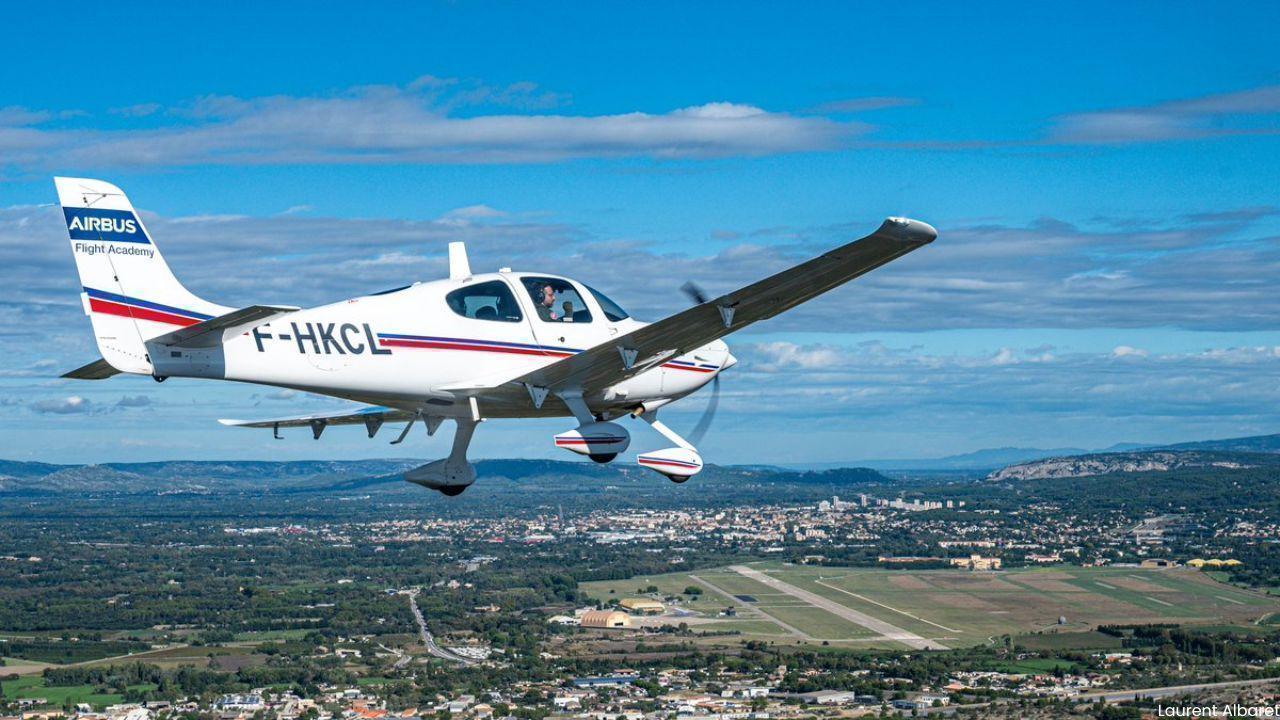
Photo : X / Laurent Albaret
What began as a routine pilot training exercise for the French Air and Space Force quickly escalated into a serious aviation incident, highlighting the unpredictable nature of flight operations even in controlled environments. A Cirrus SR20 training aircraft crashed near Montagne de Lure in southern France during a low-altitude training mission, sending shockwaves across the defense aviation community. While such missions are designed to build precision and confidence among trainee pilots, this incident underscores the inherent risks that remain embedded in even the most structured flight programs.
The aircraft went down in an uninhabited mountainous area in the Alpes-de-Haute-Provence region during the morning hours, significantly reducing the risk of civilian casualties. Both individuals onboard an instructor and a trainee pilot survived the crash and were able to alert emergency services shortly after impact, demonstrating the effectiveness of emergency response protocols and survival training embedded within military aviation programs.
Rescue teams were quickly deployed to the crash site, and both crew members were transported to nearby medical facilities with injuries. The fact that both pilots remained conscious after the incident reflects not only advancements in aircraft safety features but also the rigorous training standards that prepare pilots for high-stress emergency scenarios.
The Cirrus SR20 plays a critical role in France’s pilot training ecosystem, serving as a foundational platform for developing core flying skills. As a single-engine aircraft, it is widely used for initial training phases, where cadets learn essential flight dynamics, navigation, and emergency handling. Its integration into the French Air and Space Force training pipeline since 2012 has helped streamline the transition from basic instruction to advanced military aviation platforms.
Despite its strong safety record and modern design, incidents like this serve as reminders that training aircraft operate under demanding conditions, often involving low-altitude maneuvers and complex flight patterns that increase operational risk.
Authorities have launched a formal investigation into the crash, with France’s aviation safety body tasked with identifying the underlying cause. While initial details remain limited, investigators are expected to examine a wide range of factors, including mechanical performance, environmental conditions, and human decision-making during the flight.
Such investigations are critical not only for accountability but also for improving future training protocols. Each incident provides valuable data that can enhance safety standards, refine pilot training modules, and strengthen overall operational resilience.
This incident arrives at a time when global defense forces are increasingly focused on modernizing pilot training systems while maintaining the highest safety standards. The balance between realistic training scenarios and operational safety is delicate, and events like this highlight the need for continuous evaluation of training methodologies.
Military aviation, unlike commercial aviation, often operates closer to performance limits to simulate real-world conditions. This makes safety management even more complex, requiring constant technological upgrades and procedural improvements to minimize risk.
The crash of the SR20 training aircraft serves as a stark reminder that behind every trained pilot lies countless hours of risk-laden preparation. While the survival of both crew members is a testament to effective training and safety systems, the incident reinforces the importance of vigilance, innovation, and continuous improvement in aviation safety.
As investigations unfold, the findings will likely shape future training strategies not only in France but across global defense aviation networks. In an industry where precision and preparedness are paramount, every incident becomes a learning opportunity—one that ultimately strengthens the skies for those who dare to navigate them.
#trending #latest#FrenchAirForce #SR20Crash #AviationSafety #PilotTraining #DefenseAviation





Advances in Aerospace Technology and Commercial Aviation Recovery
Insights into breakthrough aerospace technologies and commercial aviation’s recovery amid 2025 chall

Defense Modernization and Strategic Spending Trends
Explore key trends in global defense modernization and strategic military spending shaping 2025 secu

Tens of Thousands Protest in Serbia on Anniversary of Deadly Roof Collapse
Tens of thousands in Novi Sad mark a year since a deadly station roof collapse that killed 16, prote

Canada PM Carney Apologizes to Trump Over Controversial Reagan Anti-Tariff Ad
Canadian PM Mark Carney apologized to President Trump over an Ontario anti-tariff ad quoting Reagan,

The ad that stirred a hornets nest, and made Canadian PM Carney say sorry to Trump
Canadian PM Mark Carney apologizes to US President Trump after a tariff-related ad causes diplomatic

Bengaluru-Mumbai Superfast Train Approved After 30-Year Wait
Railways approves new superfast train connecting Bengaluru and Mumbai, ending a 30-year demand, easi



