Post by : Amit
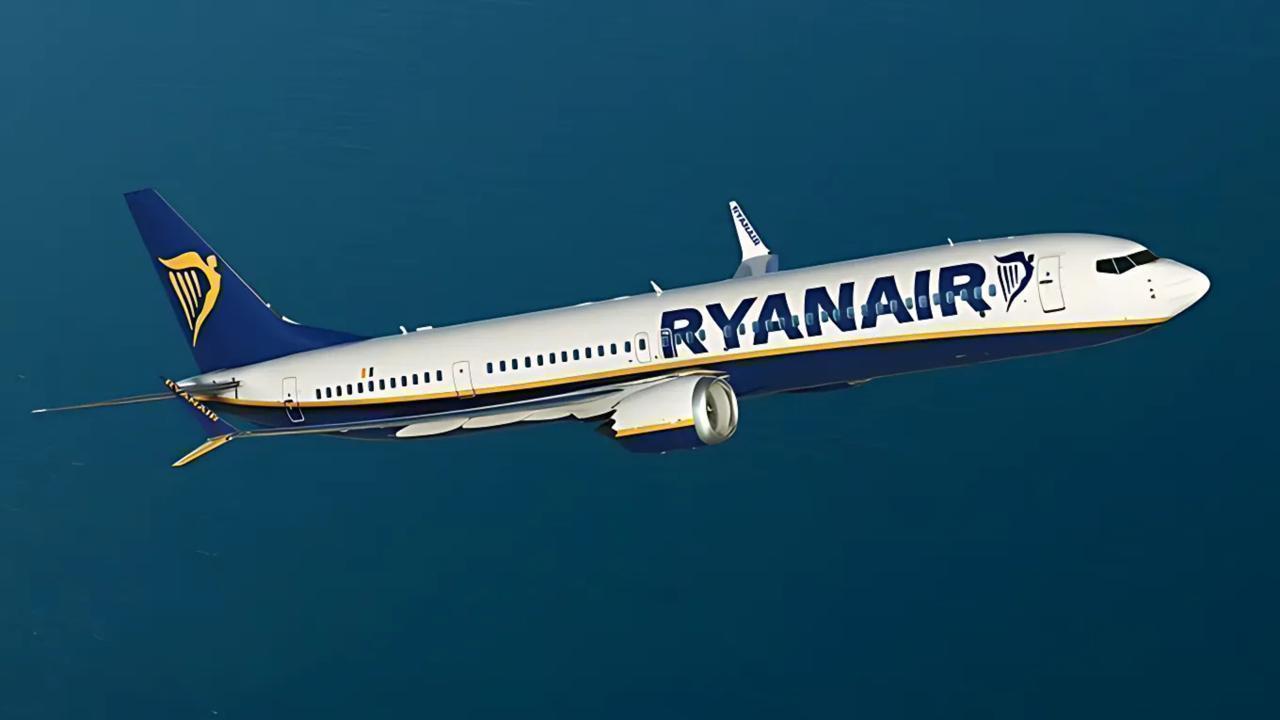
Photo : X / Ryanair
Ryanair Slashes French Winter Flights Amid Outcry Over New Ticket Tax
Europe’s biggest low-cost carrier, Ryanair, is reducing its winter capacity in France by 13% after sharply criticizing a new ticket tax imposed by the French government. The airline accuses the Macron administration of imposing an unfair burden on low-cost and regional operators while exempting large intercontinental carriers that produce higher emissions. With 737-800s and Max jets pulled from three French airports this winter, the move signals potential wider disruption as airlines push back against what they see as discriminatory climate regulation.
A Tax Designed to Penalize—But Who Pays the Price?
The new environmental ticket tax, due to take effect from 2026, will charge up to €30 per passenger departing French airports. Ryanair argues that the levy is not only steep, but deeply flawed in its structure. According to CEO Michael O’Leary, the measure unfairly targets short-haul and low-cost flights while sparing long-haul carriers like Air France and international operators flying through Charles de Gaulle and Orly airports.
“It’s madness,” O’Leary said bluntly in a press call on July 29. “We fly modern, fuel-efficient 737s with 96% load factors. Our emissions per passenger are far lower than long-haul widebody carriers. Yet we are taxed, and they are not. That’s environmental hypocrisy.”
The government claims the tax is aimed at incentivizing modal shift—pushing passengers onto trains for short trips and helping fund France’s green transport transition. But critics argue the result will hurt regional connectivity and force carriers to pull capacity from less profitable or thinner routes—precisely the ones many small French cities rely on.
Route Reductions and Base Cutbacks Begin
Ryanair confirmed that it will be reducing operations at Marseille, Bordeaux, and Beauvais airports this winter. While full schedules haven’t yet been published, O’Leary warned that up to five aircraft will be relocated from France to other markets, reducing frequencies on dozens of routes.
“France wants to kill off low-cost regional air travel under the guise of saving the planet, while protecting Paris-centric and long-haul flag carriers,” said O’Leary. “We will not be investing in markets that punish efficient operators.”
Airports in smaller French cities are likely to bear the brunt of Ryanair’s retreat. With fewer incoming flights, both inbound tourism and outbound business travel could suffer. Local chambers of commerce have already begun lobbying Paris to revise or delay the tax.
A Warning to Europe: France Is the First Domino
Though the tax applies only in France, Ryanair’s aggressive response sends a broader signal across the EU. As governments double down on sustainability pledges, they are increasingly turning to aviation taxes to raise revenue and curb emissions. The Netherlands, Germany, and Austria have all implemented or raised ticket taxes in the past five years.
But the industry contends these measures often have the opposite effect of their stated intentions. By reducing short-haul flights and discouraging competition, they concentrate traffic at major hubs and incentivize connections via long-haul flights—often with a greater per-passenger carbon footprint.
“If more countries follow France’s lead, regional airports and low-fare access will disappear,” warned Ryanair’s Director of Route Development, Kate Sherry. “This isn’t about environment—it’s about protecting legacy players under the green banner.”
Political Backlash Gains Momentum
Ryanair isn’t alone in criticizing the policy. France’s regional leaders, opposition MPs, and even some officials within the transport ministry have voiced concerns about the economic consequences. A parliamentary commission on regional air connectivity released a report earlier this year warning of potential job losses and reduced economic activity in smaller cities.
The ticket tax, originally floated as part of France’s 2023 climate strategy, was expanded following pressure from environmental groups who criticized aviation’s exemption from carbon taxes under the EU Emissions Trading System. President Macron’s government framed the policy as a “climate justice” measure—charging flyers more to fund sustainable transport modes like high-speed rail and electric buses.
Yet, critics argue the implementation is poorly thought out. “There is no carve-out for green aircraft. There is no consideration for route length, emissions data, or load factors,” said Sherry. “It’s a one-size-fits-all slap.”
Ryanair’s Strategic Shift to Greener, Friendlier Skies
Despite its strong words, Ryanair insists it supports climate action—just not “greenwashing” taxes that don’t differentiate between efficient and wasteful carriers. The airline has invested heavily in fleet modernization, replacing older 737-800s with Boeing’s 737 MAX 8-200 aircraft, which burn 16% less fuel and carry more passengers.
It’s also one of the few carriers to publish monthly emissions statistics and voluntarily participate in EU ETS auctions, even on routes that are exempt. “We walk the talk,” said O’Leary. “If the goal is to reduce CO₂, then reward operators who invest in cleaner fleets. Don’t punish them.”
With over 600 aircraft on order, including a massive 300-jet deal with Boeing signed in 2023, Ryanair’s growth strategy is built around operating the youngest, most fuel-efficient fleet in Europe. But the airline is becoming more selective about where it deploys these assets.
Airport Operators and Tourism Boards React
The fallout from Ryanair’s capacity cut is already rippling through France’s aviation ecosystem. Marseille Provence Airport, one of the bases impacted, issued a statement expressing “deep concern” over the reduction and calling for a “balanced and fair approach to climate taxation.”
Tourism agencies in Occitanie and Nouvelle-Aquitaine warned that fewer winter flights could depress tourist arrivals, particularly from UK and Irish markets. “Ryanair brings visitors who spend in our communities, not just Paris,” said a spokesperson from Bordeaux’s tourism bureau. “A 13% cut may sound small, but it hits us hard.”
Airports Council International (ACI) Europe has also weighed in, urging EU member states to coordinate taxation policies to avoid market distortions and protect regional mobility.
Could Legal Action Follow?
O’Leary hinted that Ryanair might challenge the tax’s structure under EU law, arguing that it constitutes unfair state aid by favoring national carriers and hub airports. The European Commission has yet to respond to inquiries about whether the tax could be investigated under competition rules.
Legal experts say the case is not straightforward. While taxation is a national competence, the EU does regulate market distortion and competition. “If the tax ends up shielding certain players while burdening others, Ryanair may have a legitimate complaint,” said Dr. Laurent Meunier, aviation law expert at Université Paris-Saclay.
The Broader Battle Over Europe’s Air Future
At its heart, the Ryanair vs. France conflict is more than just a dispute over euros. It’s a test case in how Europe balances environmental urgency with economic reality in its skies.
Should low-cost, short-haul carriers—who democratize air travel and drive tourism—pay more simply for flying shorter distances? Or should environmental policy reflect actual emissions and efficiency?
For now, Ryanair is voting with its wings, pulling capacity from France and warning others to think twice. As European governments ramp up climate policy, the question remains: will they design smarter, targeted measures—or repeat France’s blunt-instrument approach?
Either way, the coming winter will be chillier in French skies—not just from weather, but from empty Ryanair gates.
Ryanair, French, Ticket Tax







Advances in Aerospace Technology and Commercial Aviation Recovery
Insights into breakthrough aerospace technologies and commercial aviation’s recovery amid 2025 chall

Defense Modernization and Strategic Spending Trends
Explore key trends in global defense modernization and strategic military spending shaping 2025 secu

Tens of Thousands Protest in Serbia on Anniversary of Deadly Roof Collapse
Tens of thousands in Novi Sad mark a year since a deadly station roof collapse that killed 16, prote

Canada PM Carney Apologizes to Trump Over Controversial Reagan Anti-Tariff Ad
Canadian PM Mark Carney apologized to President Trump over an Ontario anti-tariff ad quoting Reagan,

The ad that stirred a hornets nest, and made Canadian PM Carney say sorry to Trump
Canadian PM Mark Carney apologizes to US President Trump after a tariff-related ad causes diplomatic

Bengaluru-Mumbai Superfast Train Approved After 30-Year Wait
Railways approves new superfast train connecting Bengaluru and Mumbai, ending a 30-year demand, easi



