
Post by : Saif
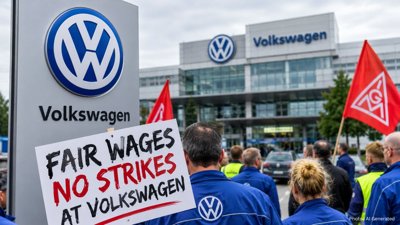
Volkswagen has taken another major step in its restructuring journey by agreeing to sell a controlling stake in Everllence to Bain Capital, a deal expected to bring in about €7.4 billion for the German carmaker. The announcement pushed Volkswagen shares up 2.4% on Thursday, showing that investors welcomed the move as a sign of stronger financial discipline at a difficult time for Europe’s biggest auto group. The deal is not just about selling a business unit. It is part of a wider effort by Volkswagen to simplify its large industrial empire, strengthen its finances and focus more sharply on its core automotive business while the company faces pressure from tariffs, Chinese competition and the costly shift to electric vehicles.
The transaction will see Bain Capital buy 51% of Everllence, while Volkswagen will keep the remaining 49% stake for the medium term. Based on the value of the proceeds and Everllence’s book value, the deal places the business at more than €9 billion, according to Reuters calculations. That makes it one of the more important industrial carve-out deals in Europe this year. For Volkswagen, the timing matters as much as the size of the transaction. The group has been trying to cut costs, streamline operations and protect its balance sheet while the auto industry goes through one of its most expensive transitions in decades. Electrification, weak margins and tougher global competition have all made capital more valuable. In that context, a €7.4 billion cash inflow offers breathing room and flexibility.
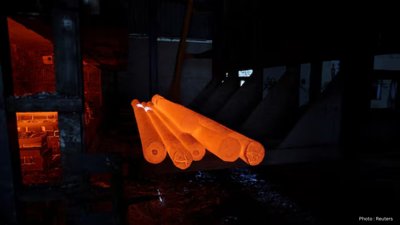
At the centre of this story is Everllence itself, a company that many outside industrial circles may not know well but which plays an important role in heavy engineering. Everllence, formerly known as MAN Energy Solutions, makes large marine engines and other industrial systems. It has long been associated with shipping and heavy power equipment, but it is also seeking growth in new areas such as generators for data centres, a market gaining attention as artificial intelligence drives demand for computing power and energy infrastructure. This gives Everllence a profile that goes beyond a traditional engine maker. It is both an old-economy industrial business and a company trying to tap into newer demand linked to digital infrastructure and power generation.
That dual character helps explain why the sale is significant. Volkswagen is not selling a weak or forgotten asset. It is selling control of a business with strong industrial relevance and future growth potential. Bain Capital clearly sees value in Everllence’s role in shipping, energy and infrastructure, while Volkswagen appears to believe that it can still benefit from that future through its remaining 49% holding. This is not a full exit. It is a strategic retreat designed to unlock capital while preserving some long-term exposure. That distinction matters because it shows Volkswagen is trying to strike a balance between short-term financial needs and long-term optionality.
The market’s positive reaction suggests investors believe the group has achieved a sensible outcome. Analysts have pointed out that the deal significantly strengthens Volkswagen’s financial position as its transformation continues. Everllence had a book value of around €3.4 billion on Volkswagen’s balance sheet as of late May, so the proceeds and valuation imply a substantial uplift. This is one reason the share price moved higher after the announcement. Investors are not just looking at the headline number. They are looking at what the transaction says about management’s willingness to take difficult decisions and about its ability to extract value from non-core assets.
Volkswagen Chief Executive Oliver Blume has made it clear that he wants to trim the group’s sprawling portfolio and bring more focus to the core vehicle business. That goal is easier to state than to deliver. Volkswagen is not a simple carmaker. It is a huge industrial group with multiple brands, legacy businesses, overlapping operations and long-standing ties to Germany’s wider manufacturing ecosystem. Reshaping such a group takes time, political care and financial planning. Selling a majority stake in Everllence is therefore not just a balance-sheet exercise. It is part of a broader effort to decide what truly belongs inside the future Volkswagen and what no longer needs to remain under full control.
The pressures pushing Volkswagen in this direction are not hard to see. The global car market is becoming tougher, not easier. Chinese manufacturers are expanding rapidly and putting pressure on pricing and market share. Tariff risks remain a concern in several markets. At the same time, the move to electric vehicles demands huge spending on batteries, software, new factories and platform development. These are expensive commitments, and returns are not always immediate. Traditional carmakers must now fund the future while still supporting older businesses that remain essential to current revenues. That makes capital allocation one of the most important decisions management can make.
In that sense, the Everllence sale reflects a broader reality across the European auto industry. Legacy manufacturers are being forced to ask which businesses are essential to their future and which ones can be monetised to support the transition. For Volkswagen, keeping full ownership of a marine engine and industrial systems company may no longer be as important as having extra billions available for its automotive transformation. The company has not yet said exactly how it will use the proceeds, but it has indicated that a decision will be made later. The money could help reduce debt, support restructuring, invest in electric mobility or strengthen other strategic areas. Whatever the final use, the deal clearly improves Volkswagen’s room to manoeuvre.
The bidding process behind the sale also reveals how sensitive and complex the transaction became. Bain Capital won the race against rival private equity firms CVC and EQT. EQT had formed a consortium that included Porsche SE, the investment vehicle of the Porsche-Piech family, which is Volkswagen’s top shareholder. That link created potential conflicts of interest and forced management to run the bidding through a closed-envelope process, with many supervisory board members abstaining from the decision. This detail matters because it shows how corporate governance and ownership structure can shape major decisions inside Volkswagen. The group is not just a business; it is also a company with deep family influence, labour representation and political importance inside Germany’s industrial economy.
There is another side to the story that should not be ignored: the impact on workers and German industrial sites. Deals of this size in Germany are rarely judged only by financial value. They are also judged by what they mean for jobs, local communities and long-term manufacturing stability. While the latest Reuters report focuses mainly on the financial side, earlier reporting on the transaction indicated that key German Everllence sites are expected to be protected until at least 2030, with compulsory redundancies ruled out during that period. That kind of protection is often essential in getting employee support and reducing resistance from labour representatives. It also suggests Bain and Volkswagen understand that social stability matters if the deal is to be seen as responsible rather than purely financial.
Still, while the transaction looks smart on paper, it also raises important questions. Selling a strong asset can help solve short-term problems, but it can also reduce diversification. Everllence operates in sectors beyond passenger cars, including shipping, energy and industrial systems. Those sectors do not always move in the same cycle as the auto business. By giving up control, Volkswagen is narrowing its industrial spread. That may be a wise move if it helps the company focus and strengthen its main operations. But if the core automotive business continues to struggle while Everllence thrives under Bain Capital, some may later ask whether Volkswagen sold too much of a good asset too early.
The answer will depend on what happens next. If Volkswagen uses the proceeds well, the deal could become a strong example of disciplined restructuring. If the money helps support a more competitive electric vehicle strategy, better margins and a clearer corporate structure, the sale will likely be seen as a smart turning point. If, however, the funds disappear into temporary fixes without solving deeper problems, the move may look more like a financial patch than a strategic breakthrough.
There is also a wider message here about the changing nature of industrial ownership in Europe. Private equity firms like Bain Capital are increasingly willing to buy complex manufacturing businesses if they see a path to stronger growth, higher efficiency or exposure to future demand trends such as digital infrastructure and energy transition. Everllence fits that profile. It has an established industrial base, a recognised position in marine engines and a chance to grow in areas linked to data centres and power systems. Bain is clearly betting that with focused ownership and fresh strategic backing, the business can do even more.
For Volkswagen, the decision seems to be that it no longer needs to control everything to benefit from it. Retaining 49% gives the group a seat at the table and a continued financial interest without forcing it to keep full ownership of a non-core industrial operation. That may prove to be the most important part of the deal. It shows a more selective and financially pragmatic Volkswagen, one that is willing to shrink in some places so it can defend itself better in others.
Read more: European Car Sales Rise as Electric Vehicles Gain Strong Momentum in October
The rise in Volkswagen’s share price after the announcement is therefore about more than one transaction. It reflects a broader judgment by the market that the company is taking its restructuring seriously. Investors want signs that management understands the scale of the challenge ahead and is prepared to act decisively. The Everllence deal gives them one such sign. But the applause will not last forever. Volkswagen still faces a hard road in its core car business, and the real test will be whether it can turn financial breathing room into lasting strategic progress.
For now, though, this is a meaningful win for the group. It brings in billions of euros, trims part of the corporate portfolio and gives management greater flexibility at a time when flexibility is badly needed. In a fast-changing global auto market, that may be exactly what Volkswagen needs most.
#trending #latest #Volkswagen #Everllence #BainCapital #VolkswagenShares #AutoIndustry #BusinessNews #EuropeBusiness #EVTransition #CorporateDeal #GermanCarmaker #MarketUpdate #IndustrialNews #GlobalMarkets




Advances in Aerospace Technology and Commercial Aviation Recovery
Insights into breakthrough aerospace technologies and commercial aviation’s recovery amid 2025 chall

Defense Modernization and Strategic Spending Trends
Explore key trends in global defense modernization and strategic military spending shaping 2025 secu

Tens of Thousands Protest in Serbia on Anniversary of Deadly Roof Collapse
Tens of thousands in Novi Sad mark a year since a deadly station roof collapse that killed 16, prote

Canada PM Carney Apologizes to Trump Over Controversial Reagan Anti-Tariff Ad
Canadian PM Mark Carney apologized to President Trump over an Ontario anti-tariff ad quoting Reagan,

The ad that stirred a hornets nest, and made Canadian PM Carney say sorry to Trump
Canadian PM Mark Carney apologizes to US President Trump after a tariff-related ad causes diplomatic

Bengaluru-Mumbai Superfast Train Approved After 30-Year Wait
Railways approves new superfast train connecting Bengaluru and Mumbai, ending a 30-year demand, easi



