Post by : Saif
Iraq’s warning that it could reconsider its place in OPEC if its oil production quota is not raised is more than a routine oil dispute. It is a sign of how deeply the country’s finances are under pressure and how fragile unity inside the oil producers’ group has become. Baghdad is not a minor member threatening to walk away from a club. It is OPEC’s second-largest producer, one of its founding members, and the country where the organization itself was created in 1960. If Iraq is now openly signaling that it may look at “all available options” unless it gets more room to pump crude, the message is clear: this is not just about barrels per day. It is about survival, state revenue, political leverage and the future balance of power inside the global oil market.
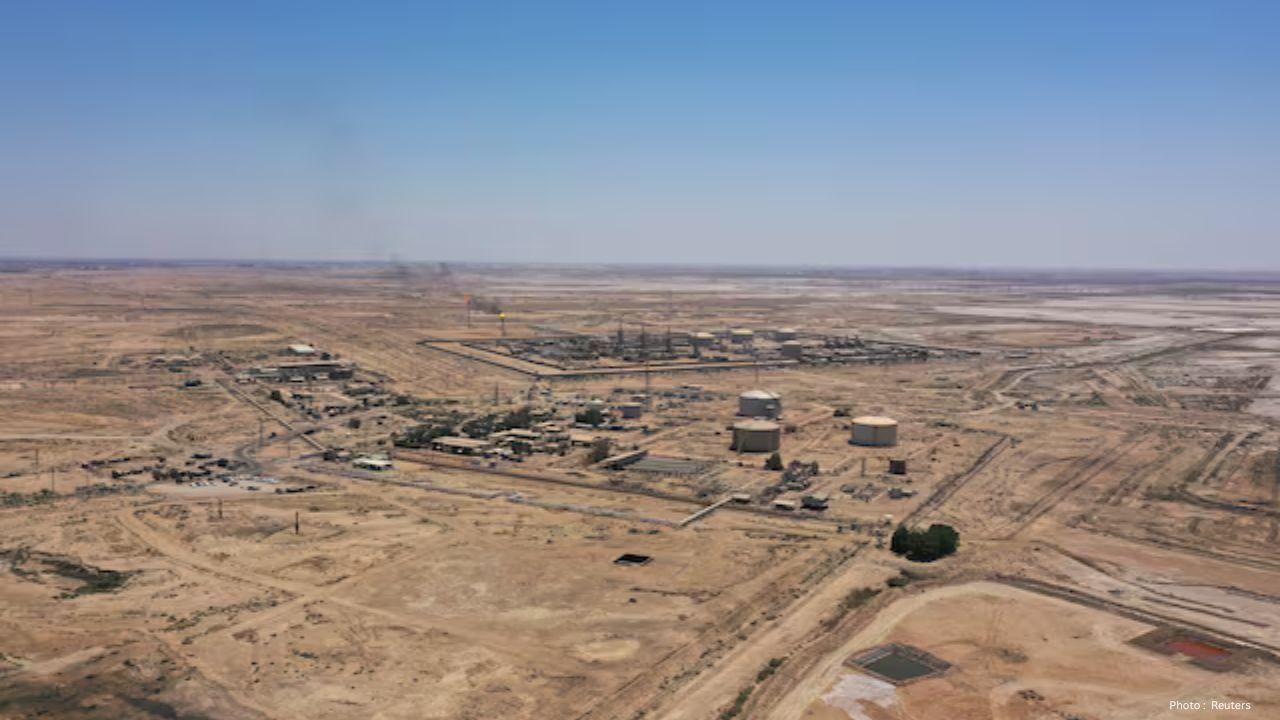
At the centre of the dispute is Iraq’s demand for a significantly higher output quota. Under the current arrangement, Iraq’s quota for July stands at 4.378 million barrels per day, but actual production has fallen far below that level because of disruptions linked to the recent conflict in the region and the effective blocking of exports through the Strait of Hormuz. OPEC data cited in current reports show that Iraq pumped only 1.48 million barrels per day in May, a sharp drop from nearly 4.2 million barrels per day in February before the latest disruptions hit exports. For a country that depends on oil for the overwhelming share of its state income, this collapse in export ability has created a serious financial squeeze.
That is why Baghdad’s tone has become so firm. Iraqi officials have indicated that the country’s demand for a larger quota should be treated seriously, especially as the government tries to recover from the economic damage caused by regional instability and the export shock. According to the reported comments, the current preference is still to remain inside OPEC and negotiate for a better quota rather than leave immediately. But the warning is unmistakable: if Iraq’s production capacity and financial needs are ignored, it may eventually decide that staying inside the group no longer serves its interests. Iraq’s Oil Ministry later said that reports about an exit do not reflect the government’s official position, but it did not hide the core message that Baghdad wants a quota more in line with its production ambitions.
This matters because Iraq is not asking for a small adjustment. The government has openly said it wants to raise output to 7 million barrels per day over the coming years. That target reflects Baghdad’s long-term strategy to use its vast oil reserves as the backbone of economic rebuilding, foreign investment and fiscal recovery. Prime Minister Ali al-Zaidi, who took office in May, has made economic reconstruction, anti-corruption efforts and investment attraction central to his agenda. For such a strategy to work, Iraq needs more freedom to produce and export. In that sense, the quota dispute is not a technical argument over oil policy. It is tied directly to Iraq’s development plans, budget stability and political future.
From OPEC’s point of view, however, Iraq’s position creates a serious problem. The group already appears more fragile than it has in years. Recent reports say the United Arab Emirates left the organization less than two months ago, weakening the image of unity that OPEC has always tried to project. If Iraq, another heavyweight producer and one of the original founders, begins openly threatening to leave as well, the damage would be much larger. It would send a signal to markets that the cartel’s internal discipline is weakening just as global energy markets are already dealing with war-related supply risks, shipping disruptions and uncertainty over future demand.
The timing makes the dispute even more important. OPEC+ — the wider alliance that includes OPEC members plus Russia and other producers — is currently carrying out a review of member countries’ production capacity. Those assessments are expected to help set 2027 output baselines, which in turn will shape future quotas. For Iraq, this review is a major opportunity. Baghdad wants its quota to reflect what it believes is its real production potential rather than the tighter limits imposed under the current system. If Iraq can convince OPEC+ that its technical capacity justifies a larger baseline, it could secure a stronger position for the years ahead. If it fails, pressure inside the country to challenge the arrangement may only grow.
There is also a deeper history behind Iraq’s frustration. Baghdad has long had an uneasy relationship with OPEC quotas because it has repeatedly tried to expand production capacity with the help of international oil companies, even while being expected to follow output restraints designed to support prices. Unlike some producers with more diversified economies, Iraq relies on oil revenue for the bulk of public spending, salaries and state operations. That makes production limits far more politically painful. When prices are weak or exports are disrupted, the state budget feels the pressure almost immediately. In normal times, Iraq might be able to live with quota frustration. In the middle of a regional crisis and a financial squeeze, it becomes much harder to accept.
The Strait of Hormuz disruption is central to understanding this pressure. Iraq’s oil economy has been hit not just by quota politics but by the reality that exports have been sharply reduced by the regional war and the dangers around the Gulf shipping route. Even though tanker flows are now slowly improving, recent market reports suggest full normalization could still take time. This has left Iraq in the difficult position of wanting both a higher quota and a faster return to full export capacity at a moment when the physical ability to ship crude remains under stress. In other words, Baghdad is trying to solve two problems at once: the short-term loss of export revenue and the long-term fight for a bigger share of OPEC production space.
From an editorial point of view, Iraq’s warning should be understood less as a firm exit plan and more as a pressure tactic born from genuine economic strain. Baghdad knows that even hinting at departure gives it leverage because OPEC can ill afford another major crack in its ranks. Iraq’s founding-member status, production scale and strategic location give it weight that smaller members do not have. By floating the possibility of leaving, Iraqi officials are effectively telling Saudi Arabia and the wider group that Iraq’s needs cannot be ignored while production rules are being rewritten for the future.
That said, actually leaving OPEC would not be a simple or risk-free move for Iraq. Membership still offers value. OPEC provides a framework for cooperation, access to policy coordination and a degree of collective influence over the market. Walking away could give Iraq more freedom to pump, but it could also leave the country more exposed to price swings and regional political friction. It might also strain relations with key Gulf producers at a time when Baghdad needs investment, diplomatic balance and market stability. This is why the Iraqi message has been carefully balanced: the threat is real enough to get attention, but the official line still says Iraq wants to stay and negotiate rather than rush for the door.
For the global oil market, the episode matters because it adds another layer of uncertainty at a time when traders are already watching Middle East shipping routes, OPEC+ policy, sanctions and demand signals from major economies. News of Iraq’s warning briefly pushed oil prices lower, partly because the market read it as a sign that more barrels could eventually come onto the market if quota discipline weakens. At the same time, the very fact that Iraq is making such threats shows how unstable the current system has become. A cartel works only if its biggest members believe the rules still serve them. When major producers start publicly questioning that bargain, the market notices.
There is also a political message behind Baghdad’s stance. Prime Minister Ali al-Zaidi’s government is trying to show Iraqis that it will fight for national economic interests rather than quietly accept limits set by others. In a country where unemployment, corruption, weak public services and economic dependence on oil remain major political issues, pushing for a higher OPEC quota can be presented as a patriotic demand. It allows the government to argue that Iraq should not be restrained when it has both large reserves and urgent financial needs. Whether that argument succeeds internationally is another matter, but domestically it has clear political value.
The broader concern for OPEC is that quota disputes are becoming harder to manage as member states follow very different economic paths. Some countries want restraint to support prices. Others want more output to fund budgets, rebuild economies or expand market share. As the world moves through energy transition debates, regional conflicts and changing demand patterns, these tensions inside OPEC are likely to intensify rather than disappear. Iraq’s warning may be dramatic, but it is also a symptom of a larger structural problem: the interests of OPEC members are no longer as easy to align as they once were.
In the end, Iraq’s message to OPEC is simple. Baghdad believes its production capacity, financial pain and long-term economic goals justify a higher quota, and it wants that case treated seriously. The country has not formally decided to leave the group, and its own ministry has tried to calm speculation by saying the reports do not represent an official exit position. But the threat itself has already done its job. It has reminded the market that Iraq is too important to ignore and that OPEC’s internal balance is under fresh strain. For now, this looks like a hard bargaining tactic rather than an immediate divorce. But if Iraq feels that its needs are once again pushed aside, the pressure to take more drastic steps may only grow. In an oil market already shaped by war, shipping risks and fragile alliances, that is a warning neither OPEC nor global traders can afford to dismiss.
#trending #latest #Iraq #OPEC #OilMarket #CrudeOil #Baghdad #EnergyNews #MiddleEast #OilPrices #GlobalMarkets #IraqOil #OPECPlus #BusinessNews





Advances in Aerospace Technology and Commercial Aviation Recovery
Insights into breakthrough aerospace technologies and commercial aviation’s recovery amid 2025 chall

Defense Modernization and Strategic Spending Trends
Explore key trends in global defense modernization and strategic military spending shaping 2025 secu

Tens of Thousands Protest in Serbia on Anniversary of Deadly Roof Collapse
Tens of thousands in Novi Sad mark a year since a deadly station roof collapse that killed 16, prote

Canada PM Carney Apologizes to Trump Over Controversial Reagan Anti-Tariff Ad
Canadian PM Mark Carney apologized to President Trump over an Ontario anti-tariff ad quoting Reagan,

The ad that stirred a hornets nest, and made Canadian PM Carney say sorry to Trump
Canadian PM Mark Carney apologizes to US President Trump after a tariff-related ad causes diplomatic

Bengaluru-Mumbai Superfast Train Approved After 30-Year Wait
Railways approves new superfast train connecting Bengaluru and Mumbai, ending a 30-year demand, easi



