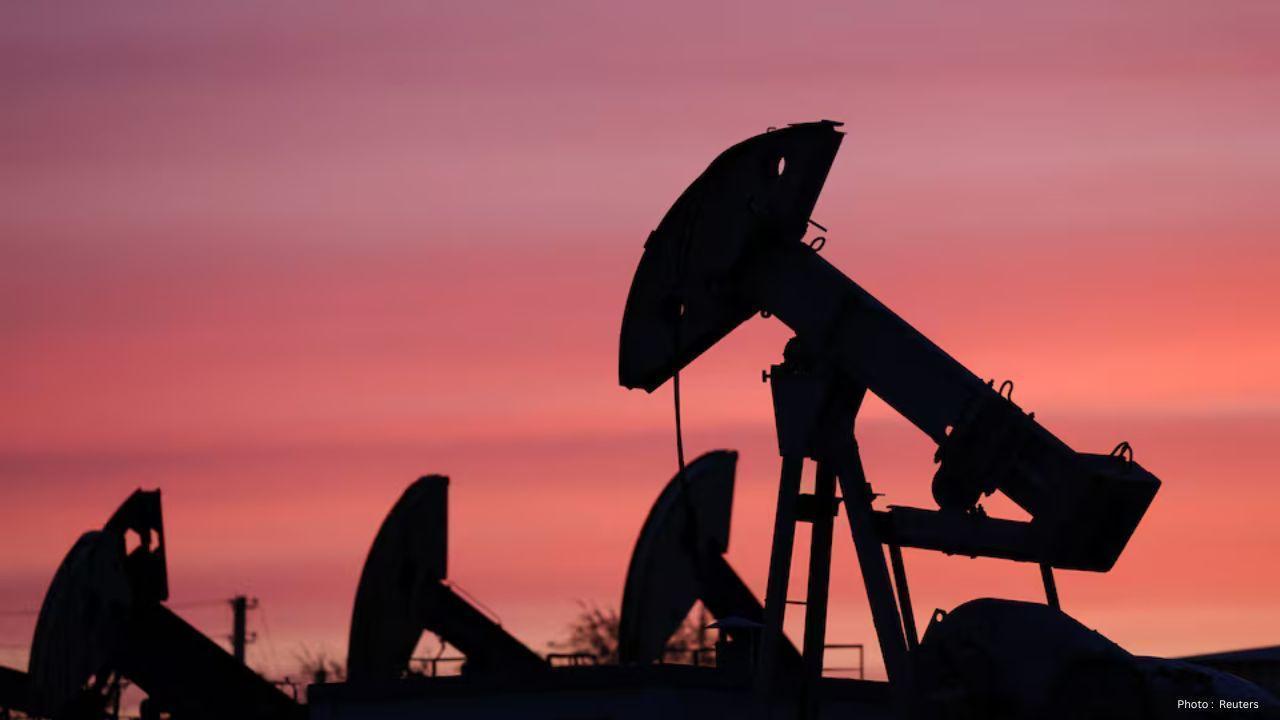
Post by : Saif
Oil prices moved slightly higher on Tuesday after a sharp fall in the previous session, as global markets waited for clearer signs that crude flows through the Strait of Hormuz were returning to normal. The small rebound came after investors reacted to early progress in U.S.-Iran talks, but the mood remained cautious because the shipping route has not fully recovered and supply risks in the Middle East are still not over. In simple terms, traders are no longer pricing in the worst-case fear of a long shutdown, but they are also not convinced that the crisis has truly passed.
The oil market is now caught between two powerful forces. On one side is optimism that diplomacy could reduce tension in the Gulf and allow more crude to reach world markets. On the other side is the reality that physical recovery takes time. Tankers do not simply resume full movement overnight after conflict, mines and damaged facilities may still need attention, and shipowners remain wary of security risks. That is why the latest move in crude prices matters far beyond daily trading. It reflects a bigger global question: how quickly can one of the world’s most important energy routes return to stable operations, and what happens if it does not?
Oil Prices Recover Slightly After Sharp Selloff
Brent crude and U.S. West Texas Intermediate both posted modest gains after suffering a steep drop on Monday. The earlier selloff came after signs of progress in peace talks between Washington and Tehran eased fears of a prolonged supply squeeze. Markets had already started removing some of the war premium built into prices during the recent conflict, and Tuesday’s trading showed a more careful mood rather than a full reversal. Traders appeared willing to buy back some positions, but only cautiously, because the key issue is no longer just diplomacy. It is whether the actual oil and gas supply chain through the Gulf can recover in a reliable way.
That distinction is important. A peace signal can calm markets quickly, but restoring normal trade through the Strait of Hormuz is a slower and more difficult process. The market is therefore trying to balance hope with caution. Prices are no longer reacting only to headlines about conflict. They are now responding to shipping data, tanker movement, sanctions policy and the speed at which Gulf exporters can bring supply back to regular levels.
Why the Strait of Hormuz Matters So Much to the Oil Market
The Strait of Hormuz is one of the most important energy chokepoints in the world. Roughly a fifth of global oil supply passes through this narrow waterway, making it critical for countries that depend on Gulf crude and liquefied natural gas. When conflict disrupts traffic there, the effect is not limited to the Middle East. It quickly reaches Asia, Europe, fuel importers, shipping insurers and financial markets around the world. That is why every sign of tanker movement in the strait is being watched so closely by traders and governments alike.
During the recent conflict involving Iran, shipments through the route were badly disrupted. Oil prices jumped as traders feared a deeper supply shock and a longer closure of one of the world’s most sensitive trade corridors. Even after the first signs of a diplomatic breakthrough, the bigger concern remained the same: reopening a shipping lane on paper is not the same as restoring full commercial confidence in practice. If vessel owners, insurers and exporters still see risk, the return to normal can be slow even without fresh fighting.
U.S.-Iran Talks Helped Calm the Market, But Doubts Remain
The latest price movement came after the first round of U.S.-Iran talks produced a 60-day roadmap and a temporary sanctions waiver that would allow Iran to resume global crude exports. That news helped reduce fears that the Gulf would remain locked in a prolonged energy crisis. It also gave markets a reason to believe that some blocked supply could return over time. But the response has been mixed because investors know that political agreements do not automatically solve physical bottlenecks at sea.
There is also a trust issue in the market. Traders remember how quickly tensions escalated earlier and how sharply prices reacted. As a result, they are reluctant to assume that every diplomatic step will hold. If talks break down, if maritime security worsens again, or if new military threats appear, the price of oil could swing upward just as fast as it fell. This is why the current rebound remains small and careful rather than strong and confident.
Tankers Are Returning, but Full Recovery Is Still Far Away
Shipping data has offered some signs of progress. A small number of supertankers have passed through the Strait of Hormuz, and several empty LNG vessels linked to Qatar have returned to the Gulf, suggesting that operators are testing the route again. Some Iranian-linked and Gulf-bound cargoes have also resumed movement. These are important signals because they show that the route is not frozen in the way it was at the height of the conflict.
Still, these movements do not mean the crisis is over. Analysts say full recovery could take weeks or even months. Mines may need to be cleared, port damage may need repair, and shipping companies may wait for stronger safety guarantees before sending more vessels through the area. Banks tracking the market have warned that even in a best-case scenario, oil flows may not return to pre-war levels quickly. That means supply may improve, but not in a smooth or immediate way.
Why Oil Traders Are Watching Physical Supply More Than Headlines
The current oil market is being shaped less by dramatic political statements and more by real supply evidence. Traders want to know how many ships are moving, how much crude is leaving Gulf terminals, whether insurance costs are falling and whether refiners in Asia are receiving regular cargoes again. These details matter because oil is not priced only on fear. It is priced on the expectation of how much supply will actually reach buyers in the coming weeks.
This is why the market’s behavior has looked uneven. On one day, prices fall sharply because peace talks suggest the worst is over. On another, they rise modestly because shipping recovery looks slower than hoped. That pattern is likely to continue until the market gets stronger proof that Gulf exports are stabilising. Until then, every headline about tanker traffic, sanctions or military threats will continue to move crude prices.
The Impact on Global Fuel Costs and Inflation Concerns
The direction of oil prices matters to ordinary consumers as much as it matters to traders. If crude remains volatile, fuel prices can stay unstable too. That affects transport costs, airline expenses, factory production and household budgets. Countries that import most of their energy, including many in Asia, are especially sensitive to any disruption in Gulf supply. Even a temporary price rise can feed into inflation by making petrol, diesel and shipping more expensive.
The recent fall in crude offered some relief to governments worried about imported inflation. But that relief remains fragile. If the Strait of Hormuz recovery slows, or if conflict risks rise again, the market could quickly rebuild a risk premium. In that case, the decline in prices seen after the peace talks may prove short-lived. For central banks and finance ministries, this is not a distant geopolitical story. It is directly tied to inflation, trade balances and economic confidence.
Middle East Tension Still Sits at the Heart of the Market
Although the current mood is calmer than during the peak of the conflict, the oil market remains deeply tied to events in the Middle East. The region supplies a large share of the world’s crude, and any disruption there sends a message to the entire global economy. In this case, the focus is not only Iran’s own exports but the wider Gulf network of producers, shippers and buyers that depend on Hormuz staying open.
That is why investors are not treating the recent diplomatic progress as a final solution. They know that energy security in the region is still vulnerable. A single military escalation, a new shipping warning, or a renewed threat to close the waterway could push prices higher again. At the same time, a steady rise in tanker traffic and proof of safer passage could keep prices under pressure by increasing available supply. In other words, the next phase of the oil story will be written not just in meeting rooms, but on the water.
What the Latest Oil Rebound Really Means
The modest rise in oil prices should not be read as a sign that the market is turning bullish again in a major way. Instead, it reflects uncertainty. Monday’s sharp fall may have priced in too much optimism too quickly, while Tuesday’s rebound shows that traders are correcting for the fact that physical supply recovery is still incomplete. This is less a vote of confidence and more a pause for reassessment.
For the broader market, that matters because it shows oil is still trading on fragile expectations. Investors believe the worst supply fears may be easing, but they are not yet ready to declare victory. They want proof that crude flows through the Strait of Hormuz are improving steadily, not just isolated signs of movement. Until that proof arrives, oil is likely to remain sensitive, reactive and prone to sudden moves in both directions.
#trending #latest #OilPrices #CrudeOil #BrentCrude #WTI #GlobalOilMarket #StraitOfHormuz #MiddleEast #EnergyNews #OilTrading #GlobalEconomy #Iran #USIranTalks #OilSupply #EnergySecurity #FuelPrices







Advances in Aerospace Technology and Commercial Aviation Recovery
Insights into breakthrough aerospace technologies and commercial aviation’s recovery amid 2025 chall

Defense Modernization and Strategic Spending Trends
Explore key trends in global defense modernization and strategic military spending shaping 2025 secu

Tens of Thousands Protest in Serbia on Anniversary of Deadly Roof Collapse
Tens of thousands in Novi Sad mark a year since a deadly station roof collapse that killed 16, prote

Canada PM Carney Apologizes to Trump Over Controversial Reagan Anti-Tariff Ad
Canadian PM Mark Carney apologized to President Trump over an Ontario anti-tariff ad quoting Reagan,

The ad that stirred a hornets nest, and made Canadian PM Carney say sorry to Trump
Canadian PM Mark Carney apologizes to US President Trump after a tariff-related ad causes diplomatic

Bengaluru-Mumbai Superfast Train Approved After 30-Year Wait
Railways approves new superfast train connecting Bengaluru and Mumbai, ending a 30-year demand, easi



