Post by : Avinab Raana
Photo : X / AeroTime
The race for hypersonic dominance has taken a decisive leap forward as Ursa Major’s Hadley rocket engine successfully completed 10 consecutive hypersonic flights, an achievement that signals a new era in aerospace propulsion. In an industry where reliability and repeatability define technological leadership, this milestone stands out as more than just a test success; it represents a structural shift in how hypersonic systems are developed, deployed, and scaled for both defense and commercial applications.
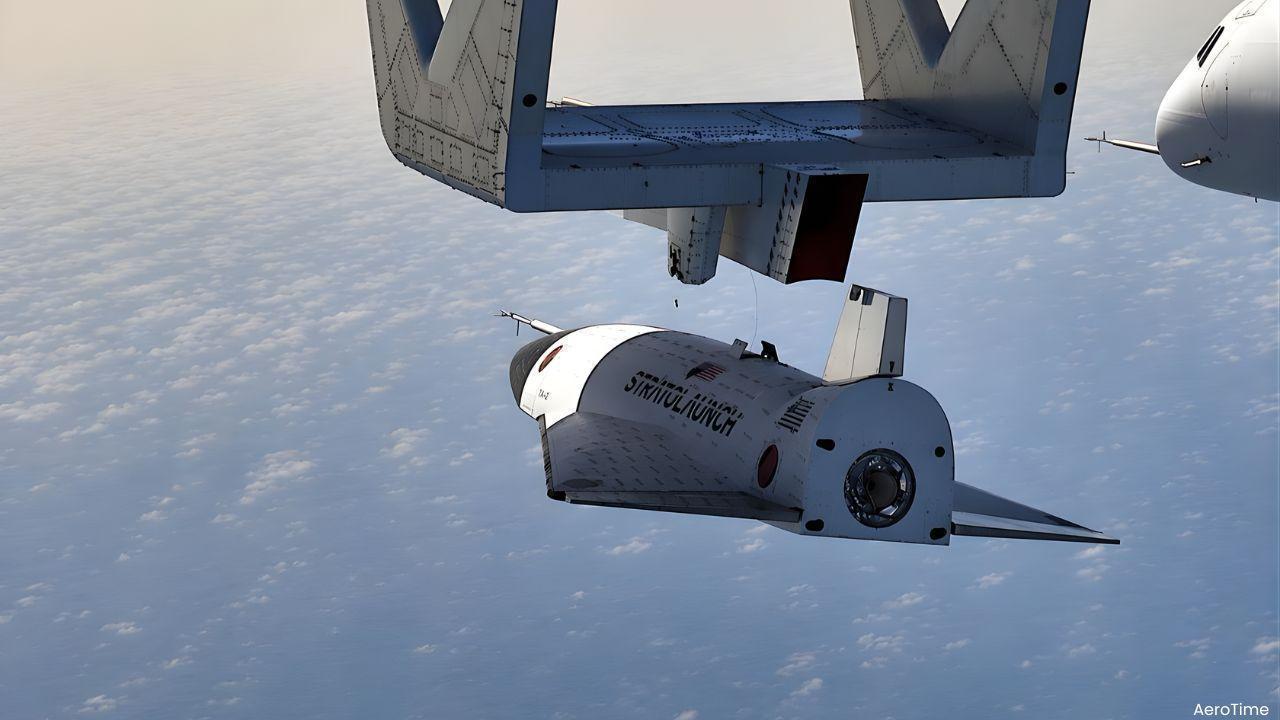
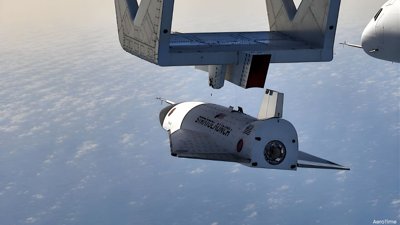
At the center of this milestone is the Hadley liquid rocket engine, a high-performance propulsion system designed for sustained hypersonic operations. Developed by Ursa Major and integrated with Stratolaunch’s flight platform, the engine has now proven its capability across multiple missions at speeds exceeding Mach 5. What makes this achievement particularly significant is not just the speed, but the consistency ten successful flights in succession underline a level of operational maturity rarely seen in emerging hypersonic technologies.
Unlike traditional experimental programs that struggle with repeatability, Hadley’s performance showcases a transition from prototype testing to reliable, flight-proven systems. The engine’s ability to operate under extreme thermal and aerodynamic conditions while maintaining stability highlights a major engineering advancement in liquid propulsion systems.
One of the most defining aspects of the Hadley engine is its reusable capability, a feature that is rapidly becoming the cornerstone of next-generation aerospace systems. Historically, hypersonic technologies have been expensive, single-use, and difficult to scale. Ursa Major’s approach disrupts this model by enabling engines that can be flown, recovered, and redeployed, dramatically reducing operational costs and accelerating testing cycles.
This reusability is not just an engineering feat; it represents a strategic advantage. Faster turnaround times mean quicker iteration, allowing developers to refine designs in real-world conditions rather than relying solely on simulations. For defense applications, this translates into faster deployment of advanced systems, while for commercial aerospace, it opens the door to more cost-effective hypersonic travel solutions in the future.
The implications of this milestone extend far beyond a single company. Hypersonic technology has become a focal point of global defense strategies, with nations investing heavily in capabilities that can travel at extreme speeds while evading traditional defense systems. Ursa Major’s success positions it as a key player in this competitive landscape, offering scalable propulsion solutions that align with modern defense requirements.
Moreover, the collaboration with Stratolaunch highlights the growing importance of integrated aerospace ecosystems, where propulsion, launch platforms, and mission systems are developed in tandem. This synergy is critical in accelerating innovation and ensuring that hypersonic technologies move from experimental phases to operational readiness at a faster pace.
While defense applications currently dominate the hypersonic narrative, the commercial potential of such technologies is increasingly gaining attention. Engines like Hadley could eventually enable ultra-fast global travel, drastically reducing flight times and reshaping long-haul aviation economics. However, challenges remain ranging from regulatory frameworks to infrastructure readiness and cost optimization.
Still, the successful demonstration of repeatable hypersonic flights marks a crucial step toward overcoming these barriers. It signals to investors, policymakers, and industry stakeholders that hypersonic systems are no longer theoretical ambitions but tangible, scalable solutions ready to transform aerospace markets.
As Ursa Major builds on this momentum, the focus now shifts to scaling production, enhancing engine performance, and expanding operational use cases. The company’s achievement sets a new benchmark for the industry, raising expectations for reliability, efficiency, and deployment speed in hypersonic systems.
This milestone is not just about ten successful flights. It is about proving that hypersonic technology can be dependable, reusable, and commercially viable. In a sector defined by speed and precision, Ursa Major has delivered both, setting the stage for a future where hypersonic travel and defense systems become an integral part of global transportation and security infrastructure.
#trending #latest#HypersonicFlight #UrsaMajor #RocketEngine #AerospaceInnovation #DefenseTech




Advances in Aerospace Technology and Commercial Aviation Recovery
Insights into breakthrough aerospace technologies and commercial aviation’s recovery amid 2025 chall

Defense Modernization and Strategic Spending Trends
Explore key trends in global defense modernization and strategic military spending shaping 2025 secu

Tens of Thousands Protest in Serbia on Anniversary of Deadly Roof Collapse
Tens of thousands in Novi Sad mark a year since a deadly station roof collapse that killed 16, prote

Canada PM Carney Apologizes to Trump Over Controversial Reagan Anti-Tariff Ad
Canadian PM Mark Carney apologized to President Trump over an Ontario anti-tariff ad quoting Reagan,

The ad that stirred a hornets nest, and made Canadian PM Carney say sorry to Trump
Canadian PM Mark Carney apologizes to US President Trump after a tariff-related ad causes diplomatic

Bengaluru-Mumbai Superfast Train Approved After 30-Year Wait
Railways approves new superfast train connecting Bengaluru and Mumbai, ending a 30-year demand, easi



