Post by : Avinab Raana
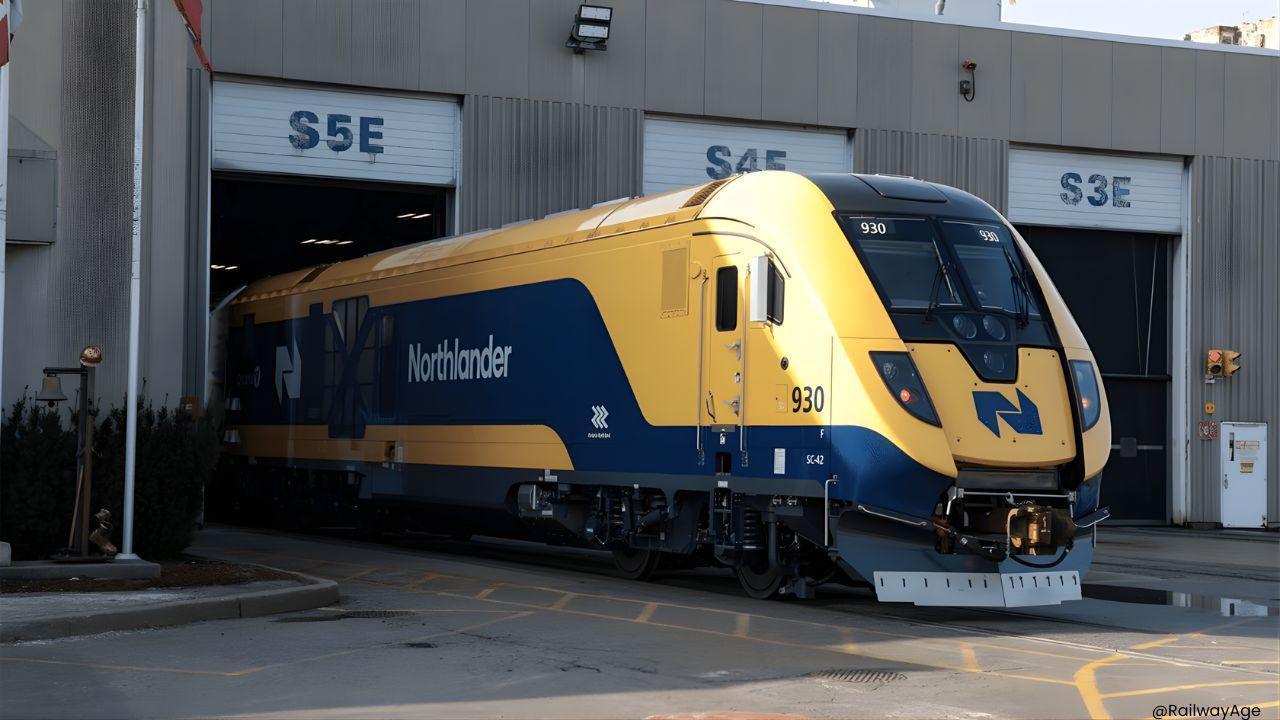
Photo : X / @RailwayAge
After more than a decade of absence, Northern Ontario is witnessing the return of a critical transportation lifeline as Northlander trains officially enter the testing phase. This milestone is more than just a technical checkpoint, it represents a powerful resurgence of regional rail connectivity that could reshape mobility, economic growth, and accessibility across one of Canada’s most underserved regions.
The Northlander project has now moved into a crucial stage of development, with its first trainset successfully completing an intensive “burn-in” testing phase covering over 1,600 kilometres under real-world operating conditions.This phase is designed to validate system reliability, performance consistency, and operational durability before public service begins. The program is now advancing into the next stage Revenue Service Demonstration, where trains will simulate full passenger operations along the entire route, testing schedules, station stops, and onboard systems in real-time conditions.This transition marks a critical shift from engineering validation to operational readiness, bringing the service closer to its long-awaited launch.
Beyond the trains themselves, the testing phase focuses heavily on operational preparedness. Staff training, emergency response drills, and system integration exercises are being conducted to ensure that every aspect of the service meets stringent safety and performance standards.This holistic approach reflects the complexity of modern rail operations, where success depends not only on hardware but also on human expertise and coordinated systems. By simulating real passenger scenarios, operators can identify potential issues early and refine processes before commercial deployment.
The Northlander service is set to run approximately 740 kilometres between Timmins and Toronto, with a rail connection to Cochrane and a total of 16 stops along the route.This corridor is more than a transportation route, it is a critical link connecting remote communities to major urban centers. For residents, it provides access to employment, education, healthcare, and economic opportunities that have been limited since the service was discontinued over a decade ago.The reinstatement of this service is expected to play a transformative role in regional development, strengthening connectivity and supporting long-term economic growth.
The return of the Northlander is backed by significant infrastructure investment, with more than CAD 100 million allocated to rail upgrades north of North Bay.These investments include track improvements, station enhancements, and system upgrades designed to support modern rail operations. The scale of funding highlights the government’s commitment to revitalizing rail transport as a key component of regional mobility and infrastructure strategy.
Each Northlander trainset is designed with passenger comfort and accessibility in mind, offering seating for approximately 169 passengers along with accessible facilities and onboard charging options.These modern features reflect a shift toward passenger-centric rail services, where comfort, convenience, and connectivity are essential. The introduction of new trainsets also ensures improved reliability and efficiency compared to older rolling stock, aligning with contemporary expectations for intercity travel.
The revival of the Northlander service is part of a broader trend toward reinvesting in rail infrastructure as a sustainable and efficient mode of transportation. As governments worldwide look to reduce carbon emissions and improve connectivity, rail is emerging as a key solution.This project demonstrates how targeted investments and strategic planning can bring dormant rail corridors back to life, creating new opportunities for both passengers and regional economies. It also highlights the importance of testing and certification phases in ensuring successful project delivery.
With testing now underway and additional trainsets entering commissioning in the coming weeks, the Northlander is on track to return to service later this year.The successful completion of this phase will mark the beginning of a new era for Northern Ontario’s transportation network, one defined by improved accessibility, stronger economic links, and a renewed focus on sustainable mobility. For communities across the region, the sound of trains returning to the tracks is more than progress.It’s a promise of connection, opportunity, and growth.
#trending #latest#Northlander #RailRevival #OntarioTransport #PassengerRail #RailTesting







Advances in Aerospace Technology and Commercial Aviation Recovery
Insights into breakthrough aerospace technologies and commercial aviation’s recovery amid 2025 chall

Defense Modernization and Strategic Spending Trends
Explore key trends in global defense modernization and strategic military spending shaping 2025 secu

Tens of Thousands Protest in Serbia on Anniversary of Deadly Roof Collapse
Tens of thousands in Novi Sad mark a year since a deadly station roof collapse that killed 16, prote

Canada PM Carney Apologizes to Trump Over Controversial Reagan Anti-Tariff Ad
Canadian PM Mark Carney apologized to President Trump over an Ontario anti-tariff ad quoting Reagan,

The ad that stirred a hornets nest, and made Canadian PM Carney say sorry to Trump
Canadian PM Mark Carney apologizes to US President Trump after a tariff-related ad causes diplomatic

Bengaluru-Mumbai Superfast Train Approved After 30-Year Wait
Railways approves new superfast train connecting Bengaluru and Mumbai, ending a 30-year demand, easi



