Post by : Avinab Raana
Photo : X / @dtbyaadi
In a development that has sent ripples across global shipping and energy markets, a US-sanctioned Chinese tanker has successfully crossed the strategically critical Strait of Hormuz despite an active American naval blockade. The incident marks one of the first high-profile challenges to Washington’s attempt to control maritime traffic linked to Iran, highlighting the fragile balance of power in one of the world’s most vital energy corridors. At a time when geopolitical tensions are already at a boiling point, this single voyage has exposed the complexity and limitations of enforcing naval dominance in contested waters.
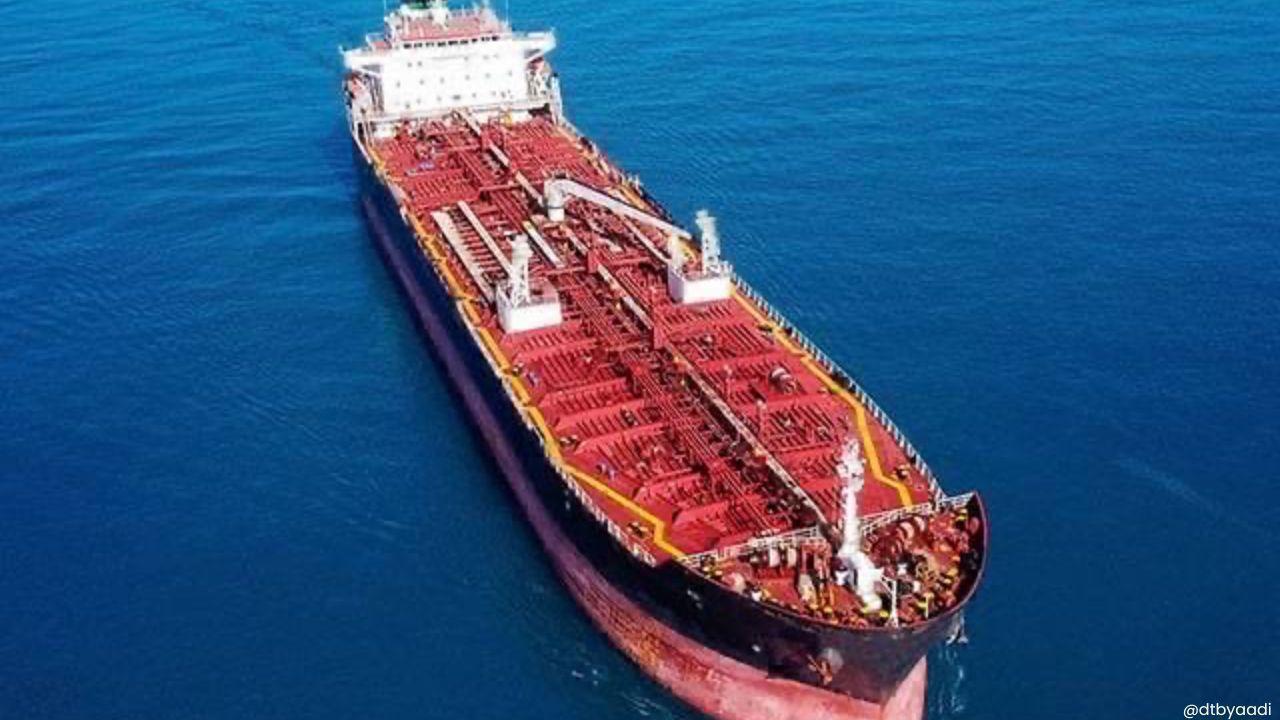
The vessel at the center of this development, identified as Rich Starry, is a Chinese-owned tanker previously sanctioned for allegedly facilitating Iranian oil trade. Carrying an estimated 250,000 barrels of methanol, the tanker navigated through the narrow Hormuz chokepoint, becoming one of the first vessels to pass despite newly imposed restrictions.
What makes this transit particularly significant is that it occurred within hours of the blockade being enforced, effectively testing the operational reach and enforcement strategy of the US Navy. While several vessels reportedly turned back under pressure, this tanker’s successful passage raised immediate questions about how consistently the blockade can be implemented across such a vast and high-traffic maritime zone.
The Strait of Hormuz is not just another shipping route, it is the backbone of global energy trade. Roughly 20% of the world’s oil supply passes through this narrow waterway, making it one of the most strategically sensitive chokepoints on the planet.
Any disruption here has immediate consequences for global markets. Even the perception of instability can drive oil prices higher, disrupt supply chains, and force shipping companies to rethink routes. The ongoing tensions have already led to reduced vessel movement, increased insurance premiums, and heightened operational risks for maritime operators navigating the region.
The US-led blockade was designed to restrict vessels linked to Iranian trade, particularly oil shipments, as part of broader geopolitical pressure. However, early developments suggest that enforcing such restrictions is far from straightforward. Reports indicate that while some ships complied and reversed course, others including sanctioned vessels managed to navigate through the strait, at least temporarily, before reassessing their routes.
This highlights a critical challenge in modern maritime enforcement: distinguishing between sanctioned and non-sanctioned vessels in real time, especially when ships frequently change flags, ownership structures, and tracking signals to avoid detection.
The involvement of a Chinese-linked vessel adds another layer of complexity to the situation. China, heavily dependent on Middle Eastern oil imports, has a direct stake in keeping the Strait of Hormuz operational. The passage of a sanctioned tanker underscores Beijing’s broader stance against unilateral blockades and sanctions that could disrupt global energy flows.
This incident is likely to intensify diplomatic tensions between the US and China, particularly as both nations navigate an increasingly competitive global landscape. It also reflects a broader shift where economic interests, energy security, and geopolitical strategy are deeply intertwined.
For the global shipping industry, this event is a stark reminder of the uncertainties surrounding one of its most critical routes. Shipping companies are now faced with difficult decisions whether to risk transit through a volatile region or reroute vessels at significant cost and delay.
Insurance premiums for vessels operating in the region have already surged, reflecting the heightened risk environment. At the same time, oil markets remain highly sensitive to any disruption in Hormuz traffic, with even minor incidents capable of triggering price volatility and supply concerns.
The passage of the sanctioned tanker is more than just a maritime incident, it is a symbol of the delicate balance between control and chaos in today’s geopolitical landscape. While the US seeks to assert dominance through naval enforcement, the realities of global trade, competing national interests, and logistical complexity make absolute control difficult to achieve.
As tensions continue to evolve, the Strait of Hormuz remains at the center of a high-stakes global equation where every ship, every decision, and every movement has the potential to reshape the future of energy, transportation, and international relations.
#trending #latest#HormuzCrisis #OilShipping #ChinaTanker #USBlockade #MaritimeSecurity


Advances in Aerospace Technology and Commercial Aviation Recovery
Insights into breakthrough aerospace technologies and commercial aviation’s recovery amid 2025 chall

Defense Modernization and Strategic Spending Trends
Explore key trends in global defense modernization and strategic military spending shaping 2025 secu

Tens of Thousands Protest in Serbia on Anniversary of Deadly Roof Collapse
Tens of thousands in Novi Sad mark a year since a deadly station roof collapse that killed 16, prote

Canada PM Carney Apologizes to Trump Over Controversial Reagan Anti-Tariff Ad
Canadian PM Mark Carney apologized to President Trump over an Ontario anti-tariff ad quoting Reagan,

The ad that stirred a hornets nest, and made Canadian PM Carney say sorry to Trump
Canadian PM Mark Carney apologizes to US President Trump after a tariff-related ad causes diplomatic

Bengaluru-Mumbai Superfast Train Approved After 30-Year Wait
Railways approves new superfast train connecting Bengaluru and Mumbai, ending a 30-year demand, easi



