Post by : Avinab Raana
Photo : X / MarineInsight
In the vast, dark depths of the world’s oceans, a silent battle is intensifying and the United States Navy is responding with renewed urgency. By expanding production of advanced sonobuoys, the Navy is doubling down on one of its most critical tools for detecting increasingly stealthy submarines. This move reflects a broader shift in global defense strategy, where undersea dominance is becoming just as crucial as air and space superiority. As rival nations invest heavily in quieter, more sophisticated submarines, the need for precise and persistent underwater surveillance has never been greater.
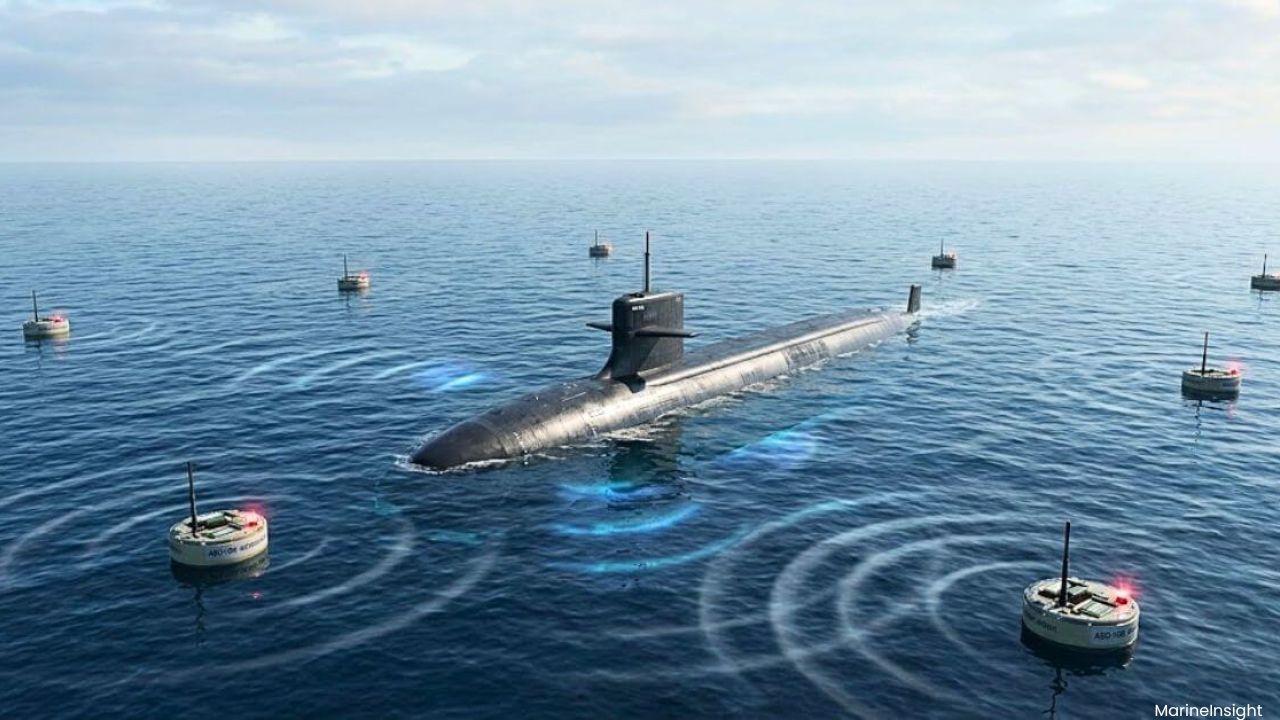
Sonobuoys may appear simple, but they are among the most powerful tools in anti-submarine warfare. These compact, expendable devices are deployed from aircraft or ships and float on the ocean’s surface while using underwater sensors to detect acoustic signals from submarines. They transmit real-time data back to operators, enabling navies to locate, track, and analyze underwater threats with remarkable accuracy.
What makes them indispensable is their ability to create a wide-area detection network. When deployed in coordinated patterns, sonobuoys can effectively “map” underwater activity, turning vast ocean spaces into monitored zones. This capability is critical in modern warfare, where submarines are designed to remain undetected for extended periods.
The decision to ramp up sonobuoy production is closely tied to the rapid advancement of submarine technology worldwide. Modern submarines are quieter, faster, and capable of operating at greater depths, making them harder to detect using traditional methods. As a result, the US Navy is investing in enhanced detection systems that can keep pace with these evolving threats.
Expanding sonobuoy production ensures that naval forces have the volume and technological edge needed to maintain persistent surveillance. In high-risk regions, where underwater threats are constantly shifting, the ability to deploy large numbers of sonobuoys quickly can mean the difference between early detection and strategic vulnerability.
This expansion is not happening in isolation—it is part of a broader response to increasing global naval competition. Countries are significantly upgrading their submarine fleets, focusing on stealth capabilities that make detection extremely challenging. The growing emphasis on undersea warfare highlights a critical reality: control of the oceans now extends far below the surface.
By strengthening its sonobuoy capabilities, the US Navy is reinforcing its position in this evolving domain. The move ensures that it can effectively monitor key maritime regions, protect carrier strike groups, and maintain a strategic advantage in contested waters.
Modern sonobuoys are far more advanced than their predecessors. They incorporate improved acoustic sensors, enhanced signal processing, and better communication systems, allowing for more accurate detection and faster data transmission. These advancements enable operators to distinguish between different types of underwater activity, reducing false alarms and improving operational efficiency.
Additionally, integration with advanced aircraft and surveillance systems is transforming how sonobuoys are used. They are no longer standalone tools but part of a larger networked ecosystem that includes maritime patrol aircraft, drones, and command centers, creating a multi-layered approach to underwater defense.
The increased focus on undersea surveillance has direct implications for global transportation and trade. Submarine threats are not limited to military targets—they can also disrupt critical shipping routes, energy infrastructure, and communication cables that underpin the global economy.
By enhancing its ability to detect and track submarines, the US Navy is also safeguarding international shipping lanes and ensuring the stability of maritime operations. This highlights the interconnected nature of defense and transportation, where security measures play a vital role in maintaining the flow of global commerce.
The expansion of sonobuoy production signals a clear direction for the future of naval warfare: enhanced situational awareness beneath the waves. As technology continues to evolve, the ability to monitor and control underwater environments will become increasingly important for both defense and economic stability.
In this high-stakes environment, the US Navy’s investment is not just about maintaining current capabilities, it is about preparing for a future where the silent depths of the ocean become one of the most critical arenas of global competition. And as that future unfolds, tools like sonobuoys will remain at the forefront of ensuring security, stability, and strategic dominance.
#trending #latest#USNavy #Sonobuoys #SubmarineDetection #MaritimeDefense #UnderseaWarfare







Advances in Aerospace Technology and Commercial Aviation Recovery
Insights into breakthrough aerospace technologies and commercial aviation’s recovery amid 2025 chall

Defense Modernization and Strategic Spending Trends
Explore key trends in global defense modernization and strategic military spending shaping 2025 secu

Tens of Thousands Protest in Serbia on Anniversary of Deadly Roof Collapse
Tens of thousands in Novi Sad mark a year since a deadly station roof collapse that killed 16, prote

Canada PM Carney Apologizes to Trump Over Controversial Reagan Anti-Tariff Ad
Canadian PM Mark Carney apologized to President Trump over an Ontario anti-tariff ad quoting Reagan,

The ad that stirred a hornets nest, and made Canadian PM Carney say sorry to Trump
Canadian PM Mark Carney apologizes to US President Trump after a tariff-related ad causes diplomatic

Bengaluru-Mumbai Superfast Train Approved After 30-Year Wait
Railways approves new superfast train connecting Bengaluru and Mumbai, ending a 30-year demand, easi



