Post by : Avinab Raana
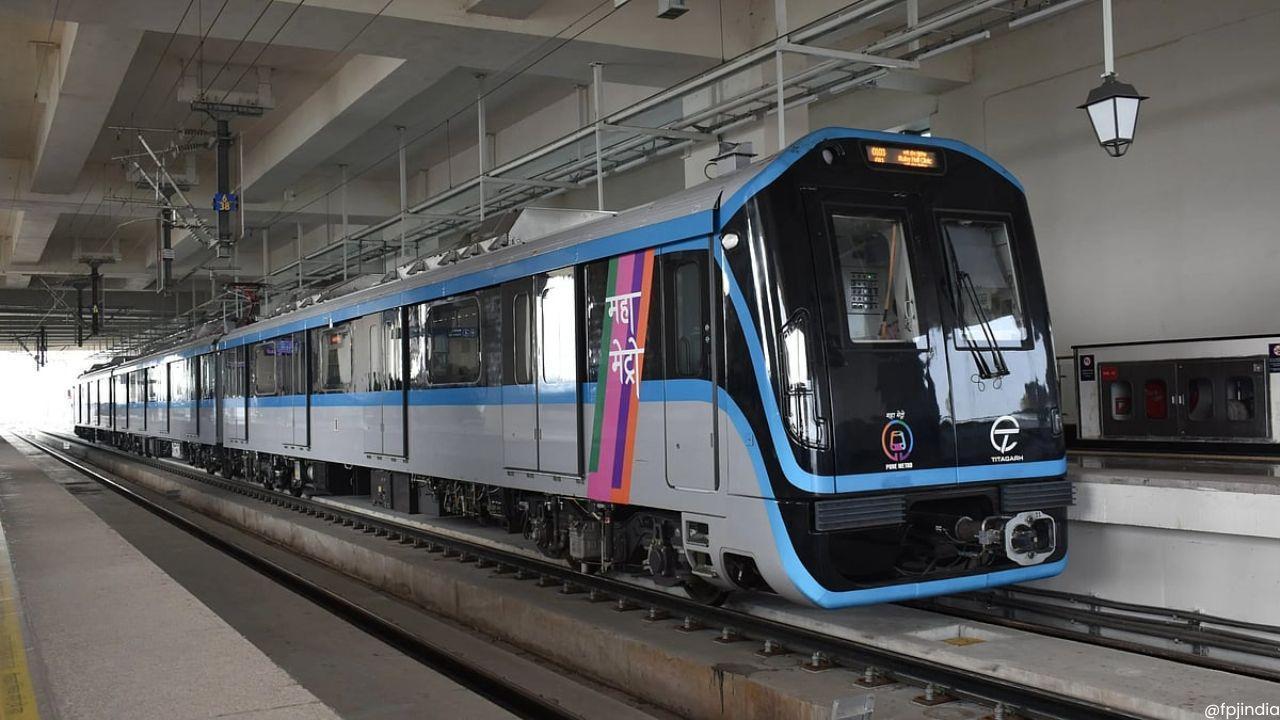
Photo : X / @fpjindia
Pune’s rapidly expanding urban and industrial landscape is set for a transformative leap as Maharashtra Metro Rail Corporation (Maha Metro) unveils a revised Detailed Project Report (DPR) for the Bhakti Shakti–Chakan metro corridor. This is not just a routine infrastructure update, it is a strategic recalibration of one of India’s most critical urban mobility corridors. With the project cost now revised to ₹12,937 crore and the alignment expanded significantly, the move reflects a deeper understanding of commuter demand, industrial growth, and the urgent need for sustainable transport solutions in one of the country’s busiest economic belts.
The revised DPR has significantly expanded the project’s footprint, extending the corridor length to approximately 47.2 kilometers and increasing the number of stations from 31 to 34. This expansion is far from cosmetic, it is a calculated effort to integrate previously underserved but high-density zones into the metro network. Key industrial and residential hubs such as Bhosari MIDC, Landewadi, and Bhosari Gaon are now part of the alignment, ensuring that the metro system caters not just to residential commuters but also to the region’s thriving industrial workforce.The corridor will seamlessly connect major residential clusters like Wakad, Pimple Saudagar, and Ravet with critical industrial zones including Moshi and the Chakan MIDC belt, creating a powerful mobility backbone for the Pune metropolitan region.
The increase in project cost from earlier estimates reflects the scale of ambition embedded in the revised DPR. The enhanced budget is being directed toward expanded infrastructure, improved alignment, and integrated transport solutions that are designed to serve the region for decades to come. A standout feature of the revised plan is the inclusion of a 17-kilometer integrated double-decker flyover between Bhosari and Chakan, developed in collaboration with national highway authorities. This dual-use infrastructure is expected to optimize land use while simultaneously addressing both metro and road traffic demands, a critical requirement in densely populated industrial zones.
The revised DPR underscores the corridor’s long-term significance with ambitious ridership projections. Passenger numbers are expected to grow steadily from over 3 lakh daily commuters in the early years to nearly 7.8 lakh passengers per day by 2062.These projections highlight the immense pressure currently faced by Pune’s road infrastructure and the urgent need for a high-capacity transit solution. By offering a fast, reliable alternative to road travel, the metro corridor is expected to significantly reduce congestion, cut travel times, and lower emissions across the region.
The Bhakti Shakti–Chakan corridor is strategically aligned with one of India’s most important industrial zones, home to major automotive, engineering, and manufacturing hubs. The revised DPR positions the metro not just as a transport project, but as an economic enabler that can boost productivity, improve workforce mobility, and attract further investment into the region. By improving connectivity between residential and industrial areas, the metro is expected to streamline daily commutes for thousands of workers while enhancing overall economic efficiency. This integration of transport and industry is a hallmark of modern urban planning, and Pune is now aligning itself with global best practices.
Beyond its immediate scope, the revised DPR also incorporates provisions for future expansion, ensuring that the metro network can evolve alongside Pune’s urban growth. Plans include potential extensions toward Talawade MIDC, Kharabwadi, and connectivity with other proposed metro corridors through key junctions like Bhujbal Chowk. This forward-looking approach transforms the project into a scalable mobility framework rather than a standalone corridor, reinforcing Pune’s ambition to become a fully integrated smart mobility city.
As the revised DPR moves toward approvals and eventual execution, the Bhakti Shakti–Chakan metro corridor stands as a defining example of how Indian cities are reimagining urban mobility. It reflects a shift from reactive infrastructure development to proactive, data-driven planning that anticipates future demand. For Pune, this project is more than a metro line, it is a statement of intent. A commitment to smarter cities, sustainable transport, and infrastructure that keeps pace with economic ambition. And as India’s urban centers continue to expand, projects like this will play a critical role in shaping the next generation of transportation ecosystems.
#trending #latest#PuneMetro #MahaMetro #UrbanMobility #MetroExpansion #SmartTransit









Advances in Aerospace Technology and Commercial Aviation Recovery
Insights into breakthrough aerospace technologies and commercial aviation’s recovery amid 2025 chall

Defense Modernization and Strategic Spending Trends
Explore key trends in global defense modernization and strategic military spending shaping 2025 secu

Tens of Thousands Protest in Serbia on Anniversary of Deadly Roof Collapse
Tens of thousands in Novi Sad mark a year since a deadly station roof collapse that killed 16, prote

Canada PM Carney Apologizes to Trump Over Controversial Reagan Anti-Tariff Ad
Canadian PM Mark Carney apologized to President Trump over an Ontario anti-tariff ad quoting Reagan,

The ad that stirred a hornets nest, and made Canadian PM Carney say sorry to Trump
Canadian PM Mark Carney apologizes to US President Trump after a tariff-related ad causes diplomatic

Bengaluru-Mumbai Superfast Train Approved After 30-Year Wait
Railways approves new superfast train connecting Bengaluru and Mumbai, ending a 30-year demand, easi



