Post by : Avinab Raana
Photo : X / ITLN Live
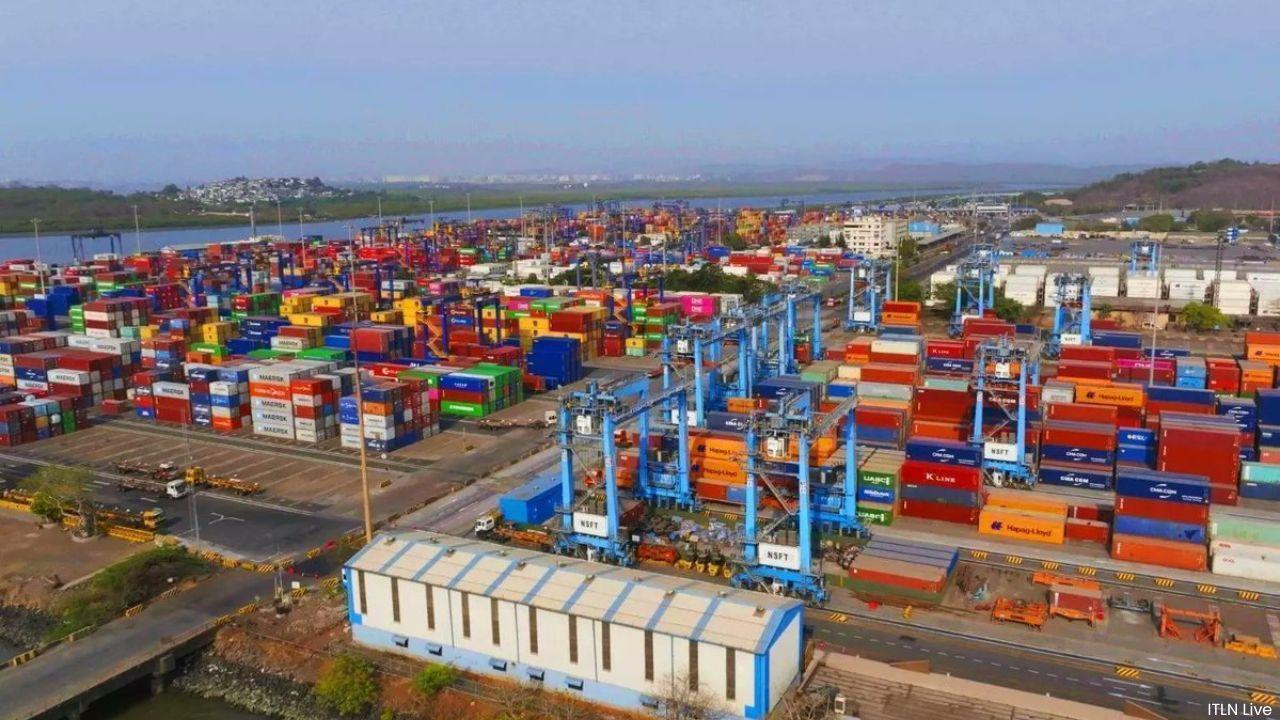
At a time when global supply chains are under intense pressure due to geopolitical tensions and shipping disruptions, India’s Jawaharlal Nehru Port Authority (JNPA) has emerged as a symbol of operational resilience. While ports across the world grapple with congestion, delays, and uncertainty, JNPA has managed to sustain performance across key operational metrics, reinforcing its position as India’s most critical maritime gateway. This achievement is not merely operational. It is strategic, reflecting the growing importance of efficient port ecosystems in stabilizing global trade flows.
One of the most telling indicators of JNPA’s performance is the significant improvement in import container dwell time, which dropped from 25.17 hours in February 2026 to 22.68 hours in March 2026. This reduction highlights faster cargo clearance, streamlined processes, and improved coordination among stakeholders.In an industry where time directly translates into cost and competitiveness, such gains are critical. Reduced dwell time not only accelerates cargo movement but also minimizes congestion within port terminals, ensuring smoother operations even during periods of heightened global uncertainty.
JNPA’s ability to maintain steady cargo flow has been driven by strategic initiatives such as Direct Port Delivery (DPD) and Direct Port Entry (DPE). With DPD at 74.57% and DPE at 45.74% during FY 2025–26, the port has significantly enhanced cargo handling efficiency and reduced dependency on intermediate storage.These initiatives are not just operational tools, they represent a shift toward smarter logistics management. By enabling faster clearance and direct movement of cargo, JNPA is effectively reducing turnaround times and enhancing overall supply chain performance.
Despite the surge in global disruptions, JNPA has maintained an average vessel turnaround time of approximately 22.61 hours, reflecting consistent handling efficiency. This is particularly noteworthy given the increasing complexity of maritime operations, where delays in one region can quickly ripple across global shipping networks.The port’s ability to sustain such performance underscores its operational maturity and readiness to handle fluctuating cargo volumes without compromising efficiency.
JNPA has also demonstrated its capacity to handle rising transshipment volumes, which increased from 5% to 16% during the reporting period. Managing such growth without operational disruptions requires precise planning, resource optimization, and real-time monitoring areas where JNPA has clearly excelled. Additionally, storage utilization has been maintained at around 50% of capacity, with further expansion through the allocation of additional land for export container storage. This balance between capacity and demand ensures that the port remains agile and responsive to changing trade dynamics.
What truly sets JNPA apart is its proactive approach to crisis management. The port has implemented real-time monitoring systems, established dedicated task forces, and coordinated closely with terminal operators and logistics stakeholders.Innovative measures such as optimized tractor trailer movement and temporary cargo transshipment strategies have helped manage congestion effectively. These actions highlight a forward-thinking approach where challenges are anticipated and addressed before they escalate into operational bottlenecks.
JNPA’s performance carries broader implications for India’s economy. As the country’s premier container port handling a significant share of cargo traffic, its efficiency directly impacts export competitiveness, supply chain reliability, and industrial growth.In times of global uncertainty, the ability of key infrastructure nodes like JNPA to maintain stability becomes a strategic advantage. It ensures that trade flows remain uninterrupted, supporting industries ranging from manufacturing to agriculture.
The sustained performance of JNPA amid global disruptions is more than a success story, it is a benchmark for future port operations. It demonstrates how a combination of technology, planning, and stakeholder collaboration can create a resilient logistics ecosystem capable of withstanding external shocks. As global trade continues to evolve, ports that can adapt quickly and maintain efficiency will define the next phase of maritime logistics. JNPA’s current trajectory suggests that it is not just keeping pace with change, it is leading it.
#trending #latest#JNPA #PortEfficiency #GlobalLogistics #SupplyChainIndia #MaritimeTrade



Advances in Aerospace Technology and Commercial Aviation Recovery
Insights into breakthrough aerospace technologies and commercial aviation’s recovery amid 2025 chall

Defense Modernization and Strategic Spending Trends
Explore key trends in global defense modernization and strategic military spending shaping 2025 secu

Tens of Thousands Protest in Serbia on Anniversary of Deadly Roof Collapse
Tens of thousands in Novi Sad mark a year since a deadly station roof collapse that killed 16, prote

Canada PM Carney Apologizes to Trump Over Controversial Reagan Anti-Tariff Ad
Canadian PM Mark Carney apologized to President Trump over an Ontario anti-tariff ad quoting Reagan,

The ad that stirred a hornets nest, and made Canadian PM Carney say sorry to Trump
Canadian PM Mark Carney apologizes to US President Trump after a tariff-related ad causes diplomatic

Bengaluru-Mumbai Superfast Train Approved After 30-Year Wait
Railways approves new superfast train connecting Bengaluru and Mumbai, ending a 30-year demand, easi



