Post by : Saif
Qantas is preparing for one of the boldest changes in modern air travel: non-stop flights from Sydney to London and Sydney to New York that could keep passengers in the air for close to 20 hours, and in some cases even longer. To make that possible, the Australian airline is not relying only on a new aircraft. It is betting on science — especially research into sleep, body clocks, lighting, food timing, movement, and cabin comfort.
This is the heart of Project Sunrise, Qantas’ long-planned push to launch some of the world’s longest direct commercial flights. The airline believes many travelers will pay more to skip stopovers if the experience feels healthier, smoother, and less exhausting. That is why the company has spent years studying how people react to ultra-long journeys and what can be changed inside the cabin to reduce jet lag and physical strain.
The idea is ambitious and commercially attractive. But it also raises a serious question: can science truly make a 20-hour journey feel manageable, or is Qantas asking passengers to trust an experiment in the sky?
A New Era of Ultra-Long-Haul Flying
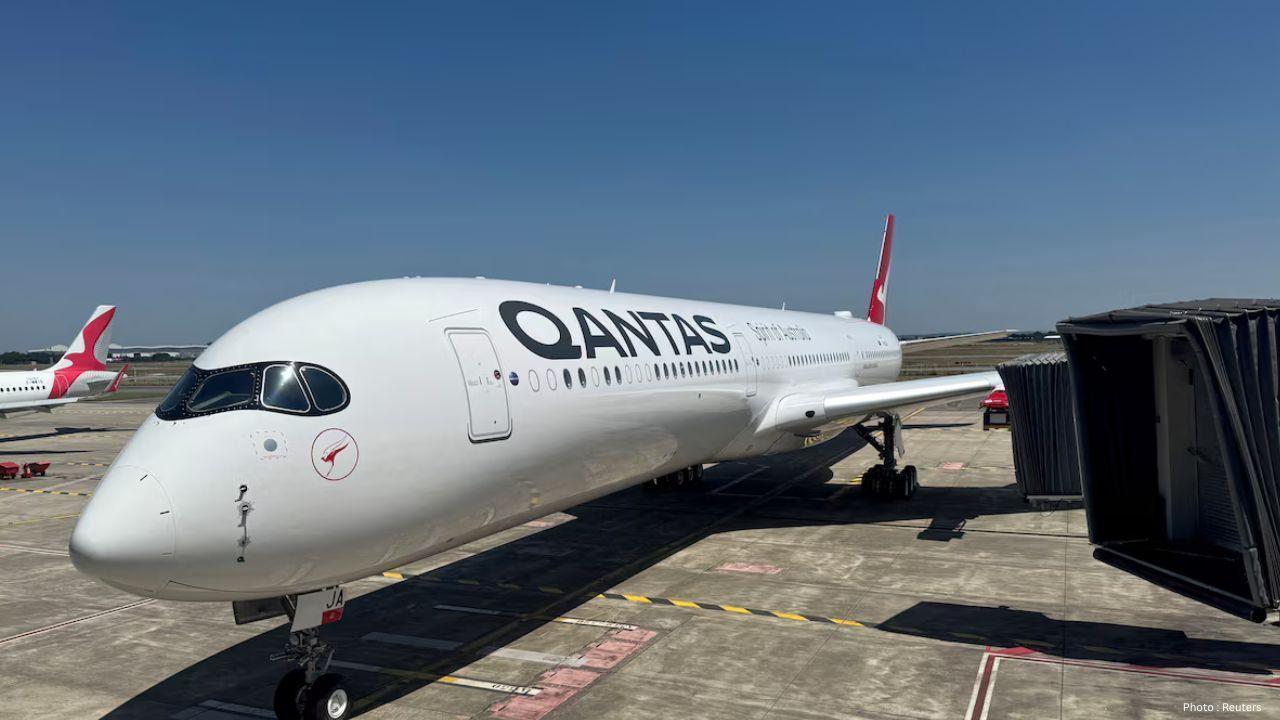
For decades, the trip between Australia and Europe has involved a stop in Asia or the Middle East. That break has been part of the routine because the distance is huge and traditional aircraft operations made a direct journey difficult. Qantas now wants to change that by using specially modified Airbus A350-1000ULR aircraft capable of flying up to 22 hours with a smaller number of passengers on board. The first Project Sunrise route is expected to be Sydney to London, followed later by Sydney to New York.
The airline’s message is simple: time matters. A direct service removes the need to get off the aircraft, pass through transit security, wait at another gate, and then board again for the final leg. For business travelers, families, and people who simply dislike stopovers, that convenience has clear value.
But a direct route only works if the body can handle it. Twenty hours in the air is not just a longer version of an ordinary long-haul trip. It creates a very different physical challenge. Travelers sit for longer, cross multiple time zones in one stretch, sleep in an artificial environment, and arrive at a body-clock hour that may feel completely wrong. That is why Qantas has framed the project as a science-led redesign of the flying experience, not just a schedule change.
Why Sleep and Light Matter So Much
At the centre of the airline’s plan is the idea that light is one of the strongest signals for the human body clock. When people travel across seven, ten, or even fifteen time zones, the body does not immediately understand where it is. Sleep patterns, hunger, alertness, and mood can all be thrown off. This is what travelers know as jet lag.
To deal with that, Qantas has worked with researchers who studied how carefully timed lighting, meals, and sleep windows could help passengers adjust more smoothly. According to the Reuters report, the airline’s test work found that travelers were more alert when meals and lighting were planned around rest rather than following a standard service pattern. That means the timing of food and the way the cabin is lit are no longer just comfort details. They are being treated as tools that can shape how the body feels during and after the flight.
The cabin lighting has been specially programmed with multiple “scenarios” designed to mimic sunrise, sunset, and calmer rest periods. This is meant to support the body’s natural rhythm and create what researchers described as a protective sleep window. Instead of keeping the cabin bright and active at the wrong moments, the airline wants to guide passengers toward better rest and stronger alertness when it matters.
That may sound technical, but the goal is very human: help people land feeling less wrecked.
More Than a Seat: The Cabin as a Health Space
Project Sunrise is also changing how the cabin itself is used. Qantas plans to include a “wellness zone” where passengers can stand, stretch, and move around during the flight. There will be extra legroom compared with many standard economy layouts, and part of the cabin will be sold as “Economy Plus” for travelers who want more space. First-class suites and premium seating are also part of the design because the aircraft will carry only 238 passengers, making it far more premium-heavy than a normal long-haul jet.
This matters because ultra-long flights are not just about sleep. Sitting still for very long periods can be physically uncomfortable and mentally draining. Even small chances to walk, stretch, and change posture can make a difference. The design team reportedly considered even more unusual ideas, including exercise bikes and yoga mats, before settling on a simpler wellness space.
That decision shows the balancing act at the centre of the project. The airline wants to make the flight healthier and more pleasant, but it also has to work within strict limits of space, aircraft weight, and commercial practicality. Every added feature must justify the room it takes up.
The Business Gamble Behind the Science
Behind the research lies a clear commercial goal. Qantas believes people will pay a premium for direct ultra-long-haul flights if the experience saves time and feels worth the extra money. Reuters reported that the carrier hopes to charge more than one-stop services, using the success of its Perth-London route as evidence that travelers will accept a higher fare for convenience. The company is aiming to turn Australia’s distance from major world cities into a business advantage rather than a handicap.
That is a smart strategy on paper. Australia is far from Europe and North America, and many of its international travelers have long accepted tiring, multi-leg journeys as normal. If Qantas can offer a direct option that is noticeably easier, it may win both premium travelers and time-conscious passengers.
Still, the business case depends on one major condition: customers must believe the comfort promises. Reuters spoke to frequent travelers who liked the idea of avoiding a stopover but said their decision would depend on seat comfort, freedom to move, and price. Some were open to paying extra, while others questioned whether saving around four hours would justify a fare premium of up to 20 percent.
That hesitation is important. People may love the idea of a direct route in theory, but the real test will come when fares are published and travelers compare cost against endurance.
What This Means for Passengers
If Project Sunrise works, it could change how long-distance flying is judged. For many travelers, the biggest benefit will be simplicity. A direct journey removes the stress of transit airports, delayed connections, baggage worries, and the mental fatigue of breaking a trip into two parts. For business passengers, it could also mean more predictable schedules and less lost time between continents.
There may also be a deeper benefit if the science delivers on its promise. Better-timed meals, calmer lighting, and smarter rest planning could make long flights less punishing not only for those on Project Sunrise routes but eventually across the wider airline industry. If Qantas proves that body-clock science improves passenger wellbeing, competitors may copy the model on other long-haul services.
However, there are also limits to what design can solve. No lighting program can fully erase the strain of being in a metal tube for close to a day. Even with extra legroom and better planning, some passengers will still find such journeys exhausting. Families with young children, older travelers, or people with health concerns may prefer the chance to break the trip in the middle. Others may simply decide that a stopover is worth it if it saves money.
In that sense, these flights are unlikely to replace traditional long-haul travel for everyone. They are more likely to become a premium option for travelers who value time, convenience, and direct access above all else.
A Wider Shift in the Airline Industry
Qantas is not just selling a new route. It is trying to shape a new category of air travel. If Sydney-London and Sydney-New York non-stop services succeed, they could push more airlines to rethink what long-haul flying should look like. Cabin design may become less about fitting as many seats as possible and more about managing the human effects of time-zone travel.
That would be a meaningful shift. For years, airline competition has focused heavily on aircraft efficiency, fares, and onboard luxury for top-paying passengers. Project Sunrise adds another layer: the use of sleep science and circadian planning as a product feature. In other words, the flight itself becomes a controlled environment designed to help the passenger function better on arrival.
This could be especially important as airlines search for ways to justify premium fares in a competitive market. Time savings alone may not be enough. But time savings combined with lower fatigue, smoother adjustment, and a better arrival experience could be a more convincing package.
Conclusion
Qantas’ ultra-long-haul plan is one of the most interesting experiments in global aviation because it is trying to solve a human problem, not just a transport one. The airline knows that travelers do not simply want to get from Sydney to London faster. They want to arrive feeling less worn out, less disoriented, and more ready to work, rest, or continue their lives.
#trending #latest #Qantas #ProjectSunrise #UltraLongHaul #LongHaulFlights #AviationNews #AirTravel #SydneyToLondon #SydneyToNewYork #SleepScience #JetLag #TravelInnovation #AirlineIndustry #FlightComfort








Advances in Aerospace Technology and Commercial Aviation Recovery
Insights into breakthrough aerospace technologies and commercial aviation’s recovery amid 2025 chall

Defense Modernization and Strategic Spending Trends
Explore key trends in global defense modernization and strategic military spending shaping 2025 secu

Tens of Thousands Protest in Serbia on Anniversary of Deadly Roof Collapse
Tens of thousands in Novi Sad mark a year since a deadly station roof collapse that killed 16, prote

Canada PM Carney Apologizes to Trump Over Controversial Reagan Anti-Tariff Ad
Canadian PM Mark Carney apologized to President Trump over an Ontario anti-tariff ad quoting Reagan,

The ad that stirred a hornets nest, and made Canadian PM Carney say sorry to Trump
Canadian PM Mark Carney apologizes to US President Trump after a tariff-related ad causes diplomatic

Bengaluru-Mumbai Superfast Train Approved After 30-Year Wait
Railways approves new superfast train connecting Bengaluru and Mumbai, ending a 30-year demand, easi



